Photo Album, my snaps...
I have thousands of photos of pipe organs. Many of them are mine. But many are not. For decades, I've been copying photos from the internet. At the time, it was only for my personal use, so unfortunately I didn't bother to record the source or photographer. As time permits, I will add them here, acknowledged if known, sorted by instrument or perhaps by organbuilding topic.
If you click on the photo, you'll usually get a bigger version of it. Or, clicking may bring you to another webpage with more info about that photo. If you click on a selection in the Index, you'll jump to that topic.
The quality of some of my photos isn't perfect. Many are 40 years old, taken with a colour film camera, by an amateur, in poor light. Decades later the faded film was scanned in the best technology and resolution of the time. But, it's better than nothing. Someday I'll figure out how to use software to improve the images.
Index:- 1977 - Marcussen Organ, Meldorf, Germany
- 1964 - Hallman Organ, Gads Hill
- 1531 - Renaissance organ of Kreward, Groningen
- 1457 - Renaissance Organ, Rysum
- 1655 - Renaissance Organ, Uttum
- 1511 - Renaissance Organ, Alkmaar, Sint-Laurenskerk Koororgel
- 1479 - Renaissance Organ, Middelburg Kookerk organ
- 1467/1636 - Stellwagen Organ at St Jacobi in Lübeck
- 1680 - Arp Schnitger, Cappel, Germany (Niedersachsen)
- 1675 - Arp Schnitger, Stade, Germany
- 1872 - Hill & Son, St Augustine’s Church, Yarraville, Australia
- 1864 - Hill & Son, Loders, Dorset
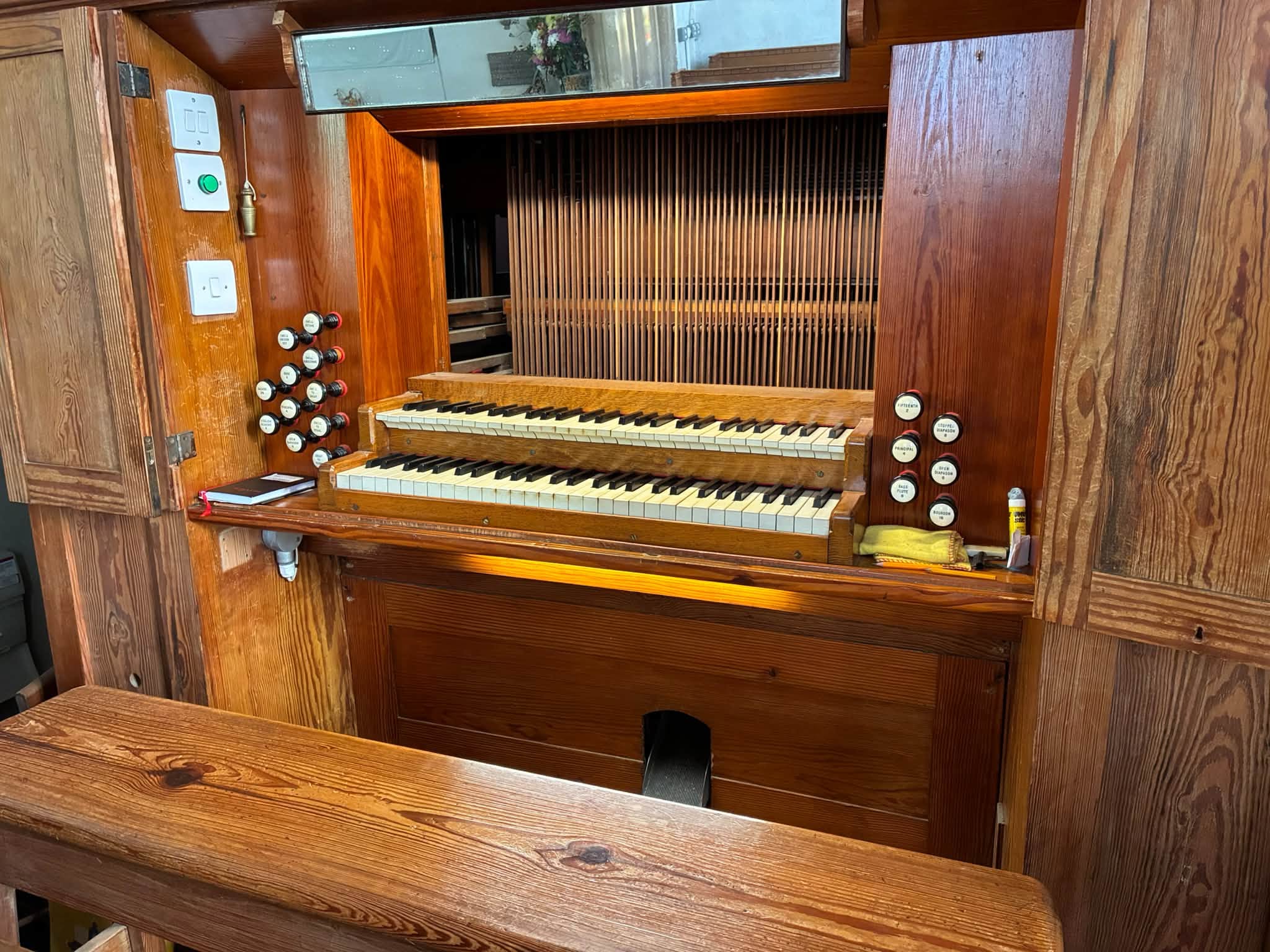
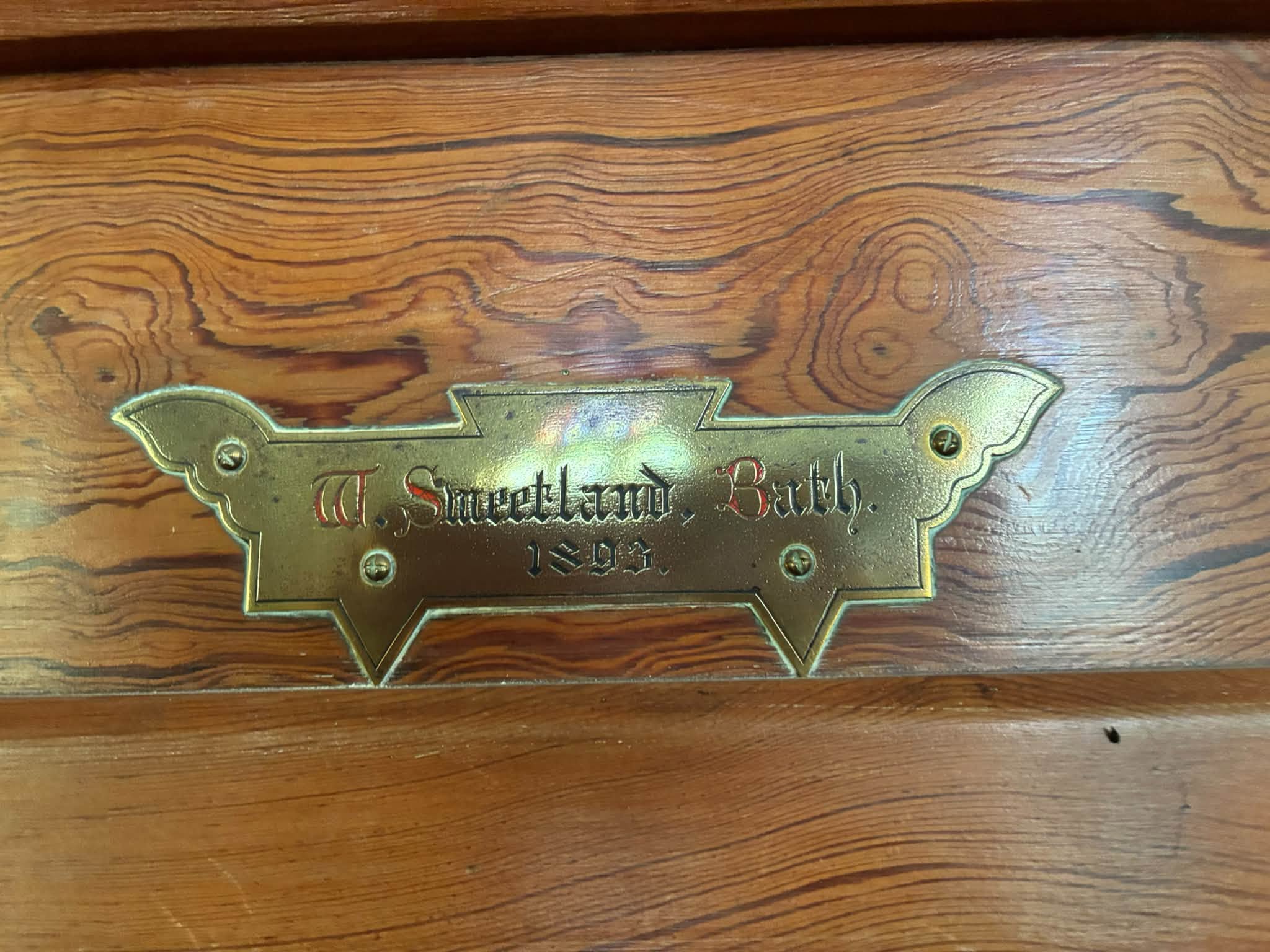
- 1893 - Sweetland organ, St Piran’s Perranarworthal, Bleadon in Somerset

Marcussen Organ, St Johannis, Meldorf
In 1977, I was doing an organ crawl of Northern Europe. I stopped to visit Marcussen, whom I consider to be one of the finest organbuilders. After the stop tour, I asked if he would open any doors for me to see some Marcussen Organs. He said I should visit the organ in Meldorf, Germany, which was currently being installed, so was open and accessible.
He gave me an letter of introduction, otherwise I wouldn't even be allowed in the building by his crew. After his staff read the letter, they treated me like a Korean Chaebol.
I took advantage of that, and charged throught the organ snooping and snapping pictures of everything. The staff was obviously very uncomfortable about my spying, but I had to exploit the opportunity. They were glad to see me go. Photo below-right is the Marcussen factory.

The quality of woodworking was breath taking. There were no screws visible anywhere, except as necessary for service disassembly. All the woodwork was polished, inside the organ and out. Dovetails and mortise and tenon joints were everywhere. All the action was beautifully handcrafted from walnut, maple, brass, and using leather nuts. No plastic and aluminum Huess stuff here.
Of special interest to me was photo #6, "Bourdon16 & helper". This organ had an open metal principal 16' in the pedal. But the biggest 6 pipes wouldn't fit in the facade, so Marcussen place six wooden Bourdon 16' pipes behind the organ to replace them. But these Bourdons were special, they were two pipes in one: a 16' Bourdon and an 8' open wood as a helper pipe. They are both on the same wind. The Bourdon provides the fundamental and the helper pipe fills in the missing harmonics, making a convincing replacement for the metal Principal. I desperately wanted to scale it, but didn't dare...
At the time, I was especially interested in tracker action, there were no pipes available. I was using a 35mm camera with colour slide film, my flash wasn't powerful so some of the photos are dim. I scanned them in the 1980s, so the quality isn't the best.


Hallman Organ, Gads Hill, Ontario
The Hallman organ was built in 1964 for St. Peter's Lutheran Church in Gads Hill (near Stradford), ON. It was the first true pipe organ Hallman produced (Opus 1), although it retained a set of reeds with electronic pickups to generate tones for the bottom octaves of the manual and pedal stops.
The Original Organ
The swell box and console are compact and can be moved through a standard-size doorway, allowing for ease of transportation and set up. A direct-electric windchest in the swell box houses three ranks of pipes:
- 4' Principal (68 pipes)
- 4' Chimney Flute (61 pipes)
- 4' String (73 pipes)
Pipes were manufactured by Stinkens of Holland, except for the largest of the principal and string basses, which were made by Durst Organ Supply. A compact cylindrical blower was originally fitted to the bottom of the windchest without a regulator, as well as a "winker" style tremulant.
The stop action is electric. Switching is performed by gang switches located neatly beneath the lid of the console, with metal contact rails running horizontally across the lid and "finger" contacts in turn contacting these rails. Console-chamber transmission wiring was originally terminated using quick-disconnect (spade) terminals.
Twenty-four notes are generated by reeds, fed by a dedicated blower inside the console with the signal amplified and then output by a speaker. The reeds are used for the bottom octaves of the 16' Pedal Bourdon and the 8' manual stops. The console includes two 61-note manuals and 32-note pedalboard, with a swell expression pedal and fixed crescendo pedal.
Original Stoplist
- Great
- 8' Principal (1-12 electronic)
- 8' Rohrflöte (1-12 electronic)
- 8' Salicional (1-12 electronic)
- 4' Octave
- 4' Flute
- 2 2/3' Twelfth (from String)
- 2' Fifteenth (from Principal; top 5 notes taken from octave below)
- 2' Dulcet
- 1 1/3' Nineteenth (top 7 notes repeat the preceding 7 notes)
- 1' Twenty-second (from String; top octave repeats octave below)
- IV Mixture (from String)
- Soft Ensemble (on Great and Pedal)
- Medium Ensemble (on Great and Pedal)
- Full Organ
- Auto Pedal (activates Pedal 16' Gedeckt for lowest held note on the GT manual, within the bottom two octaves)
- Swell:
- 16' Bass Flute (same as 8' Rohrflöte; no bottom octave)
- 8' Rohrflöte
- 8' Salicional
- 4' Flute
- 4' Violina
- 2 2/3' Nazard (from Flute; top 7 notes play from the octave below starting at F#, i.e. at unison pitch instead of mutation)
- 2' Piccolo (from Flute; top octave repeats octave below)
- 1 3/5' Tierce (from String; top 4 notes play top 4 pipes of string again)
- 8' Oboe (8' String and 2 2/3' Nazard)
- 8' Clarinet (8' Flute, 2 2/3' Nazard, 1 3/5' Tierce)
- String Ensemble (Strings 8' and 4' on SW)
- Flute Ensemble (Flutes 8' and 4' on SW)
- Swell Ensemble (8' Flute, 8' String, 4' Flute, 4' String, 2' Flute on SW)
- Tremulant (affects entire windchest)
- Pedal:
- 16' Bourdon (1-24 electronic)
- 16' Gedeckt (1-24 electronic)
- 8' Octave (from Flute rank; 1-12 electronic)
- 5 1/3' Quint (from Flute; 1-5 electronic)
- 4' Choral Bass (from Principal)
- 4' Flute
- 2' Twenty-second (from String)
- Swell 4-stage expression pedal
- crescendo pedal
The organ was regularly tuned and maintained over the years by Blair Batty. In 2012, Don Stapells, retired chief engineer of Hallman, rebuilt the electronics in the amplifier for the electronic reed bass system.
Relocation of the organ
In 2023, St. Peter's Lutheran Church made the decision to close and sell its building. The new congregation moving into the church had no interest in the organ. Mr. Bruce Cook, organist, wanted to preserve the organ and generously offered the organ to Matteo, with the intention that it be maintained and played into the future.
The same year, the organ was moved to Matteo's house. Since then, plans have been evolving to rebuild and expand the organ as a long-term project. To date, a new windchest has been built, retaining the original toeboards, rackboards and magnets, and the windchest has been completely re-wired.
A new schwimmer was constructed in 2024-2025 for better regulation of the wind supply. A static bellows from the former 1919 Casavant organ at Chalmers United Church in Guelph, ON was salvaged. After repainting, and releathering of the internal roller valve, it now feeds the schwimmer. An external BOB blower replaced the original integrated blower, to provide more wind, because of the added pipes. The organ is tuned in van Biezen temperament.
Future plans
Some of the future plans for the organ include installation of a 12-note Pedal Bourdon windchest to replace the electronic reed basses with true pipes. Addition of a unit windchest and pipes to allow for a dedicated 16-8-4 Bourdon rank for the Pedal, and construction of a new, dedicated Great windchest to decrease the number of borrowed stops, making use of used pipework.
Many thanks to Bruce Cook for his generosity in donating the organ, to Derek Verveer for his help moving the organ and allowing the use of his shop, and to Blair Batty for his guidance while moving the organ, building the schwimmer and rebuilding the organ.


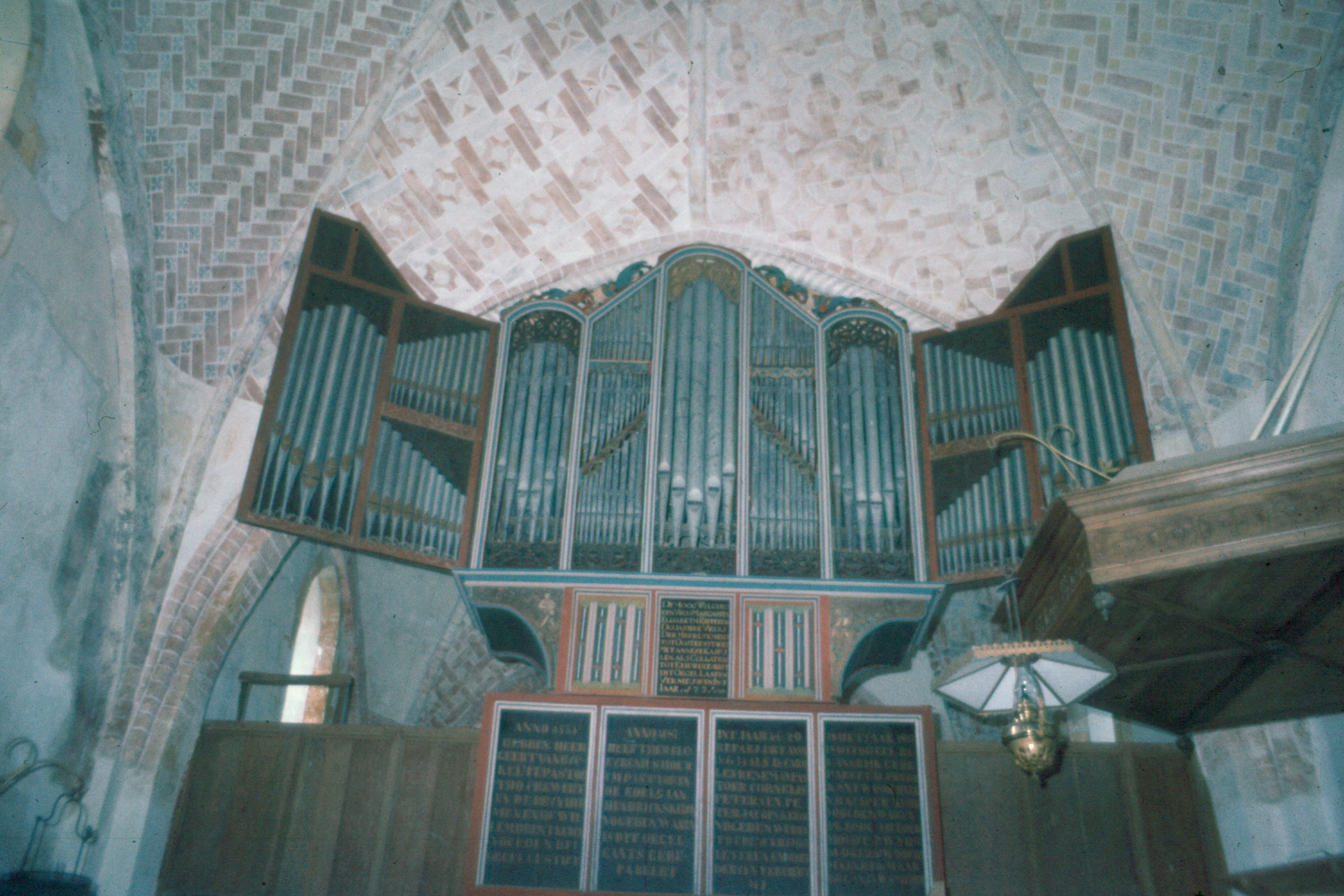
1531 Renaissance Organ, Kreward
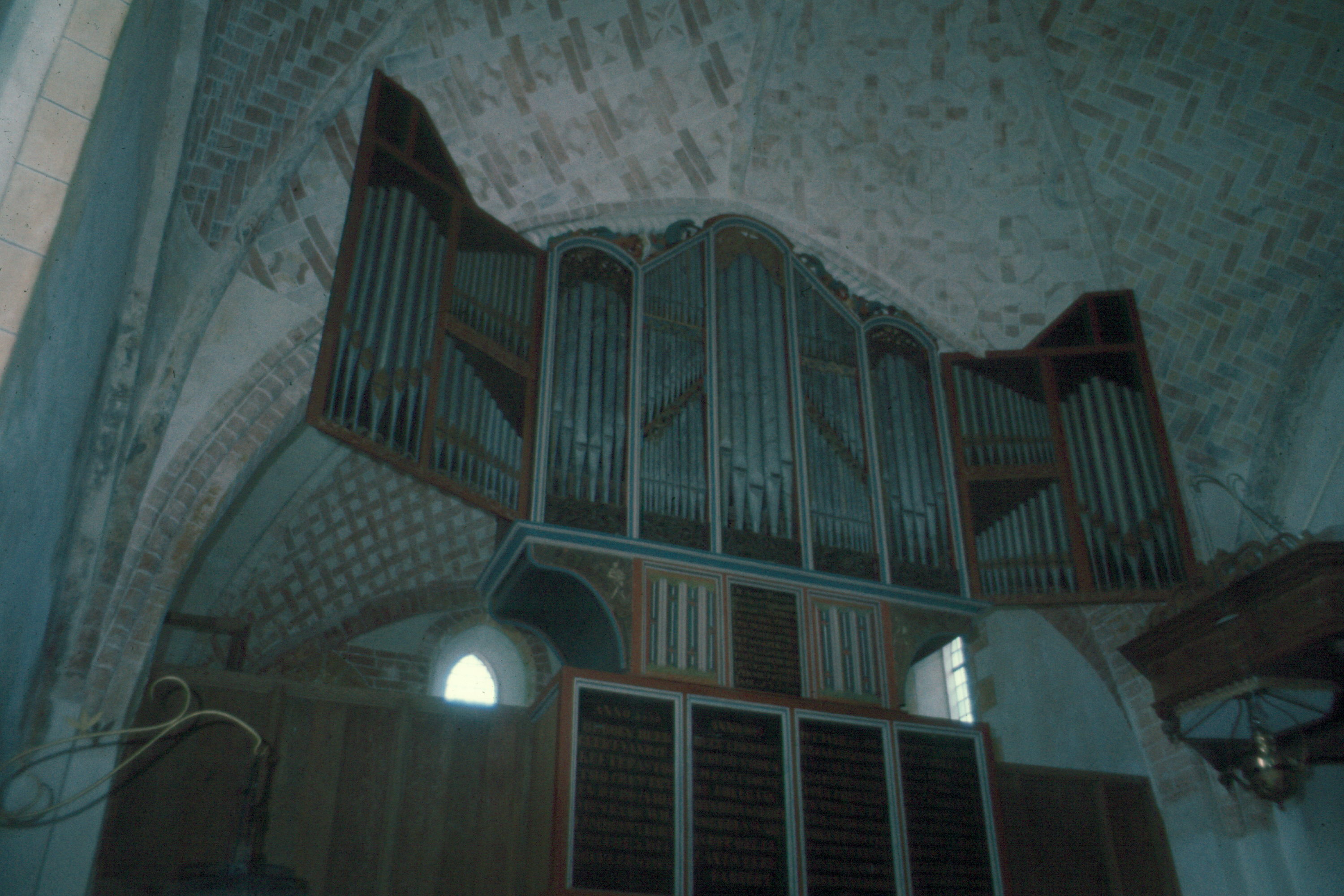
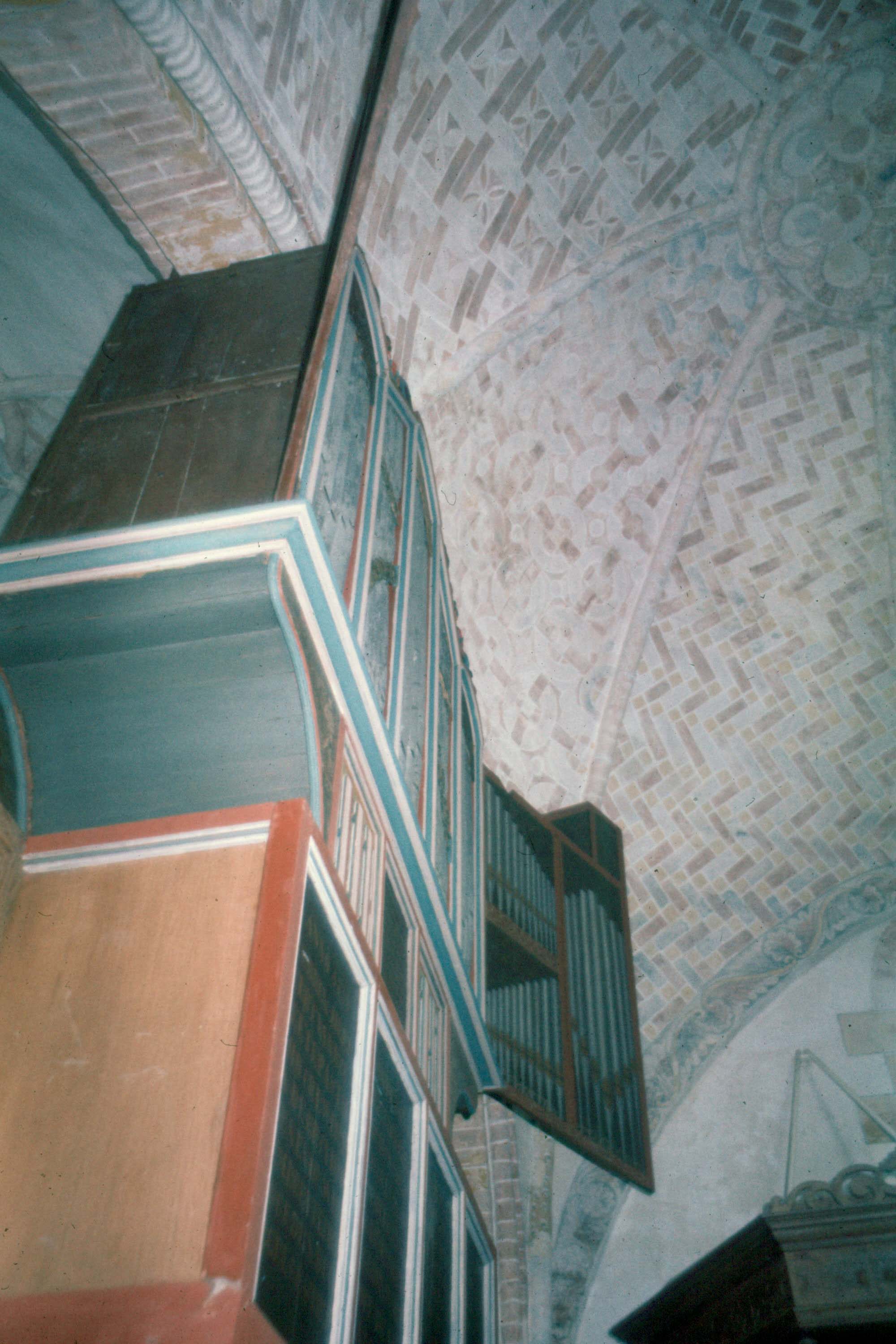
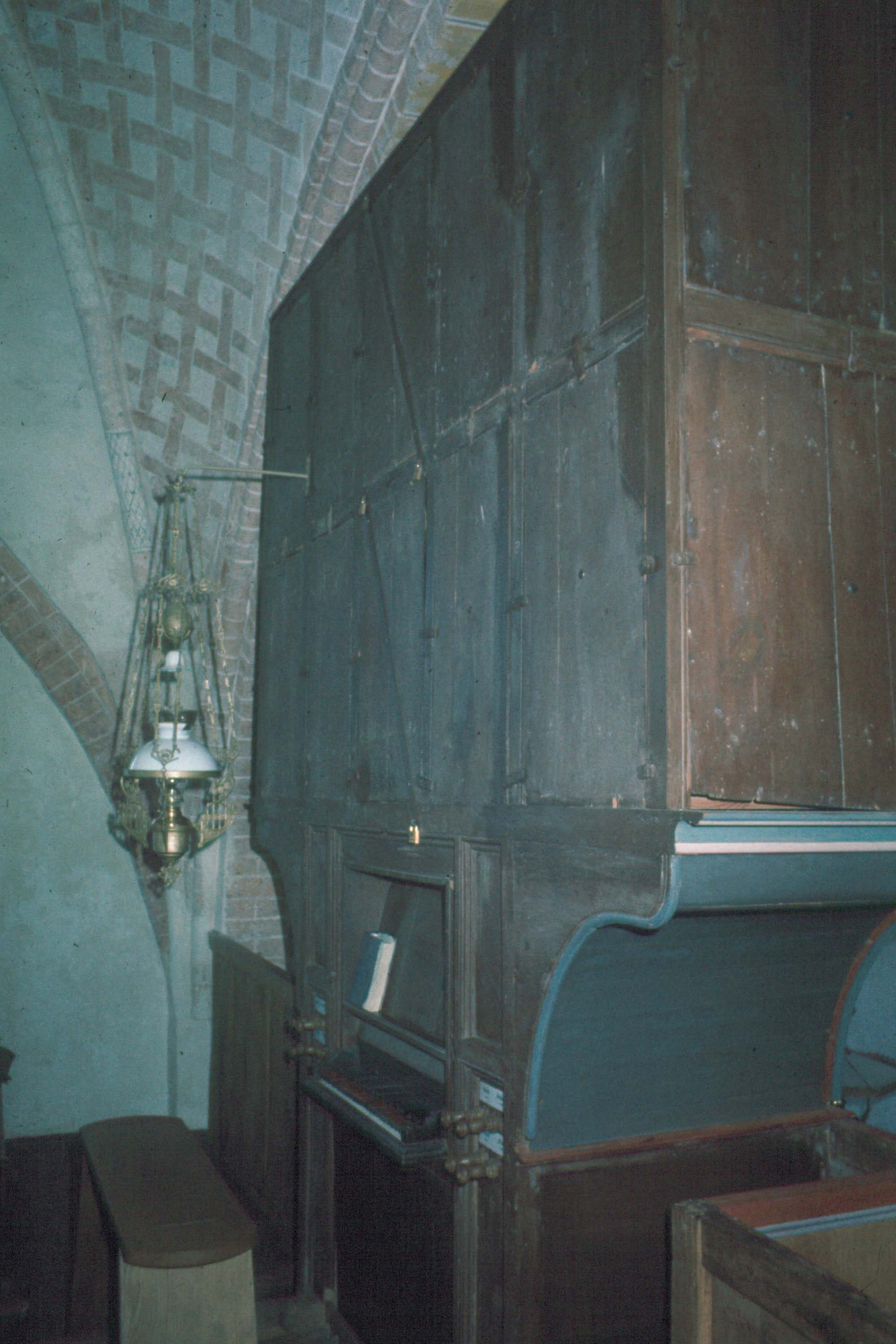
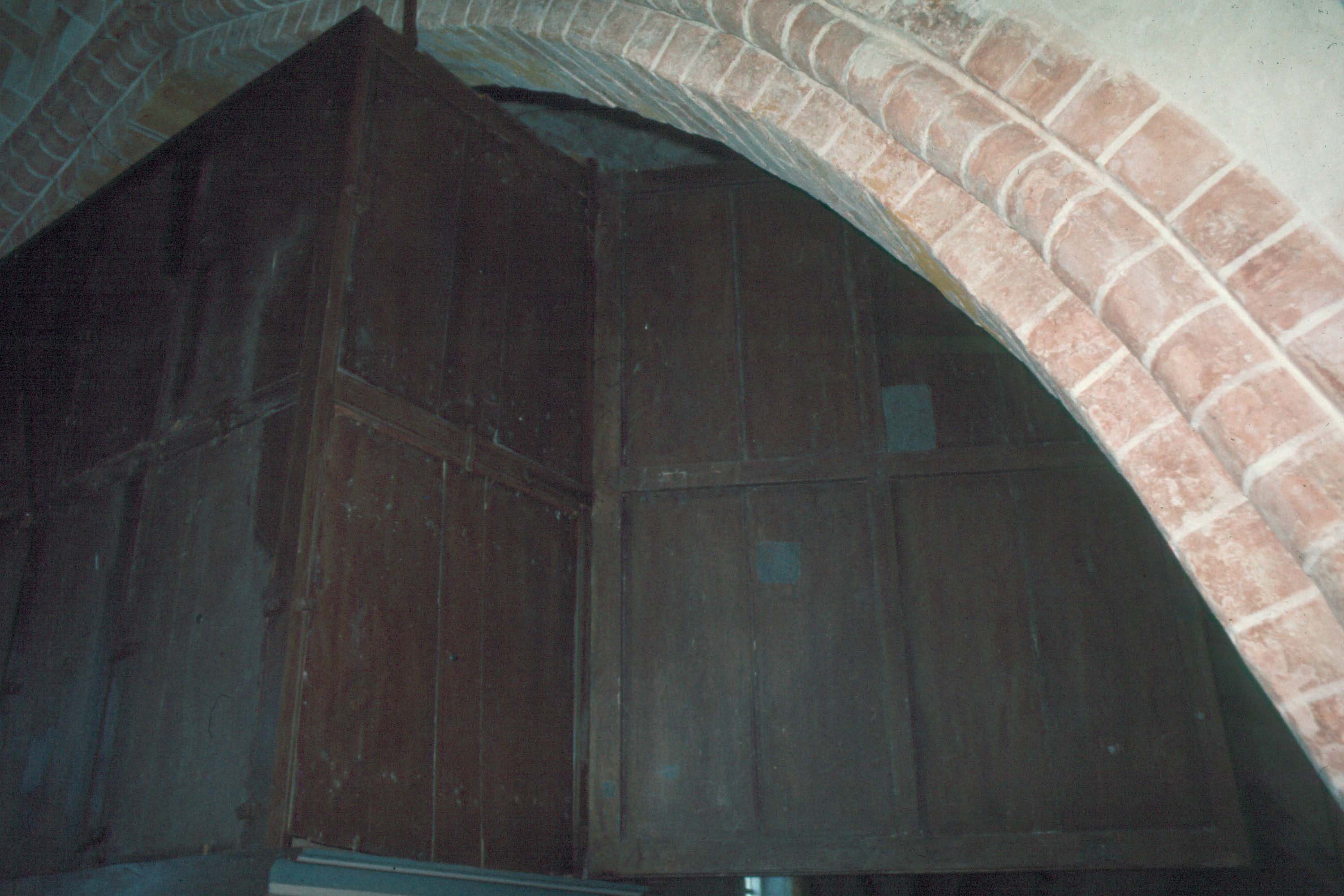
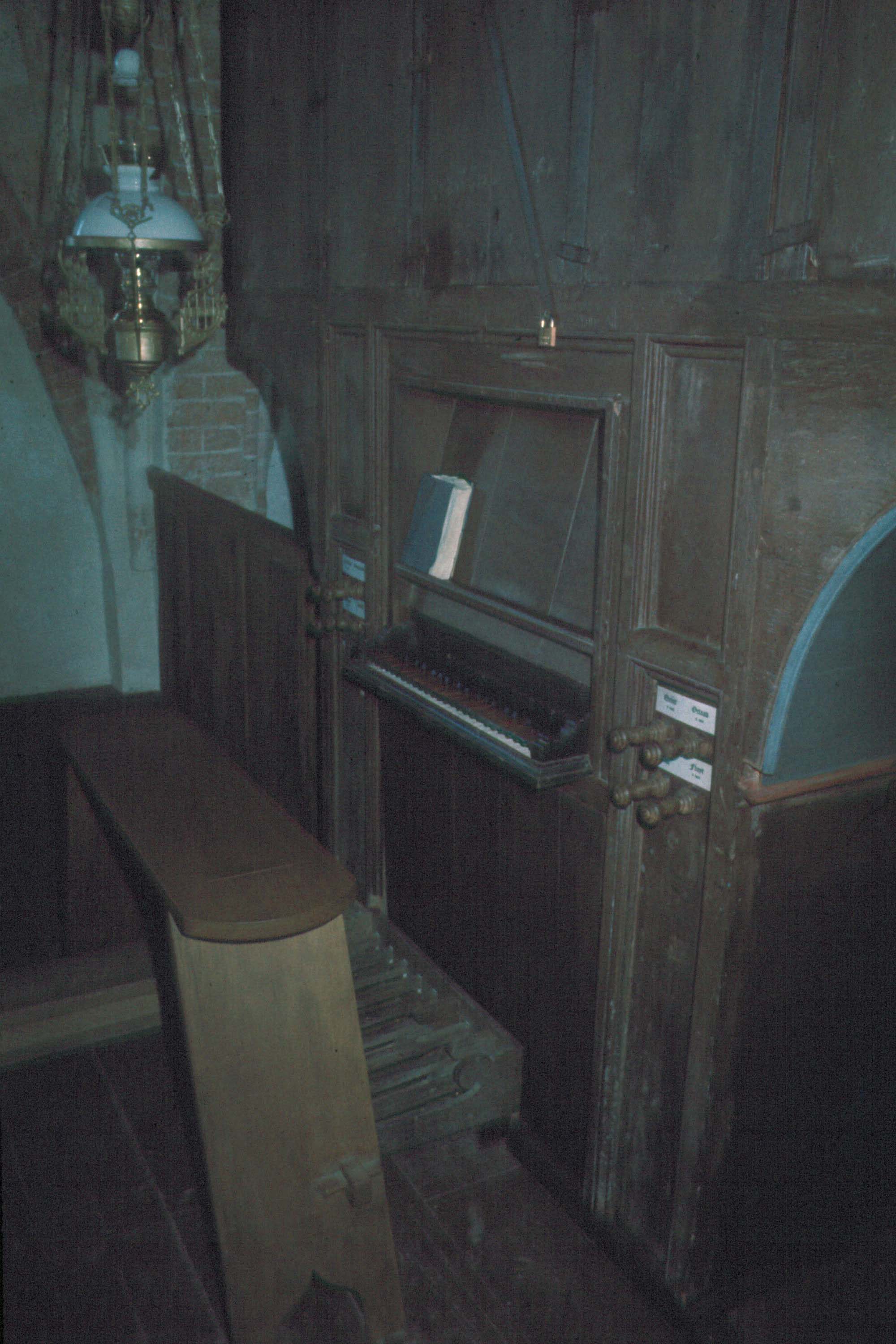
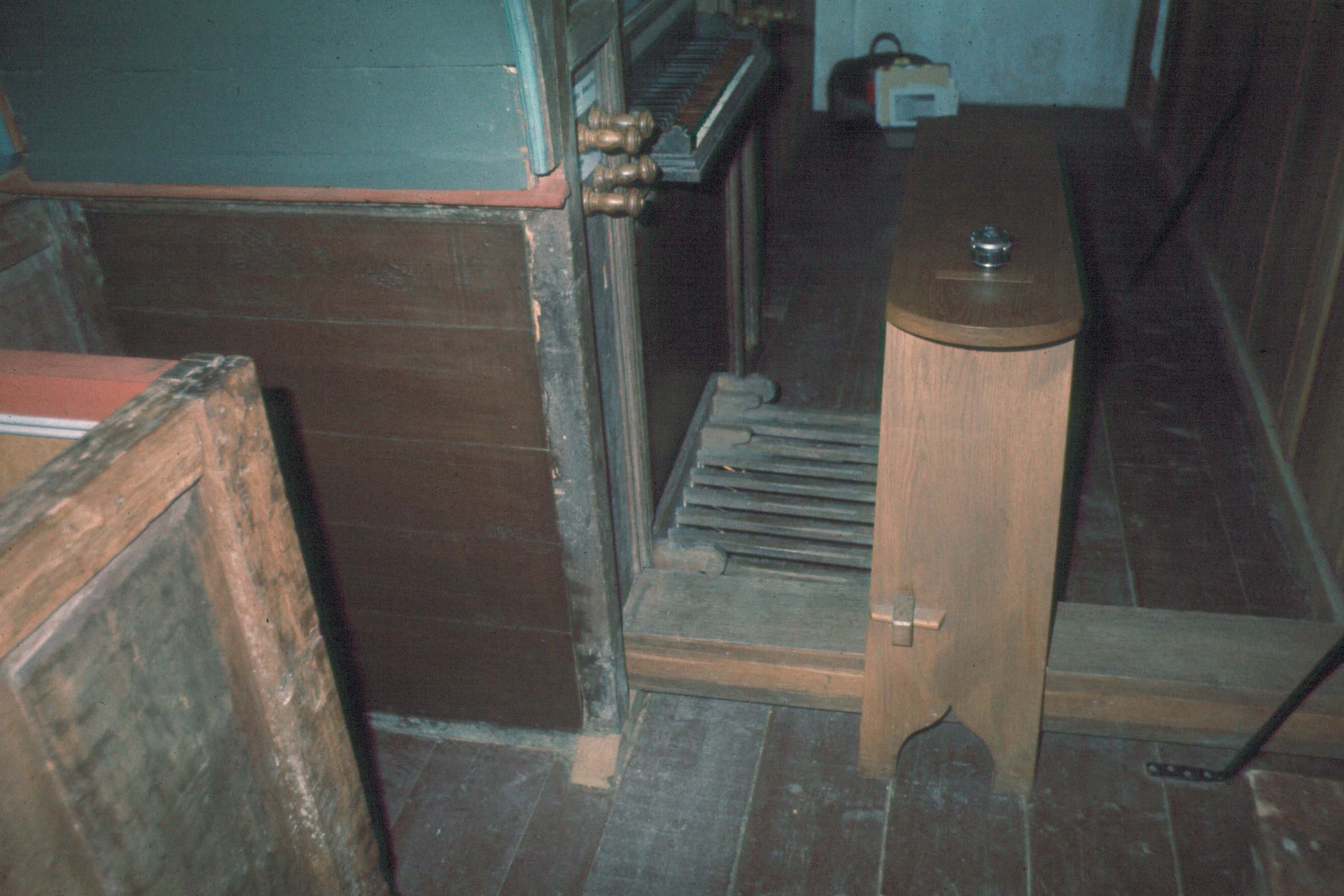
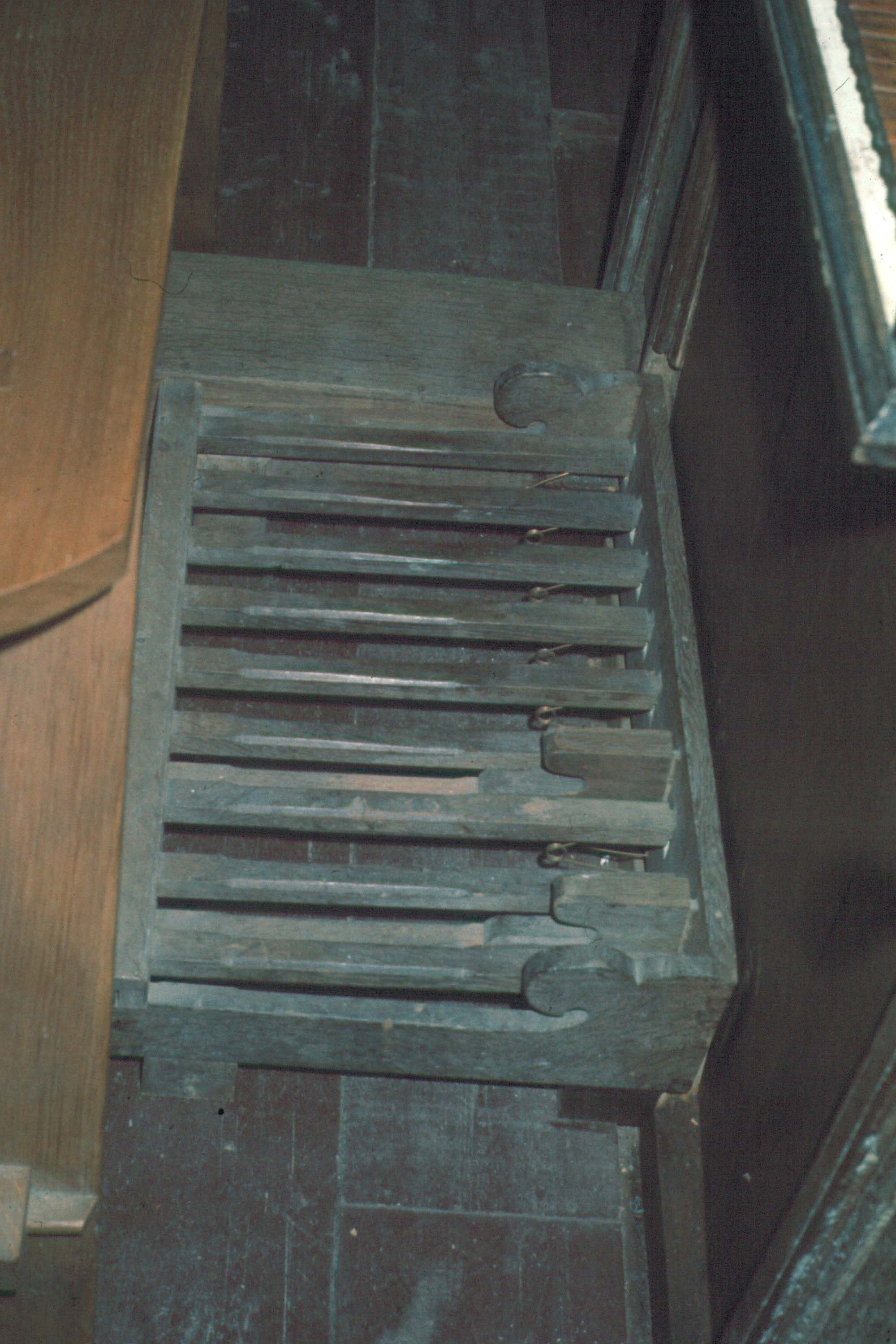
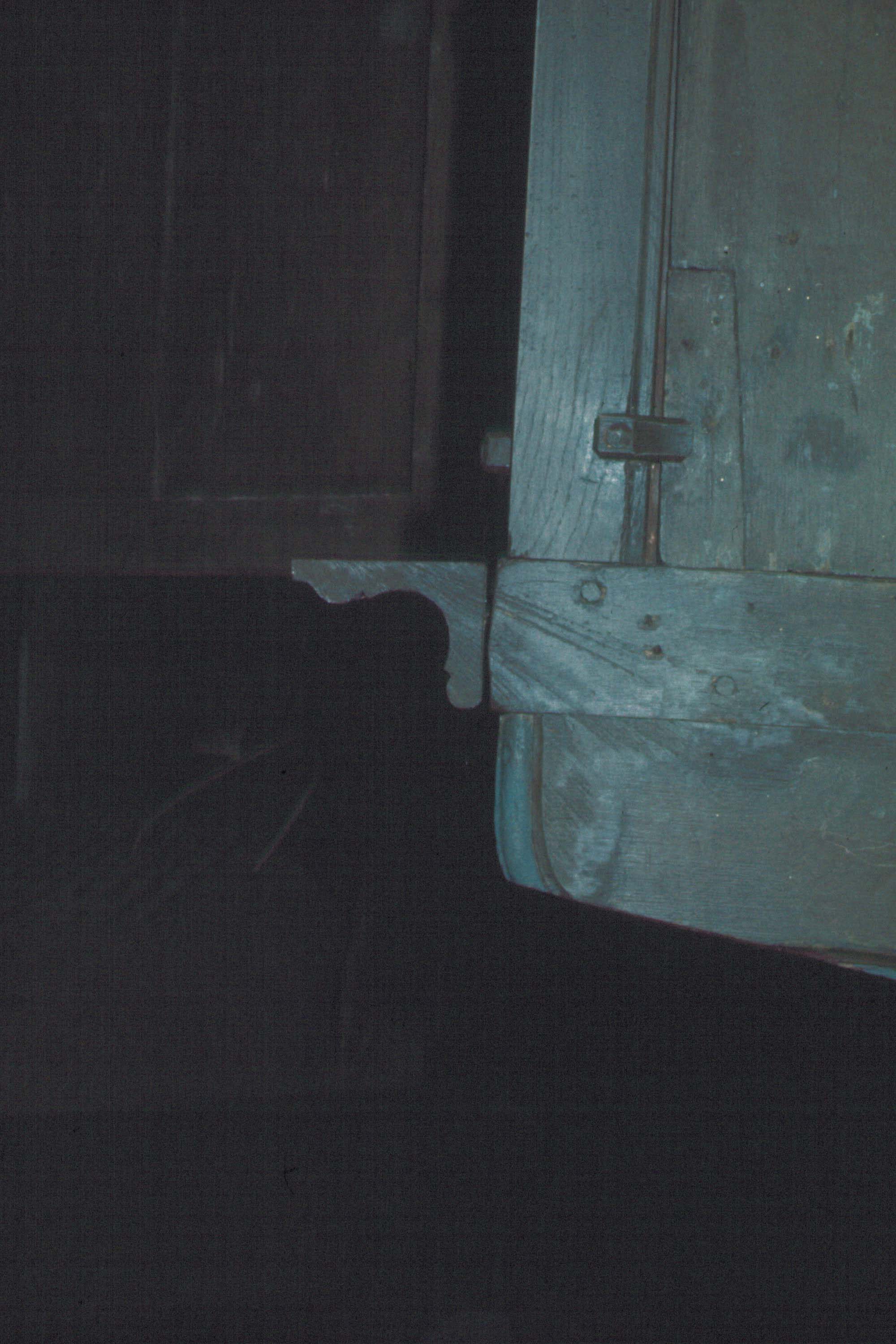
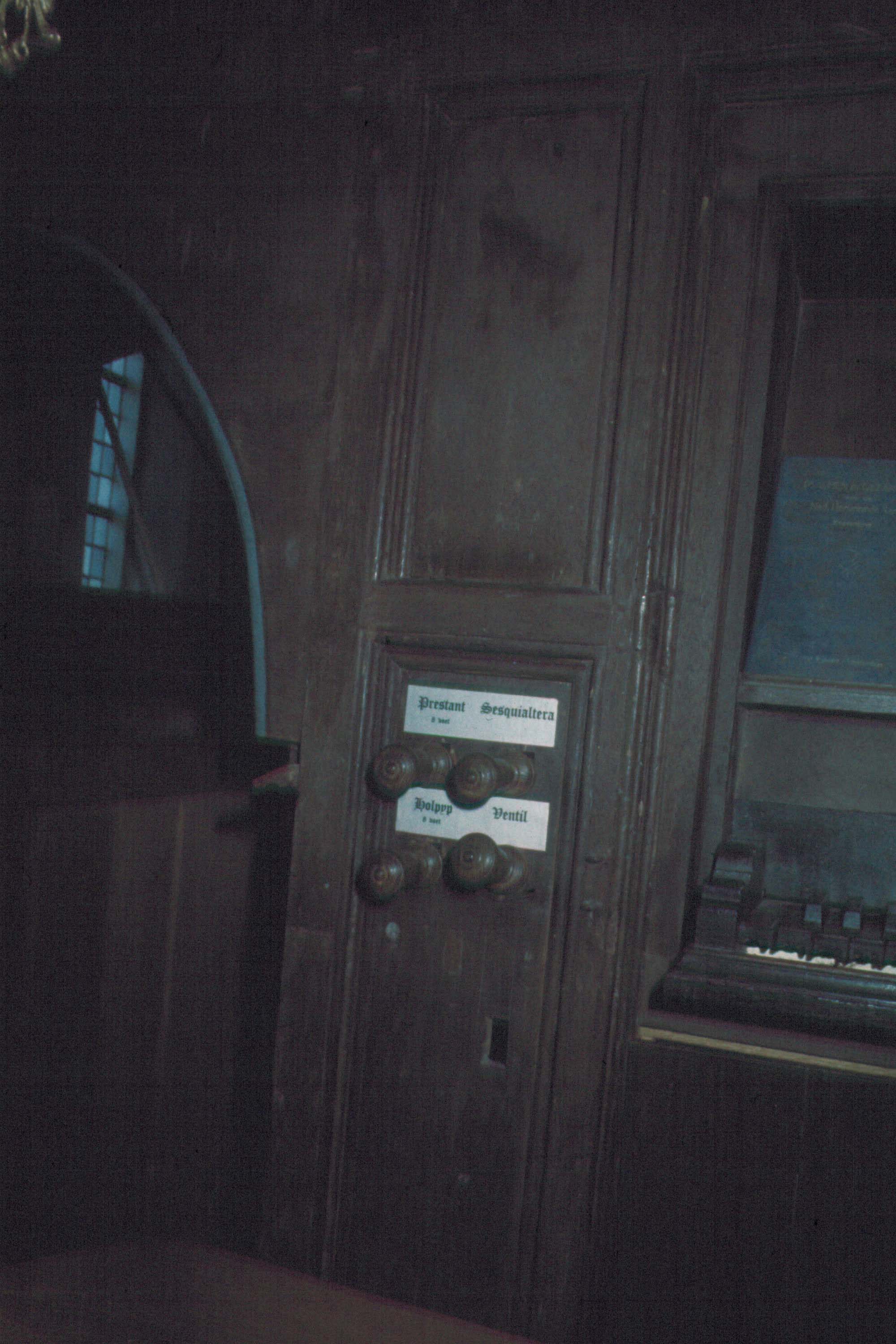
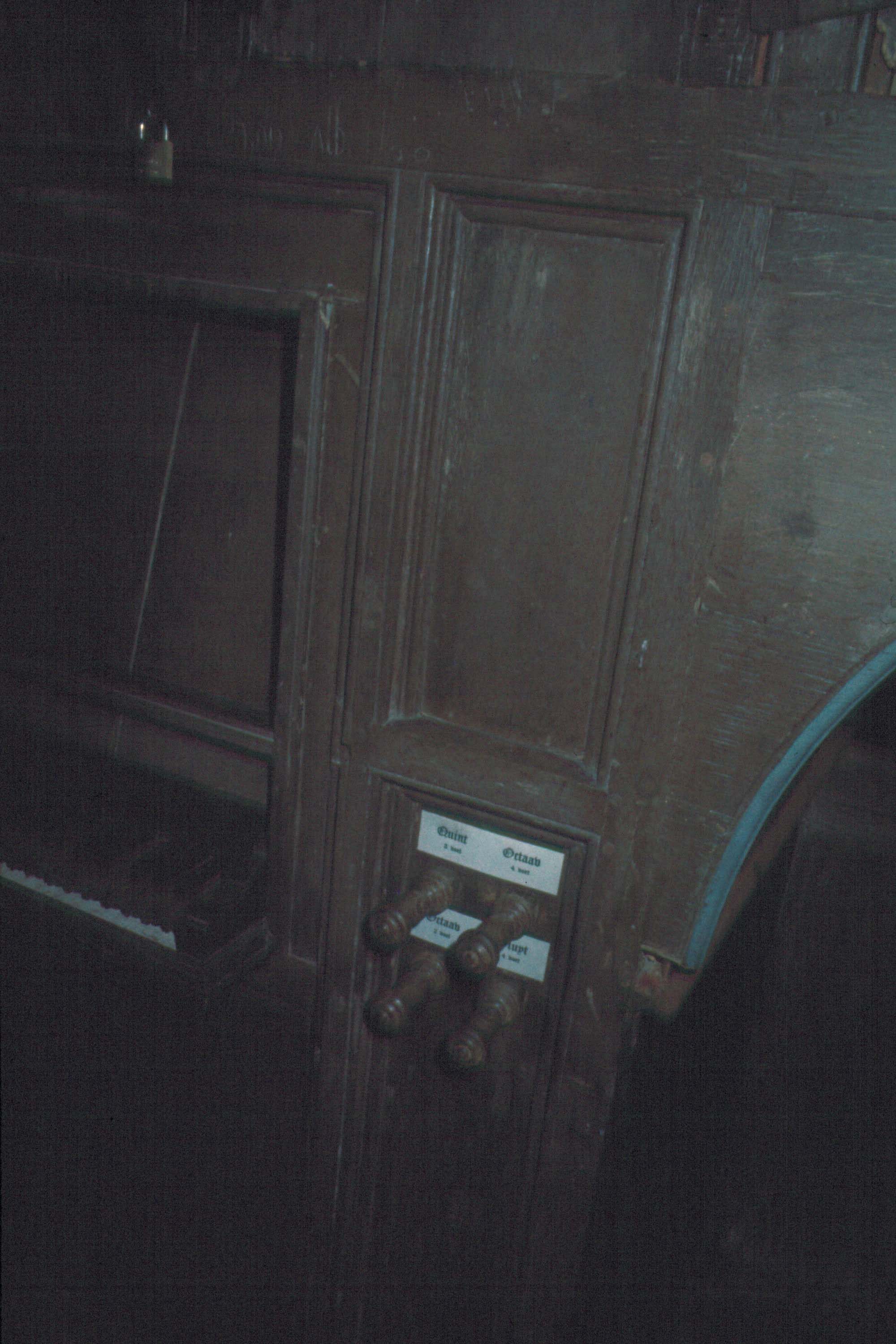
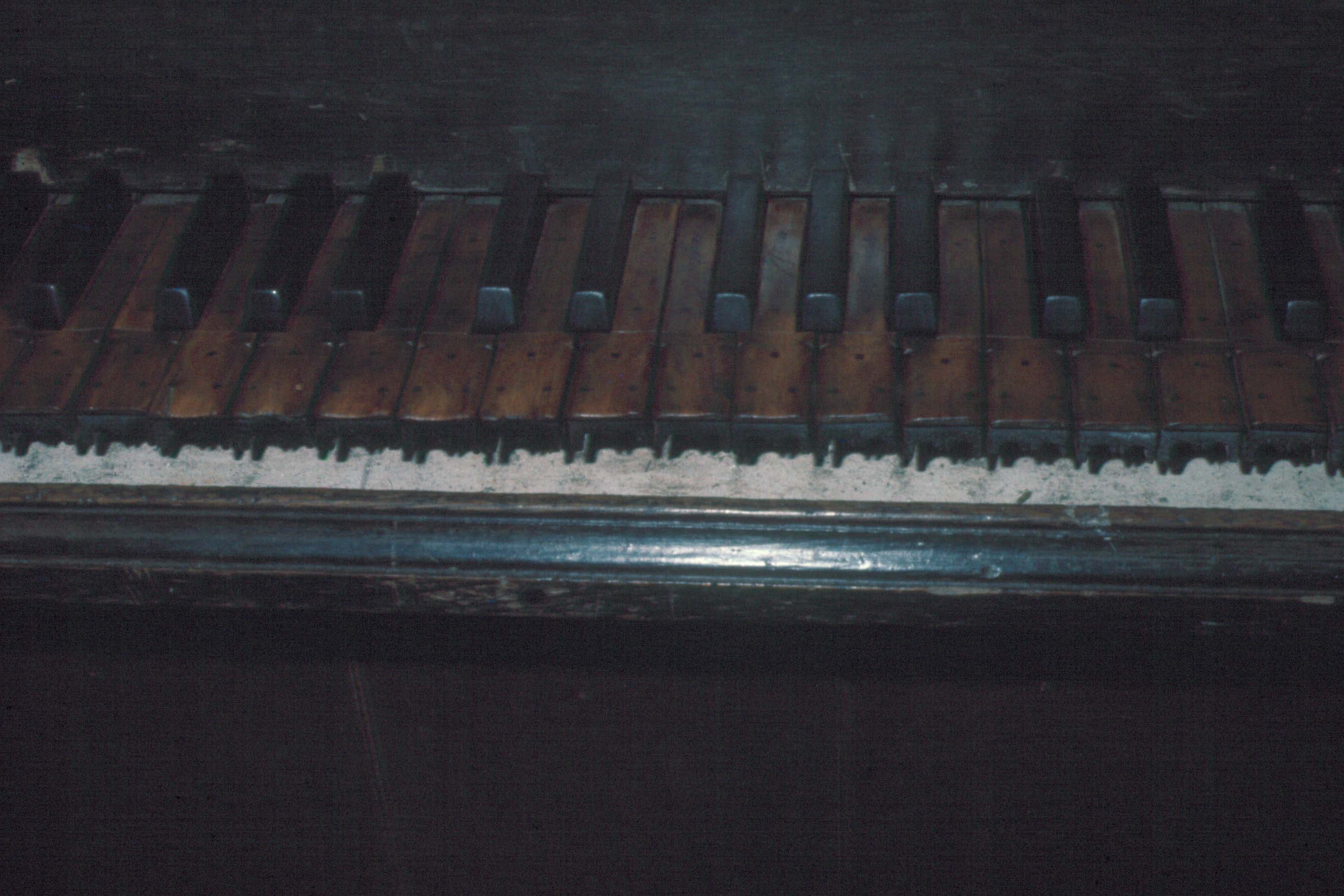
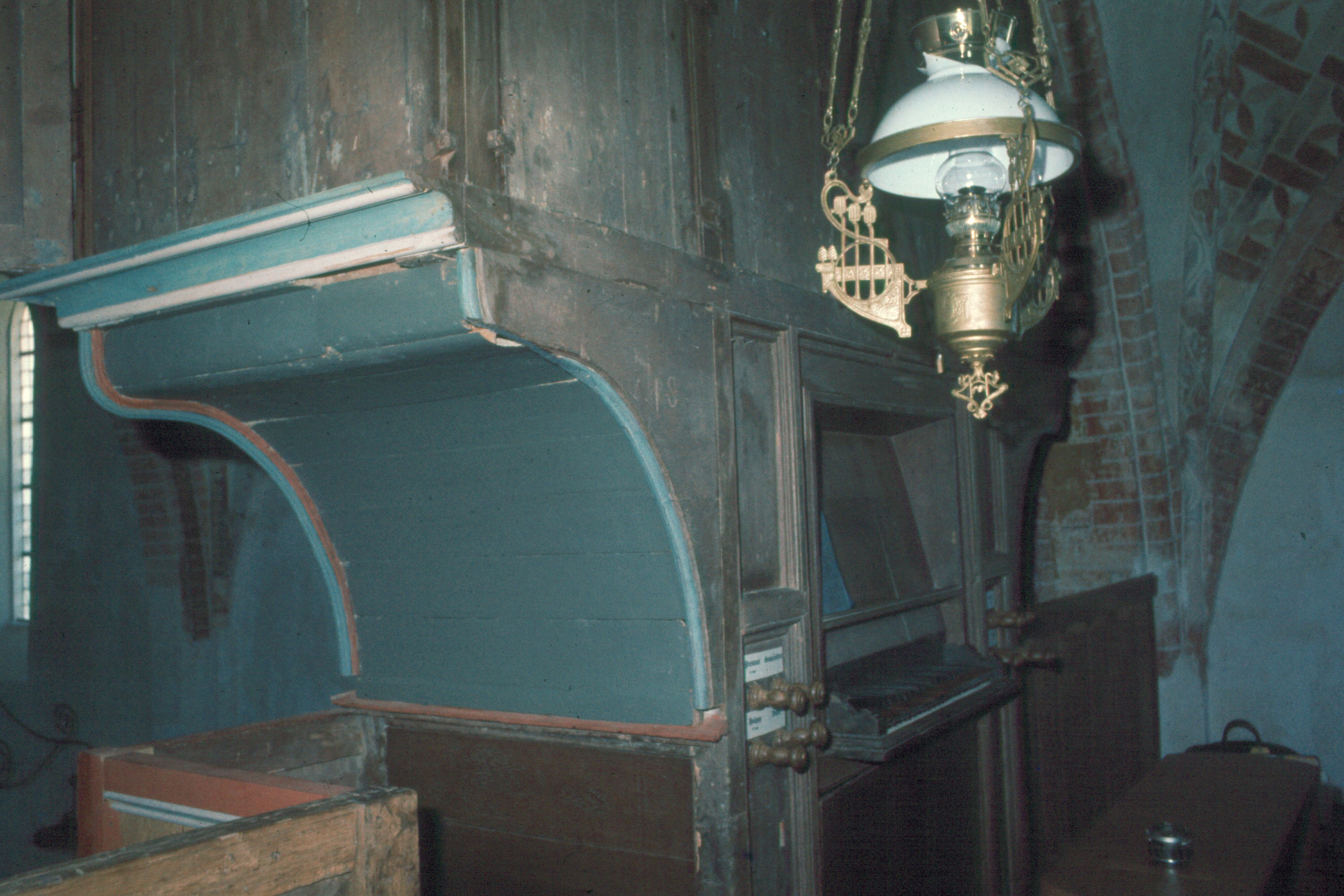
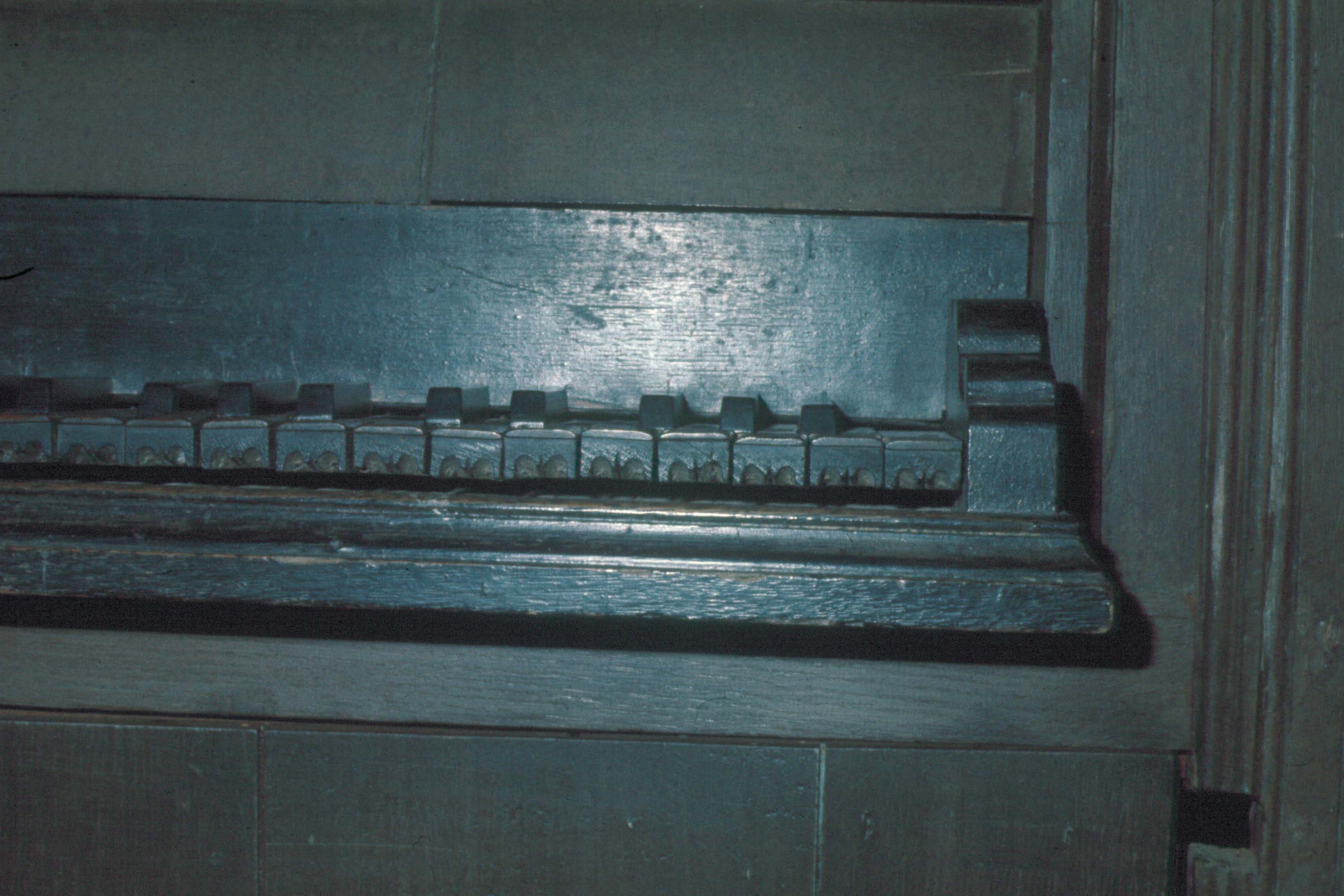
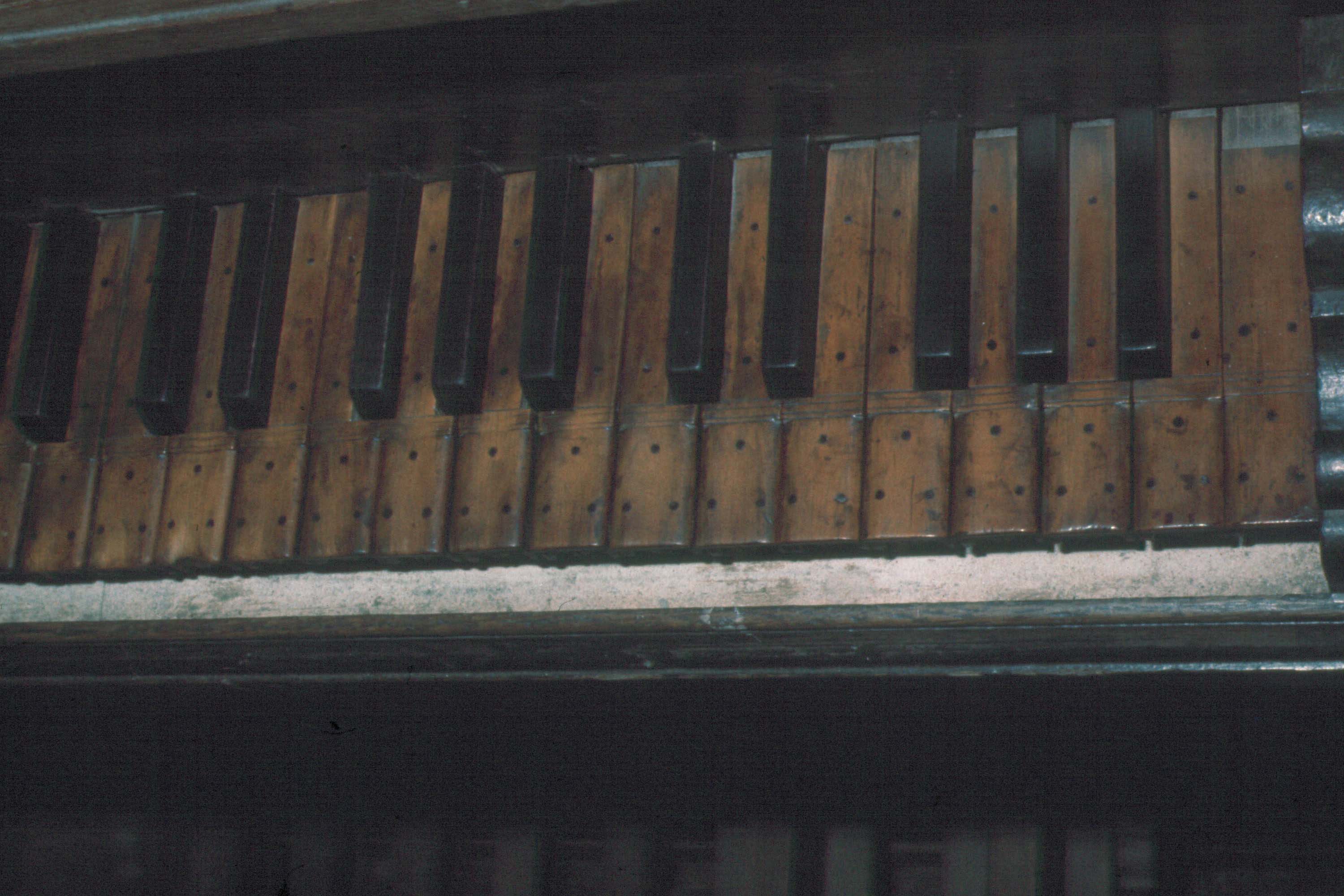
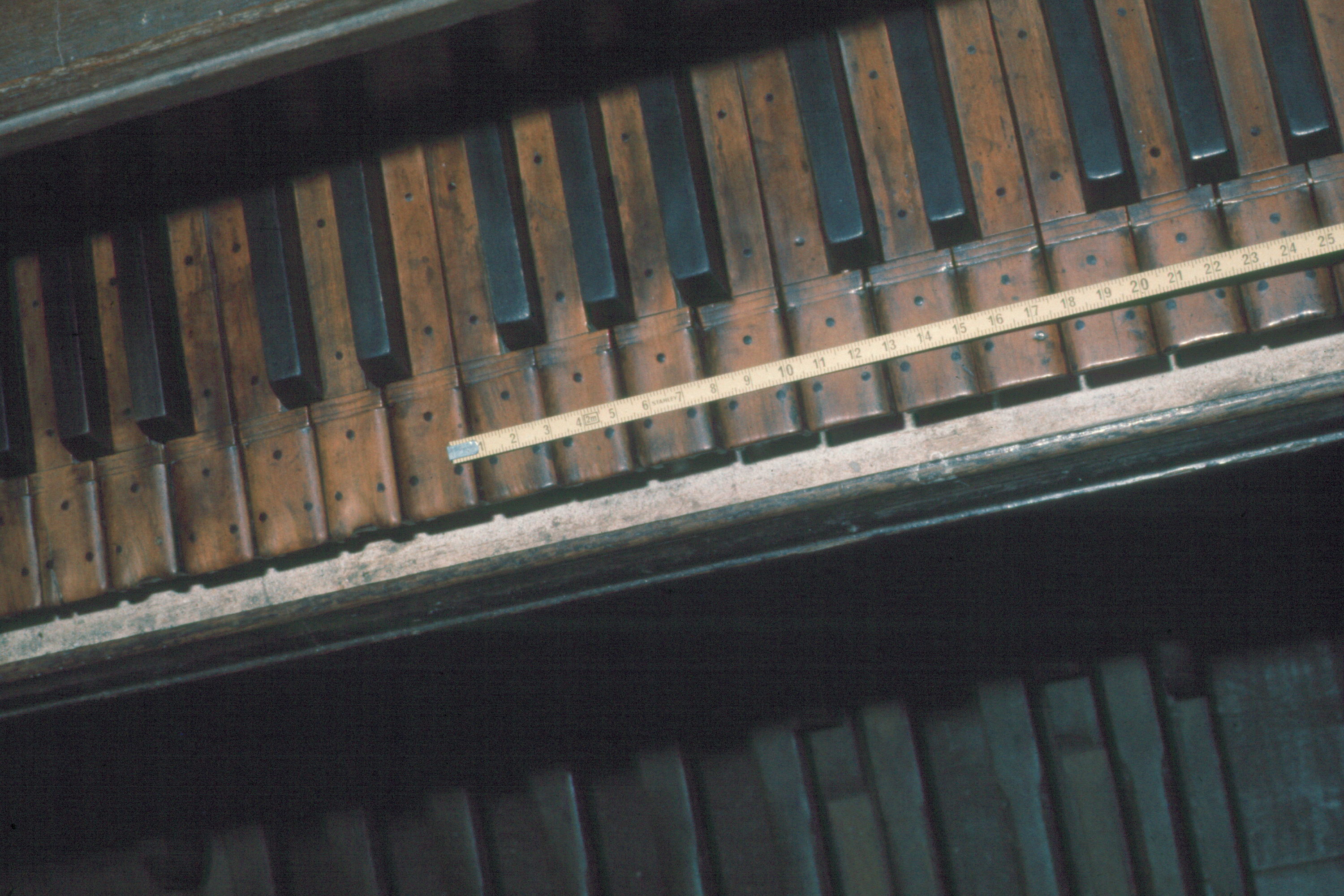
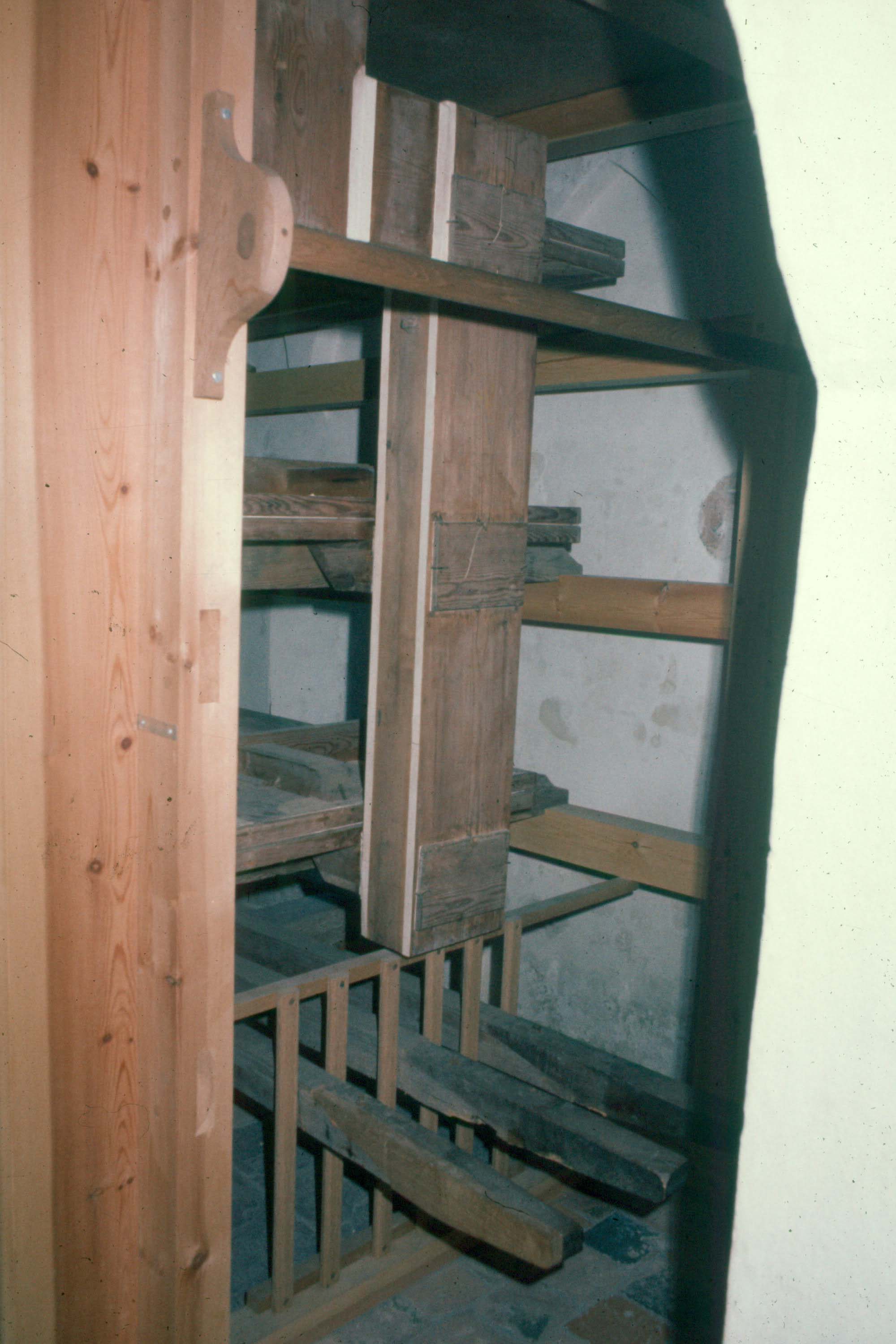
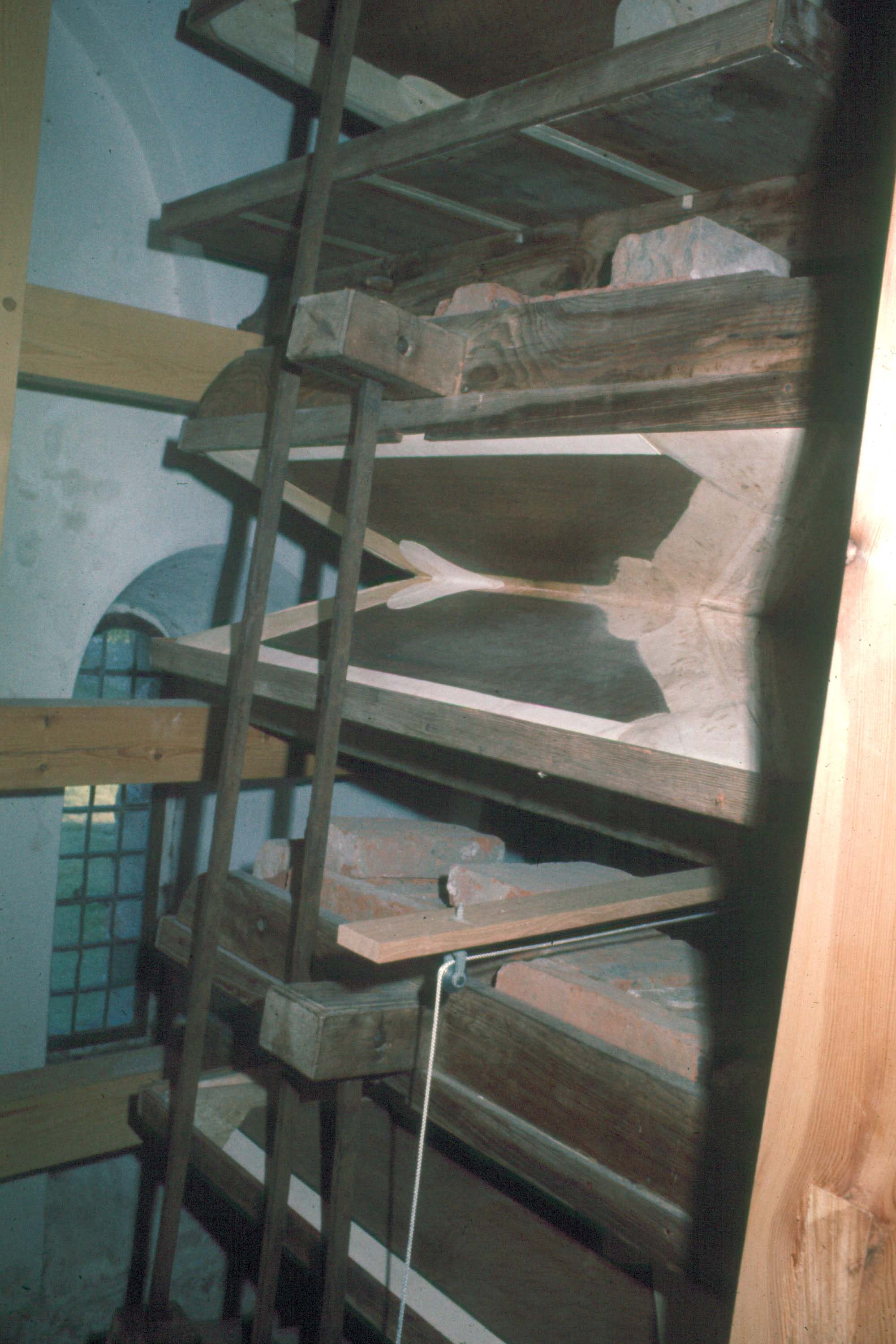
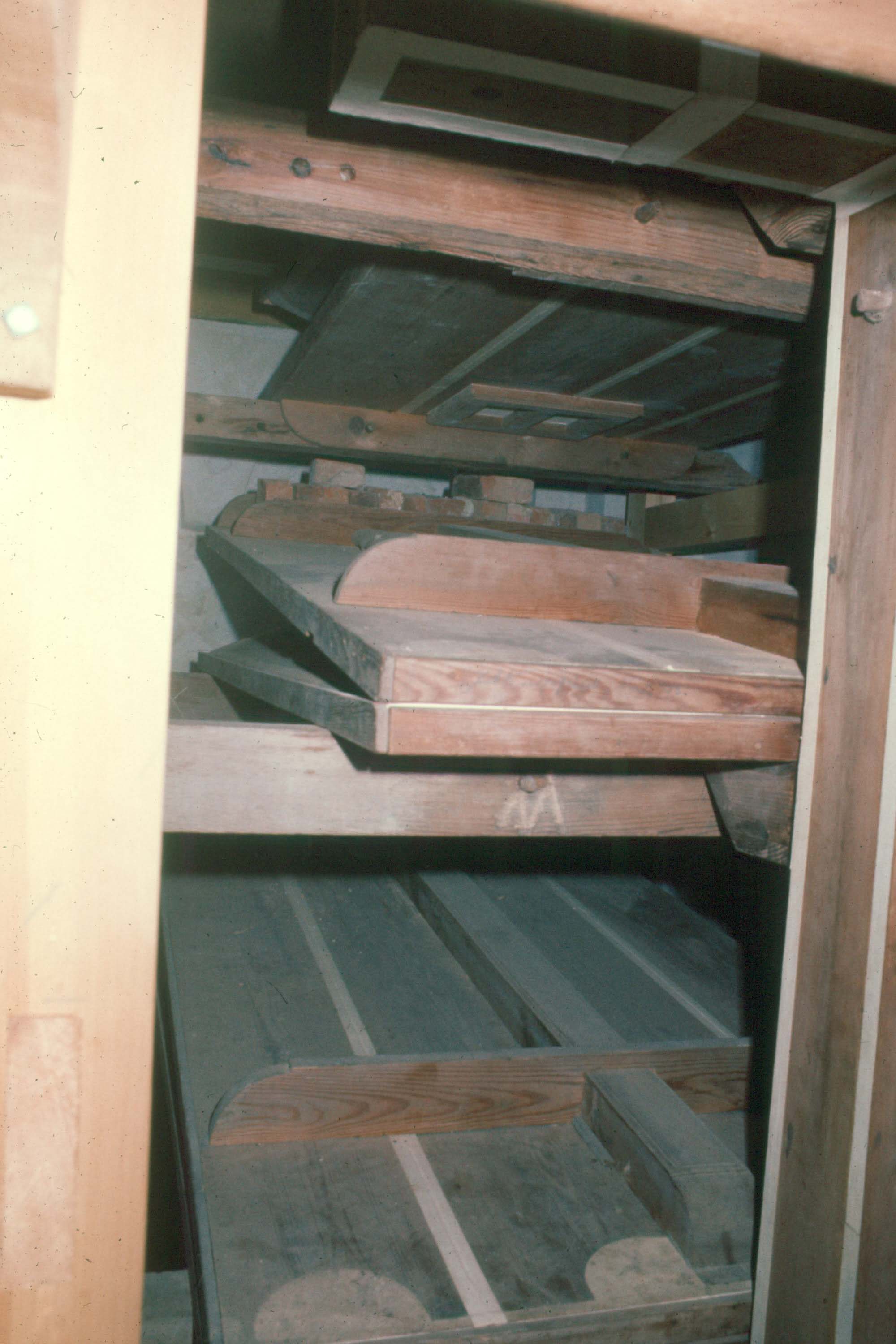
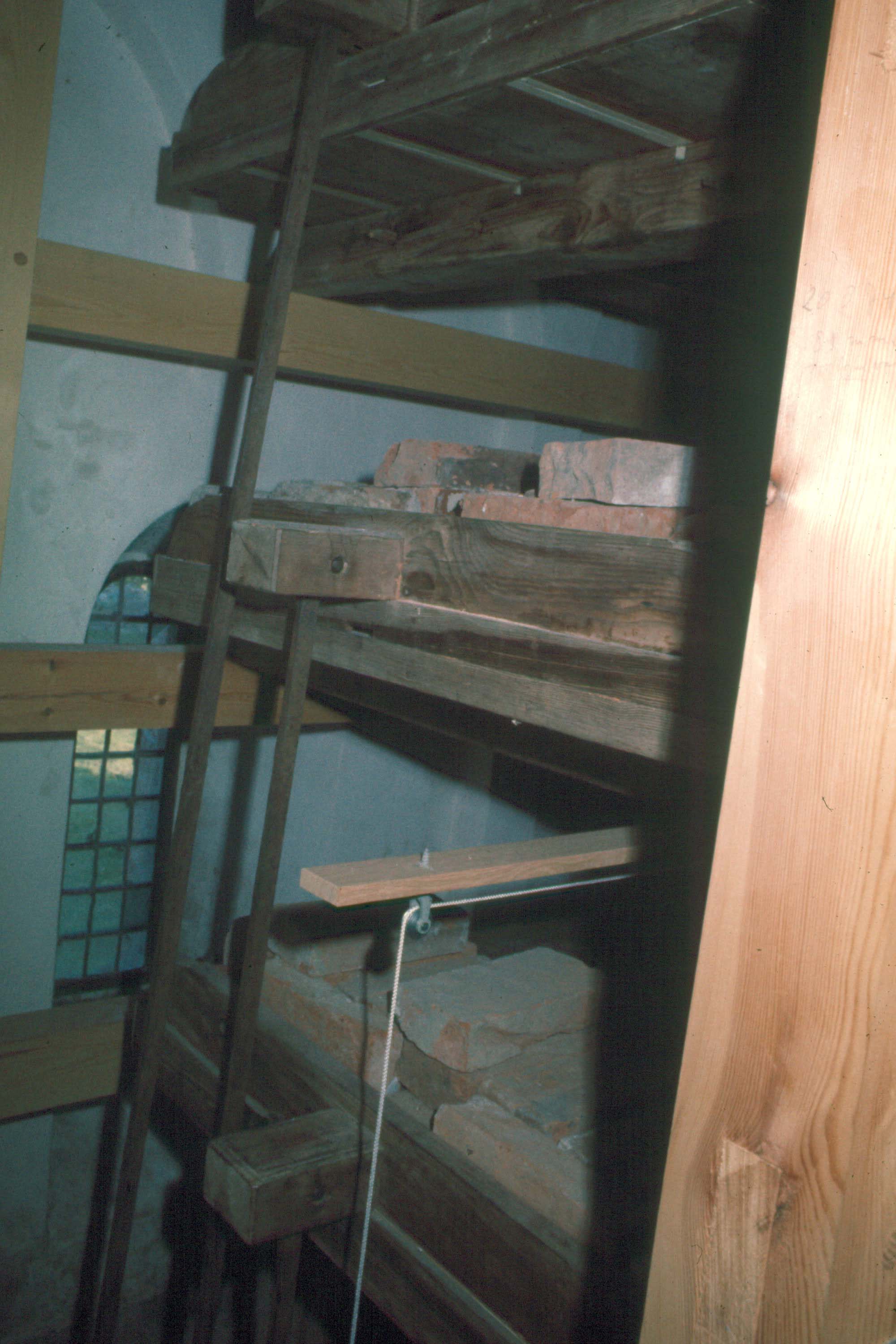
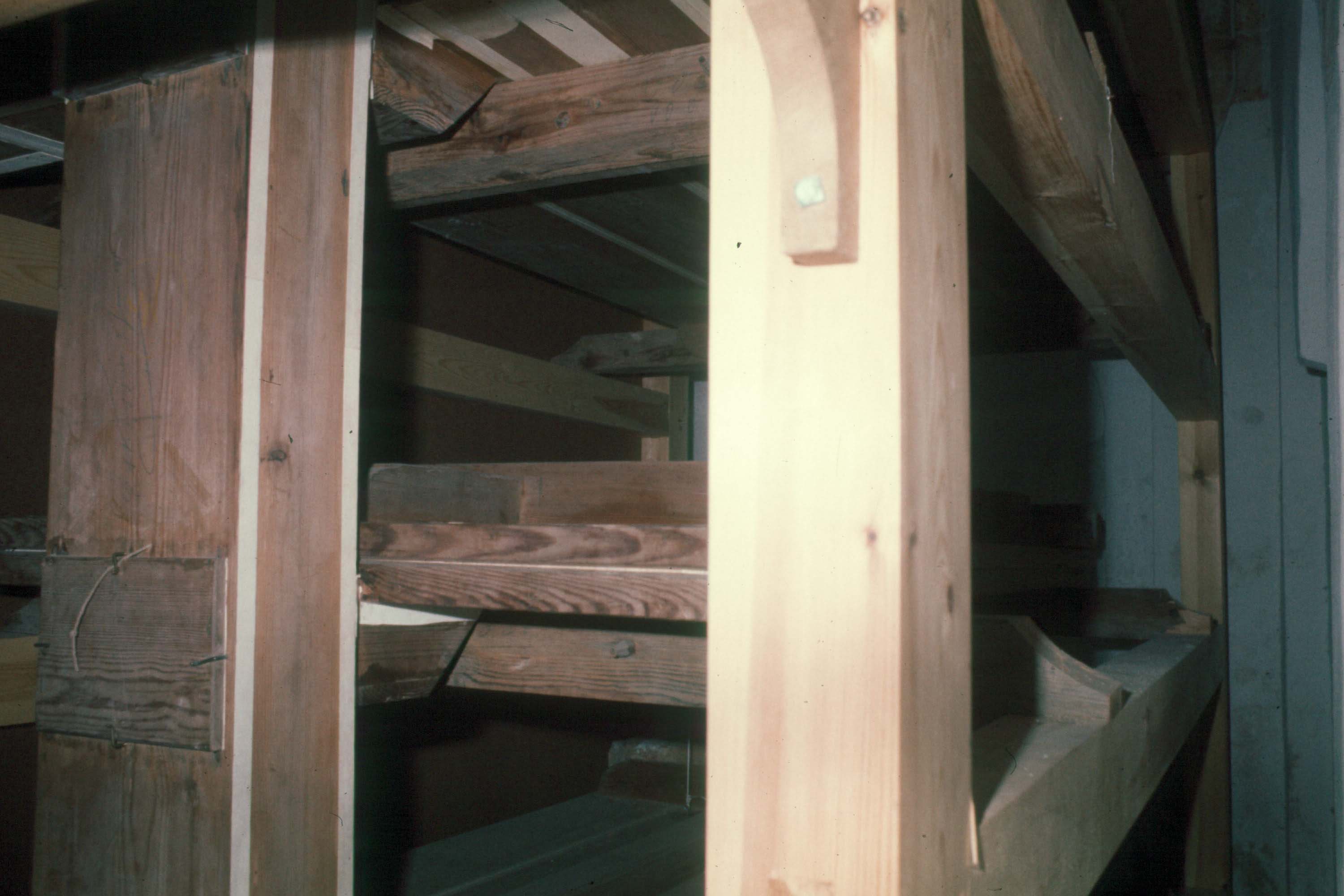
These are my photos of the 1531 Renaissance Organ in Kreward, Groningen, which I took during a visit in 1977. The church was a small building in the countryside. The upper casework with the pipes was padlocked. Click on a photo for full size view.
Built in 1531 by an unknown builder. It is the second-oldest playable pipe organ in the entire Netherlands (the oldest is from 1511 in Alkmaar). It is housed in the Mariakerk (Mary's Church), a medieval village church in Krewerd, a small village in the municipality of Eemsdelta with a population of around 75.

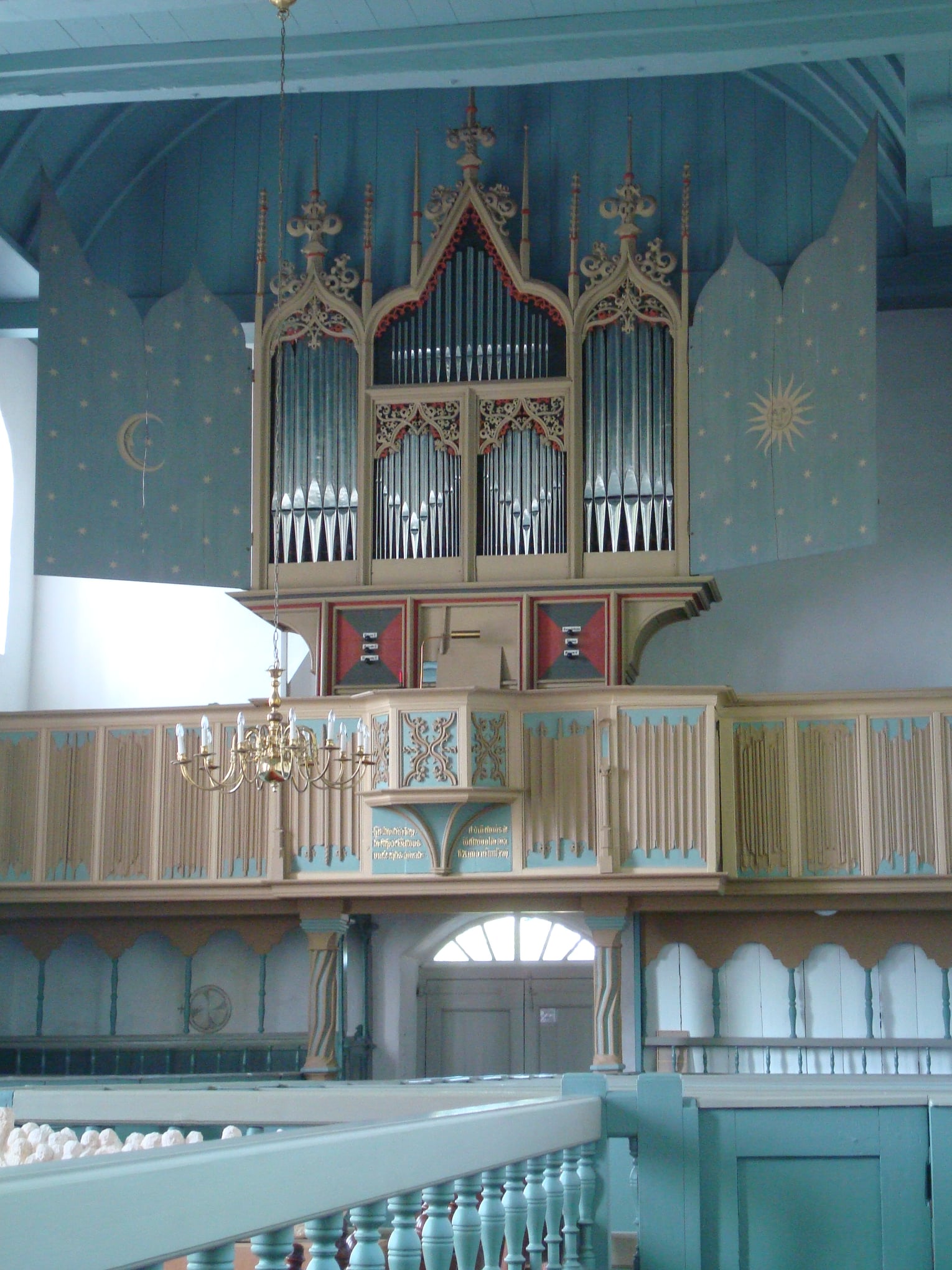
1457 Renaissance Organ, Rysum
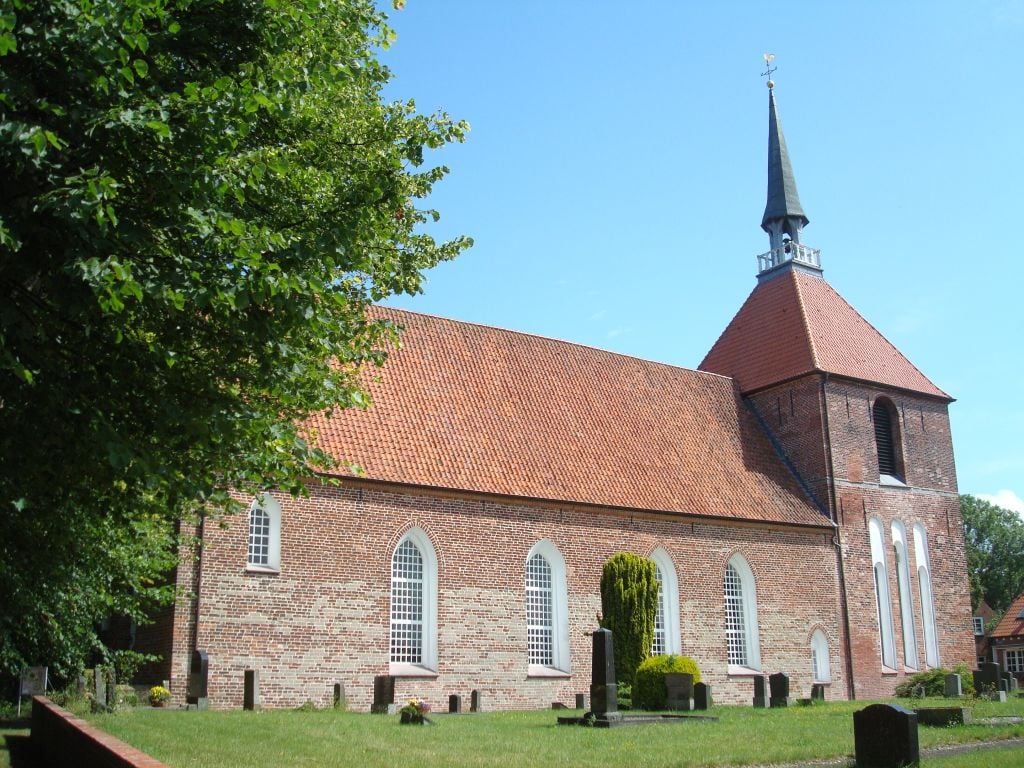
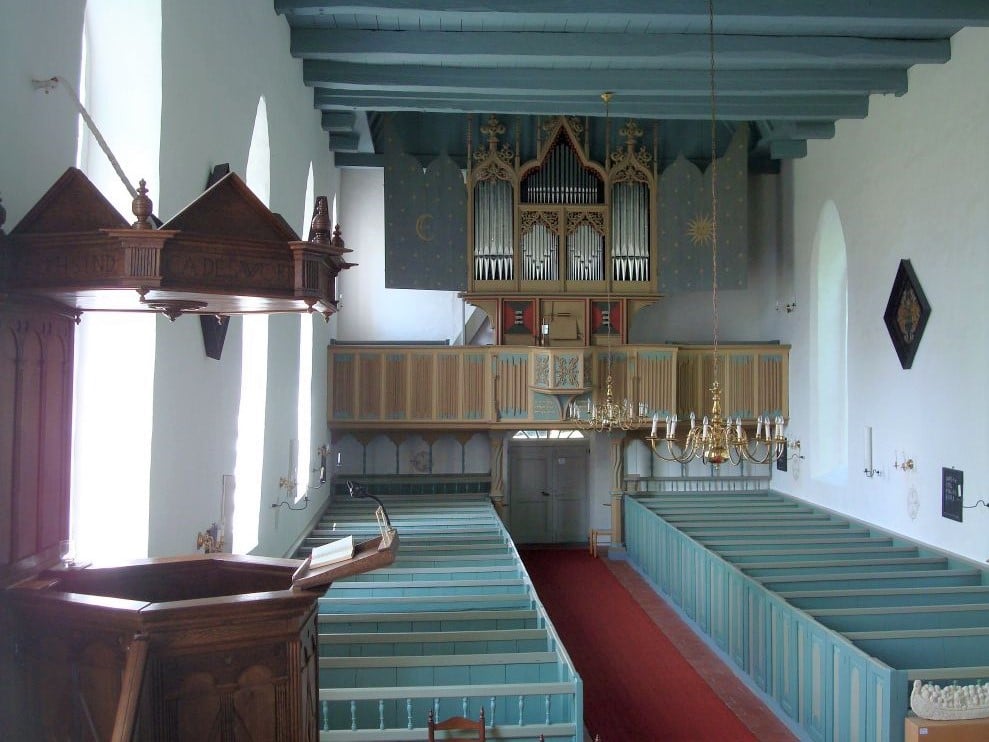
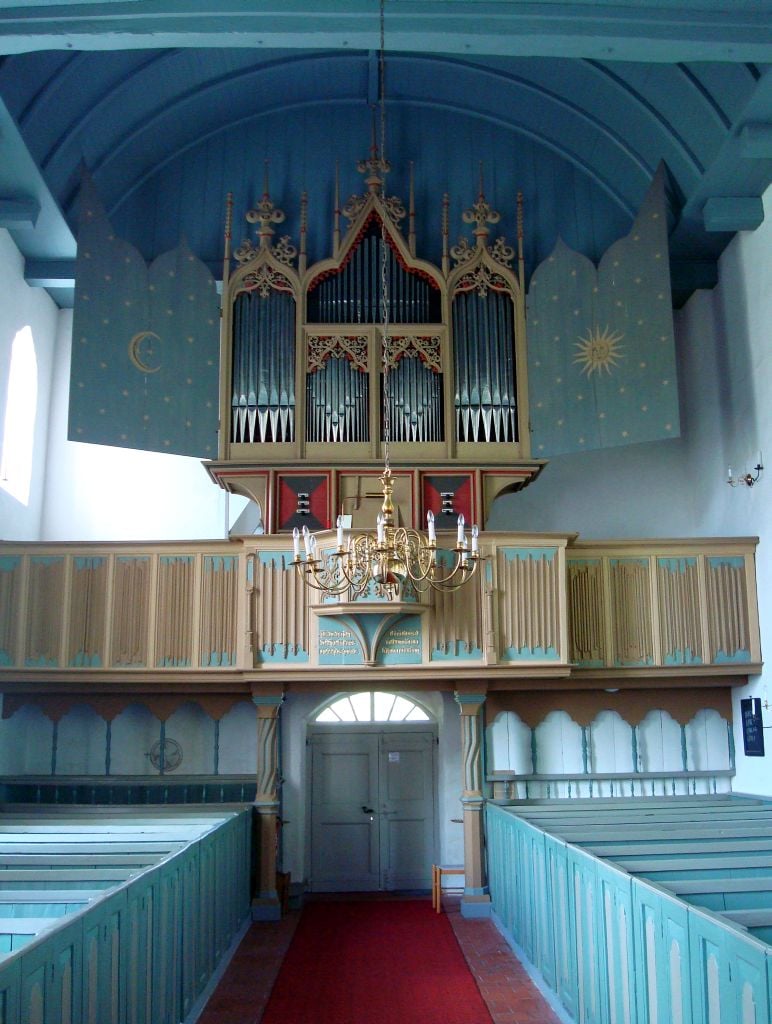
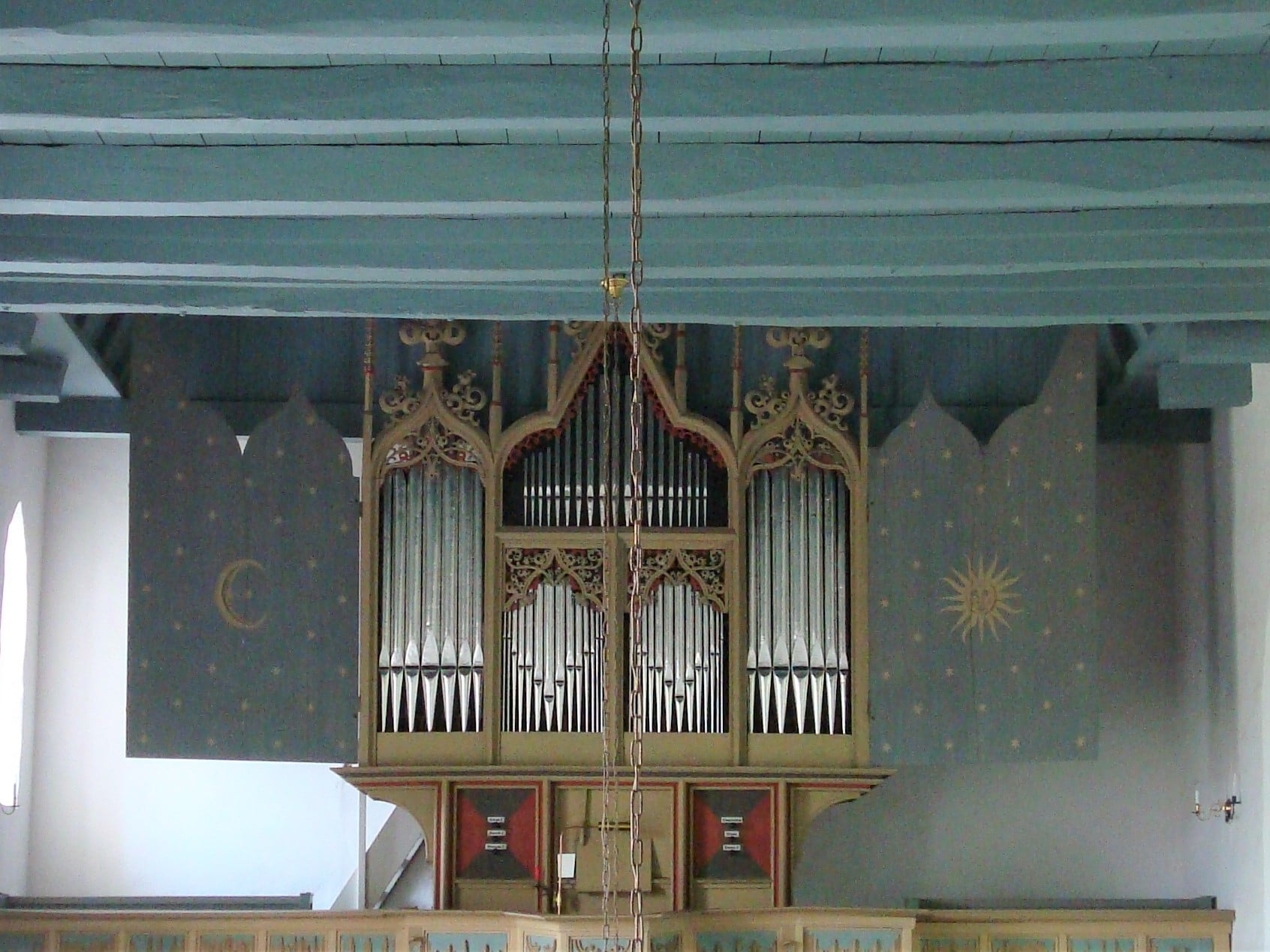
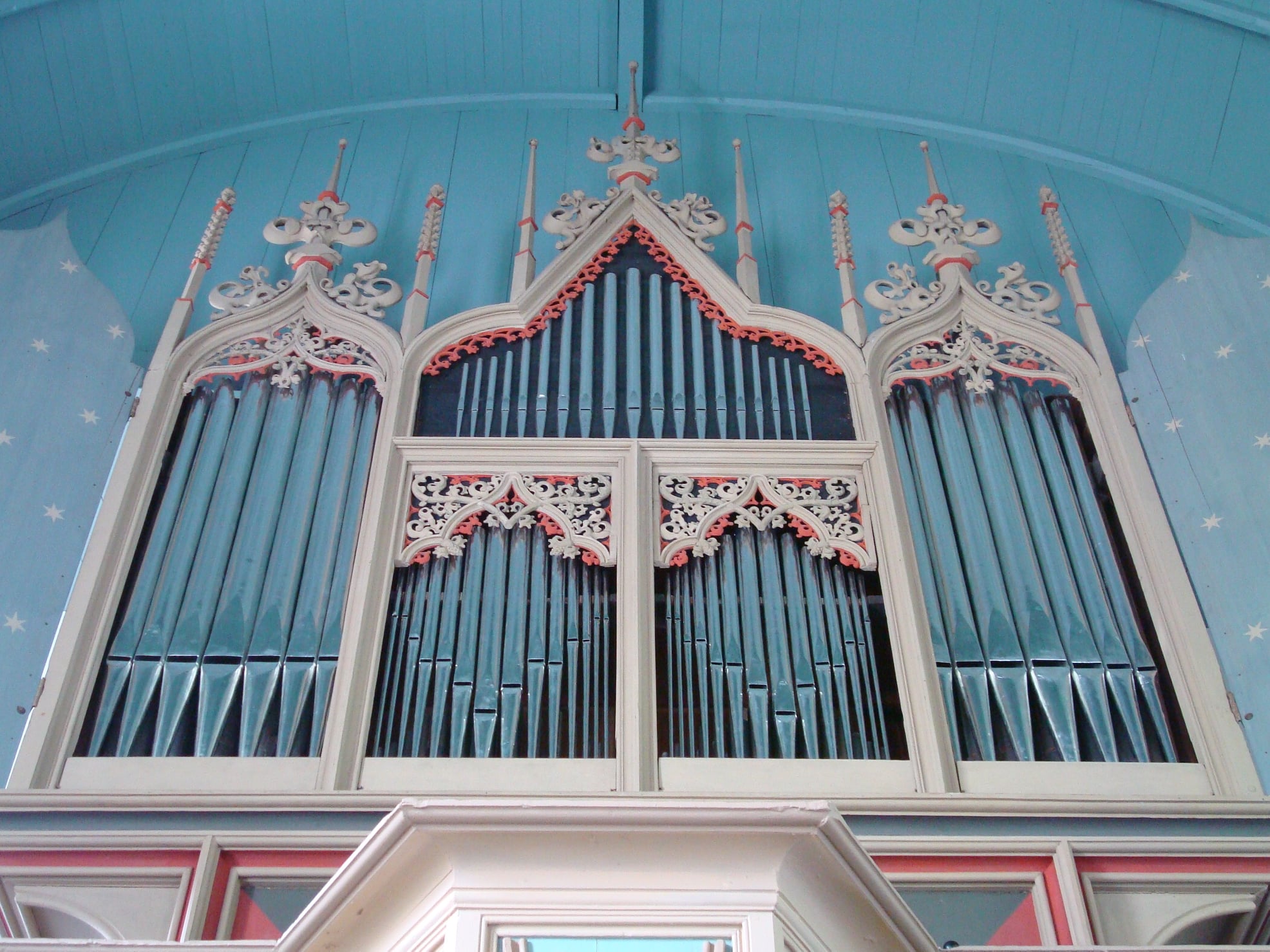
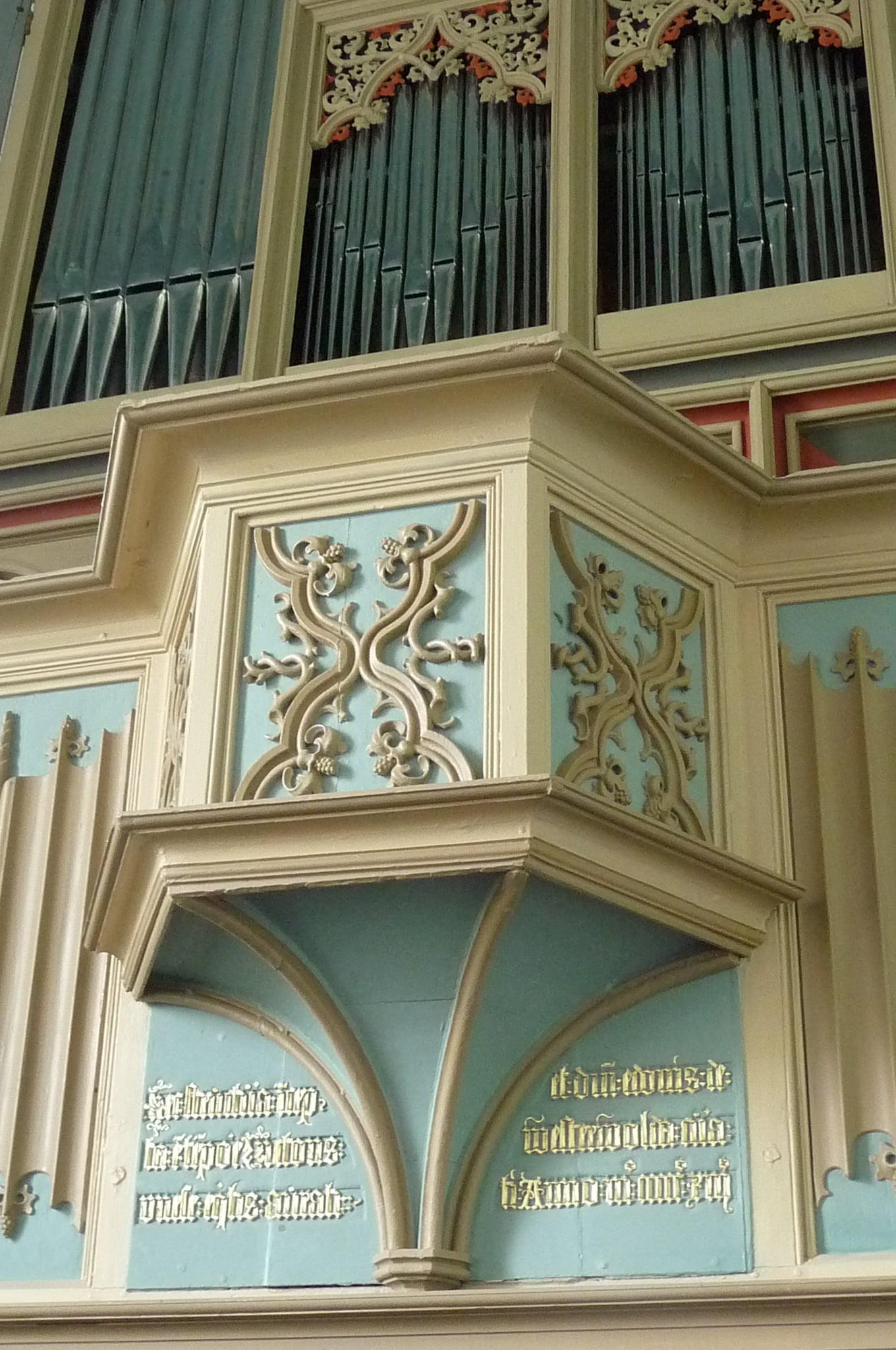
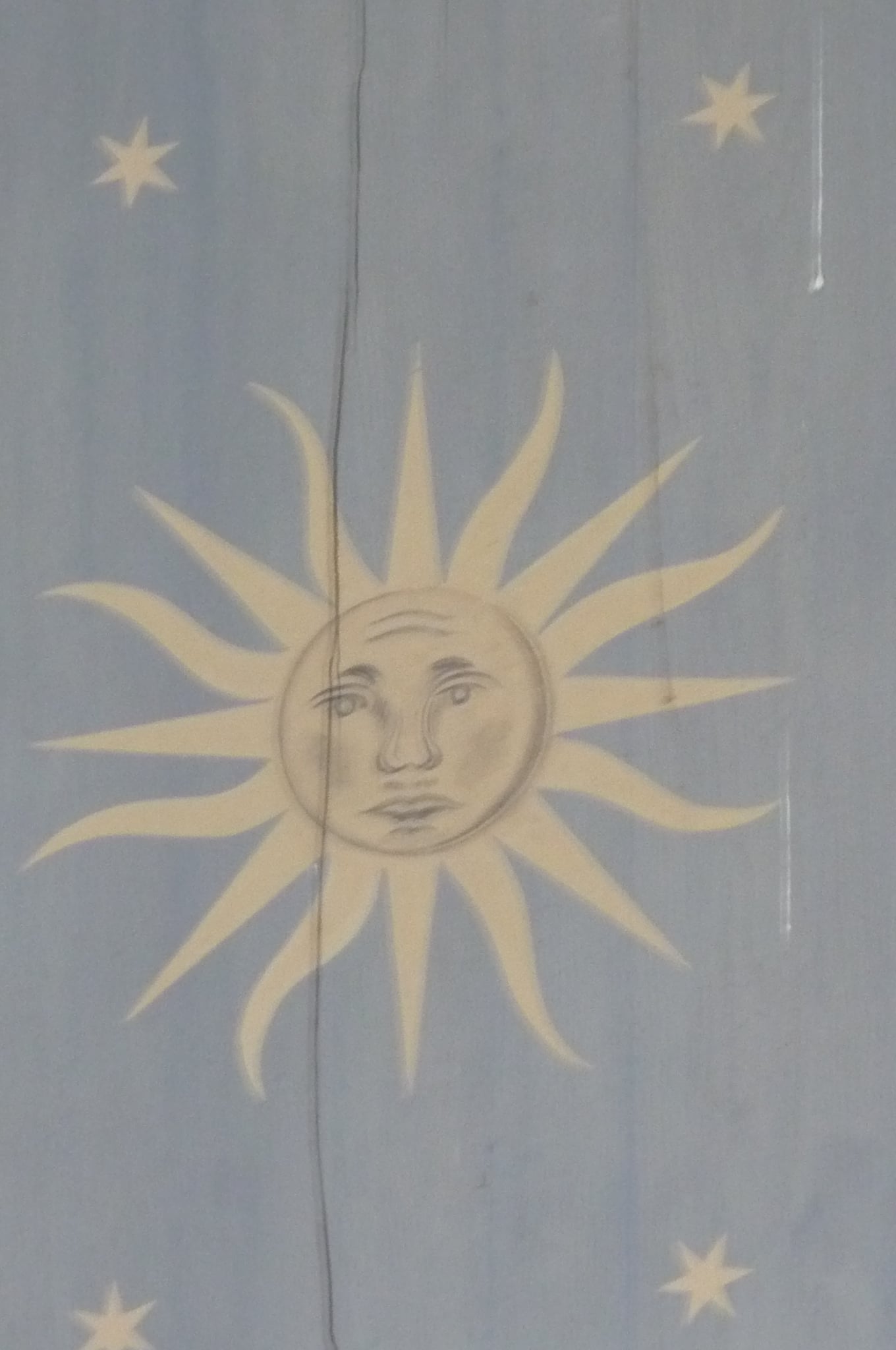
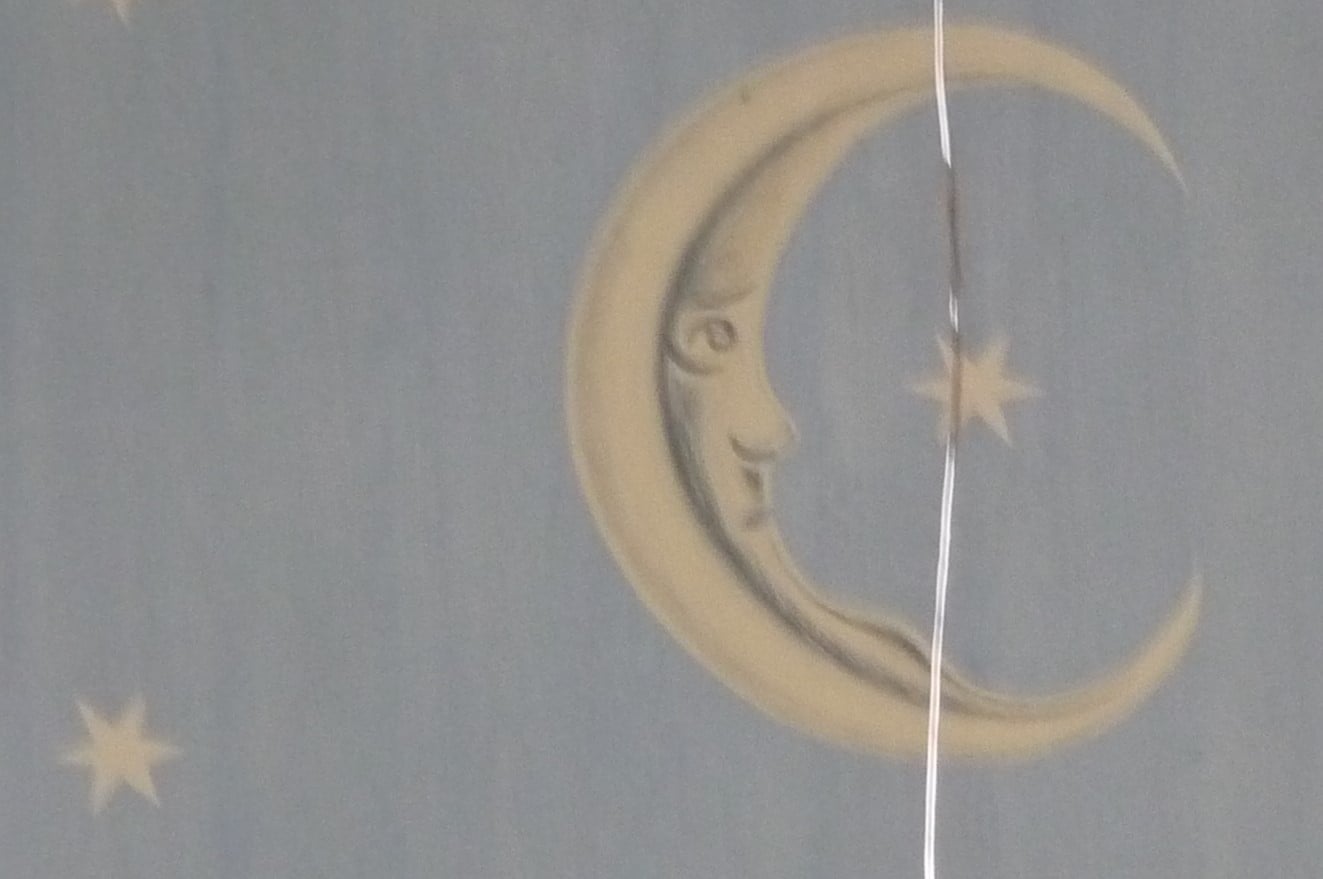
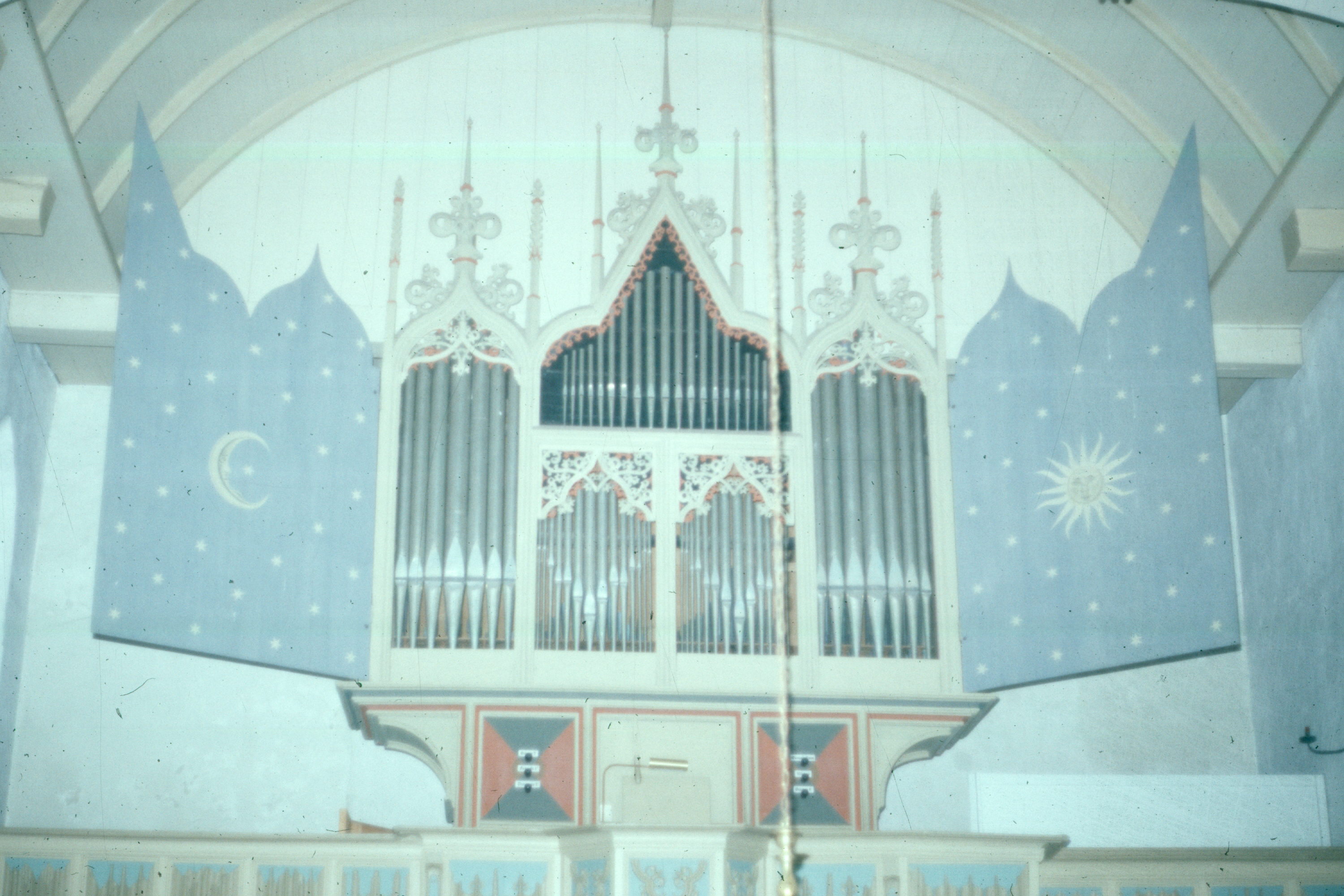
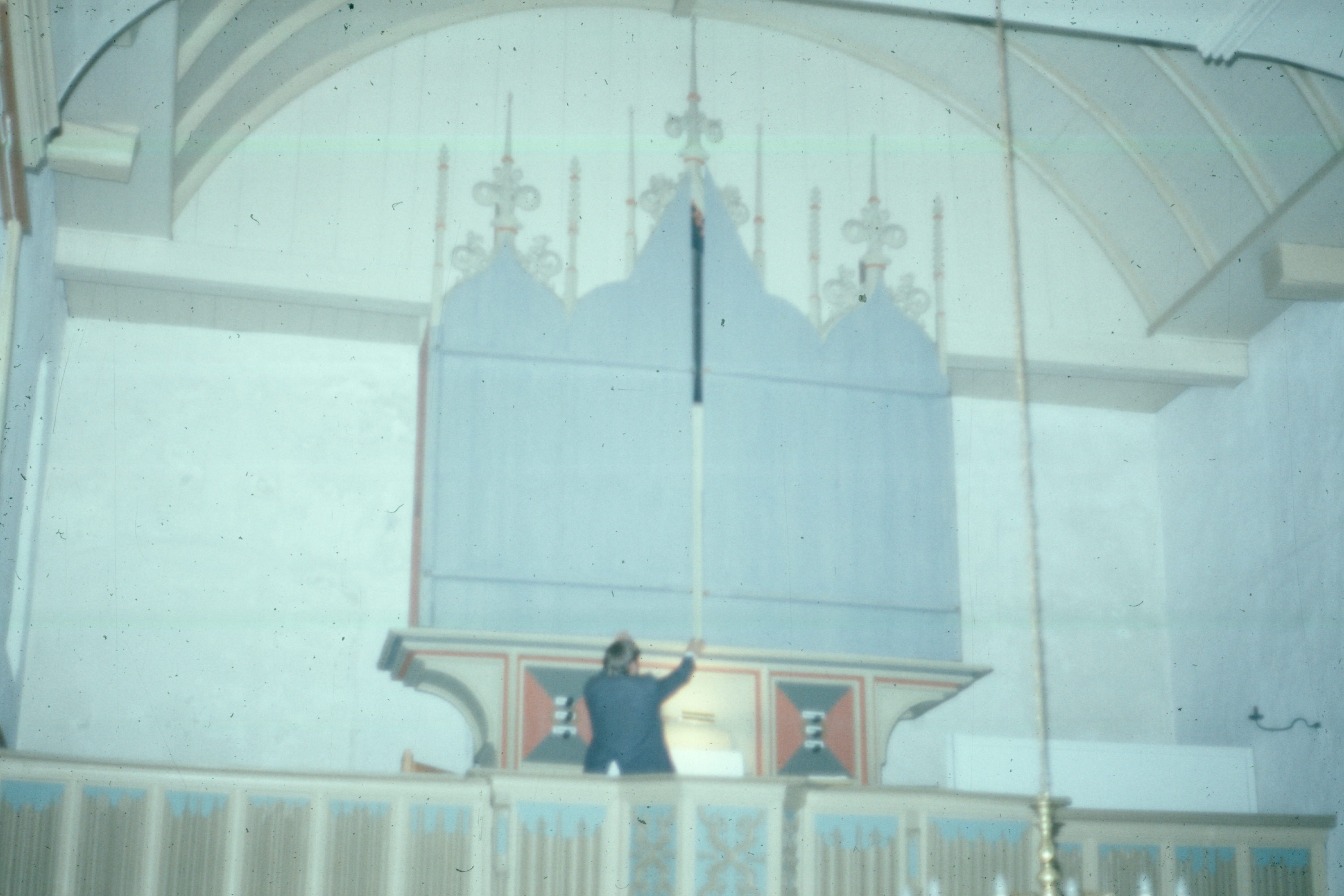
Rysum, Germany (Ostfriesland) – Dorfkirche. Built by an unknown builder 1457. One of the oldest organs in Germany. Enlargement 1513. Restauration plus reconstruction Sesquialtera, Mixtur and Trompette by Ahrend and Brunzema 1961. The panels with a crescent moon and the sun, removed in 1737, have been reconstructed.
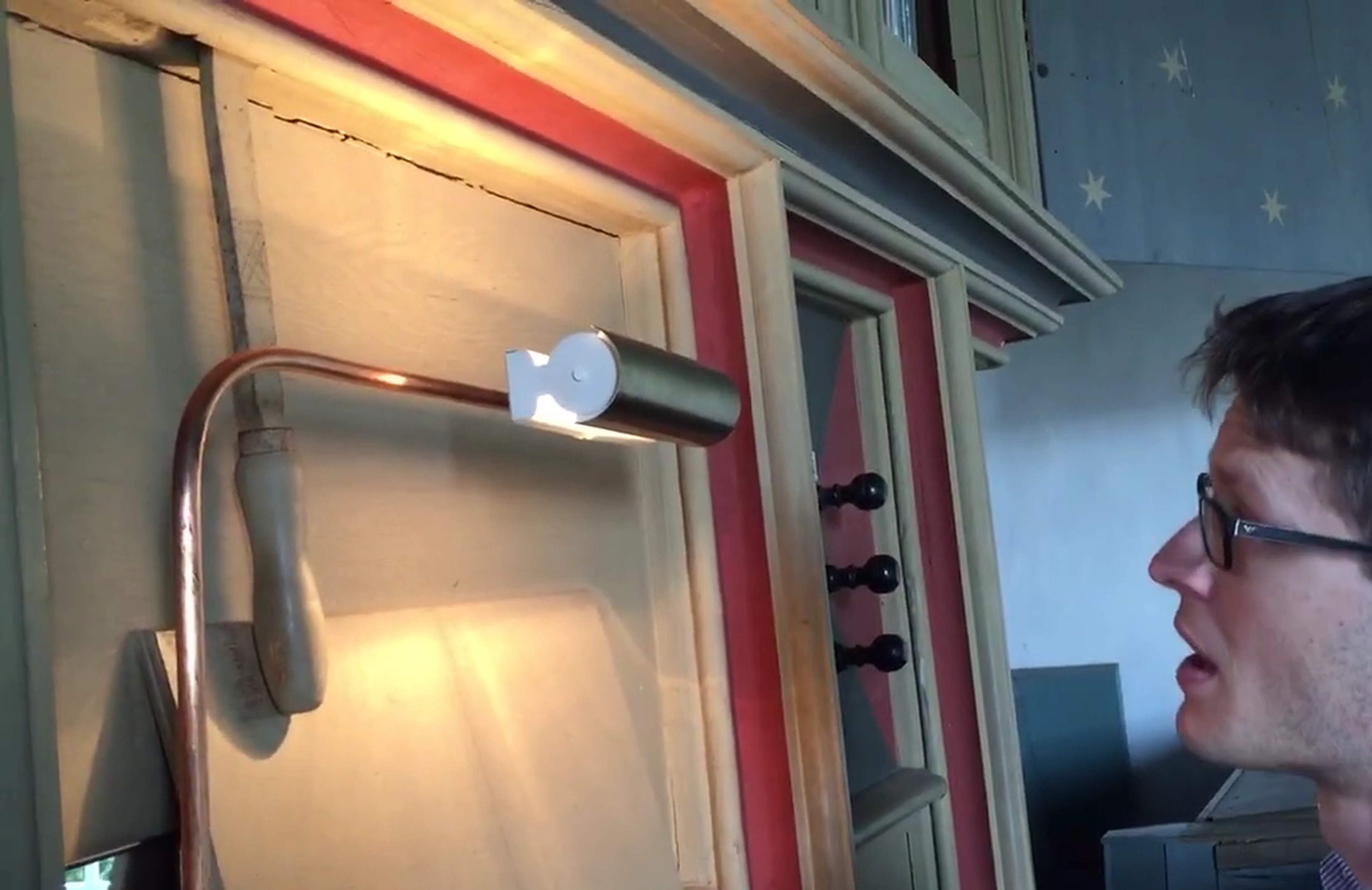
Originally, the facade pipes could be controlled separately with this stop control lever, hanging down from the impost. The facade pipes were independant of the remaining blockwerk.
Manual compass: CDEFGA - g''a''. No pedal. Pitch circa a’= 440 Hz. Tuning modified Meantone. Praestant 8', Gedackt 8', Octave 4', Octave 2', Sesquialtera II, Mixtur III-V, Trompette 8'.
Photos: Photos #14 & 15, showing closing the shutters, are mine. My photos are poor quality, so the remaining photos are by Jean Telder and Tjalling Roosjen, 2011.
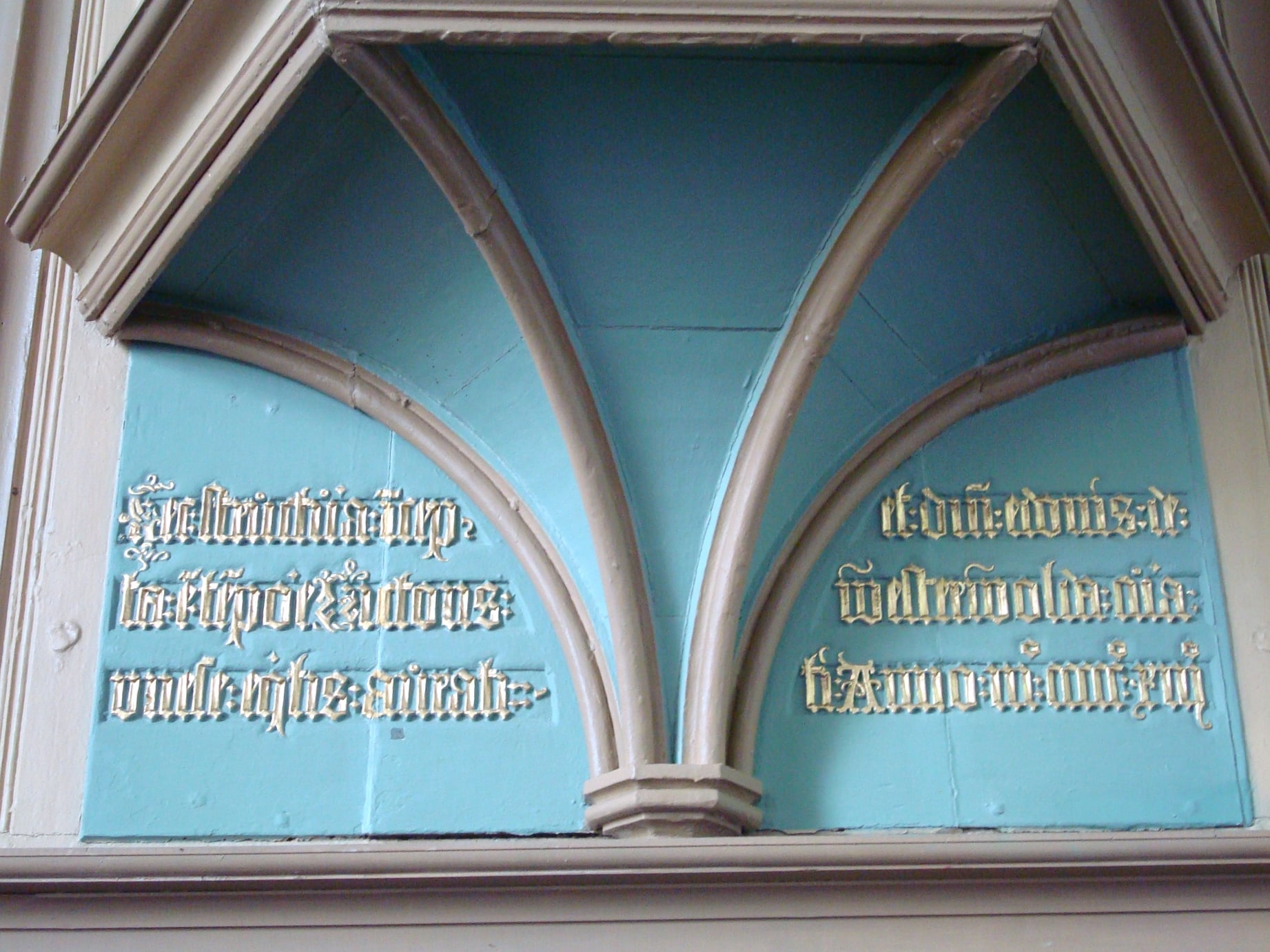
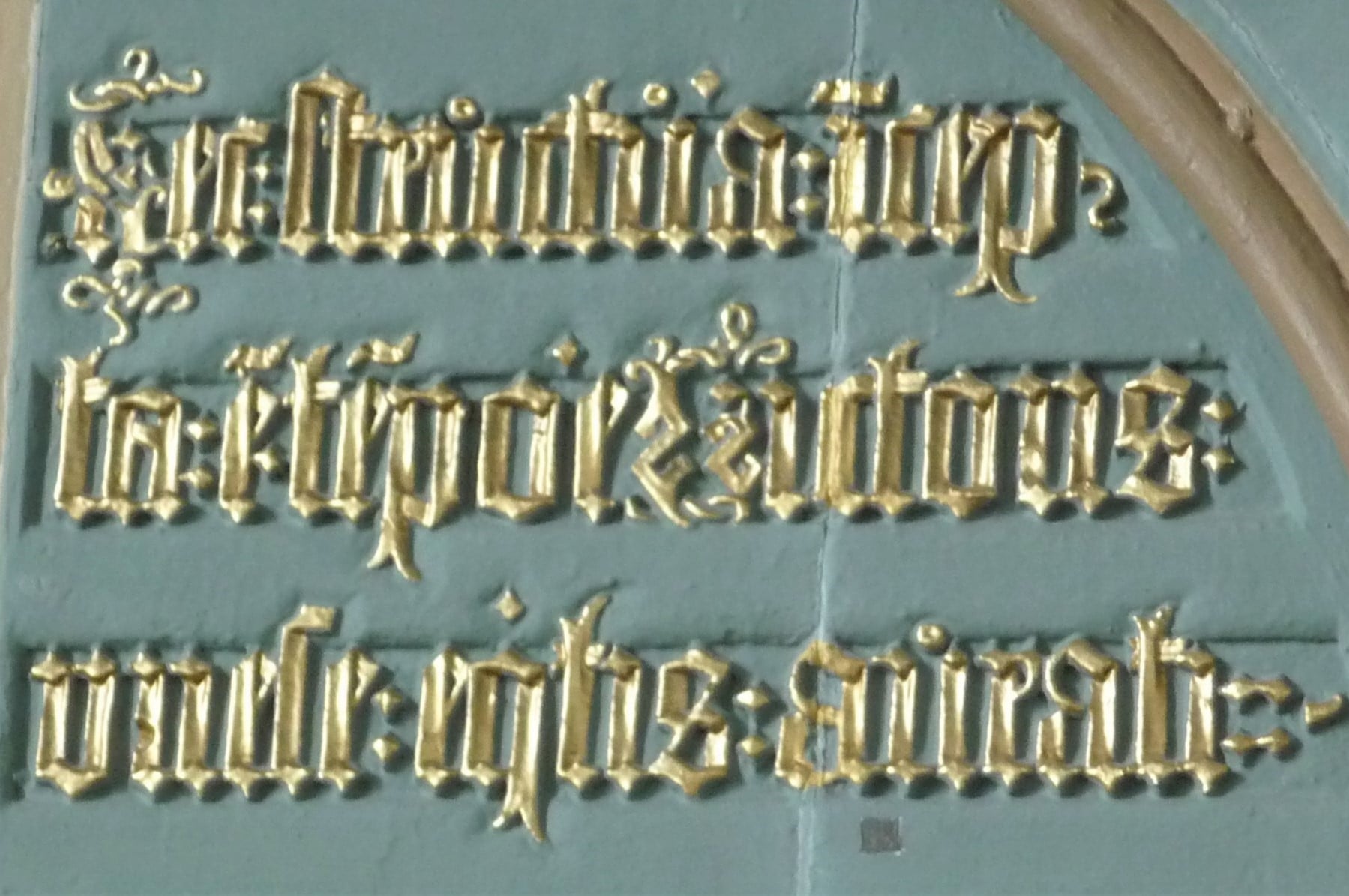
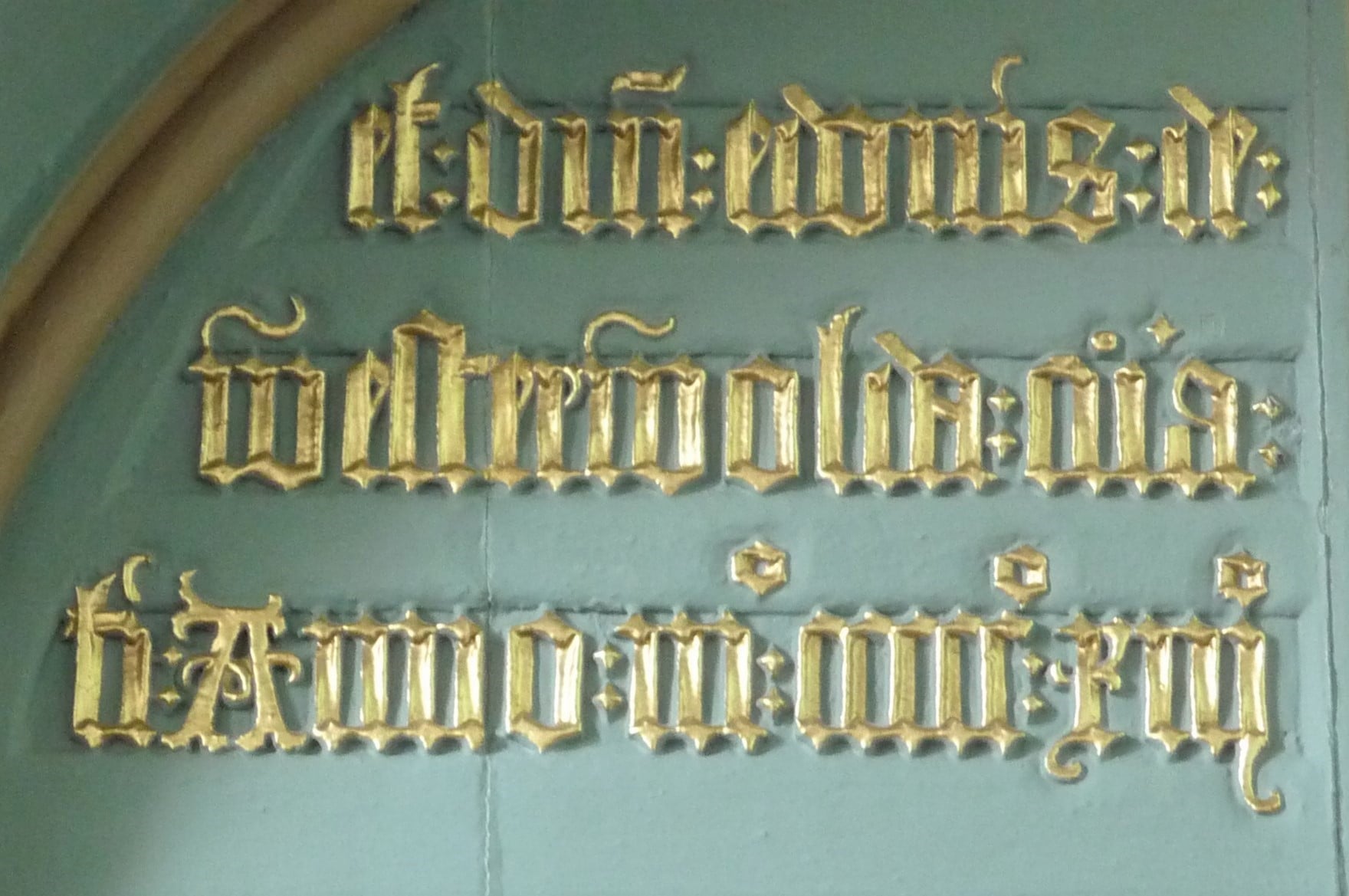
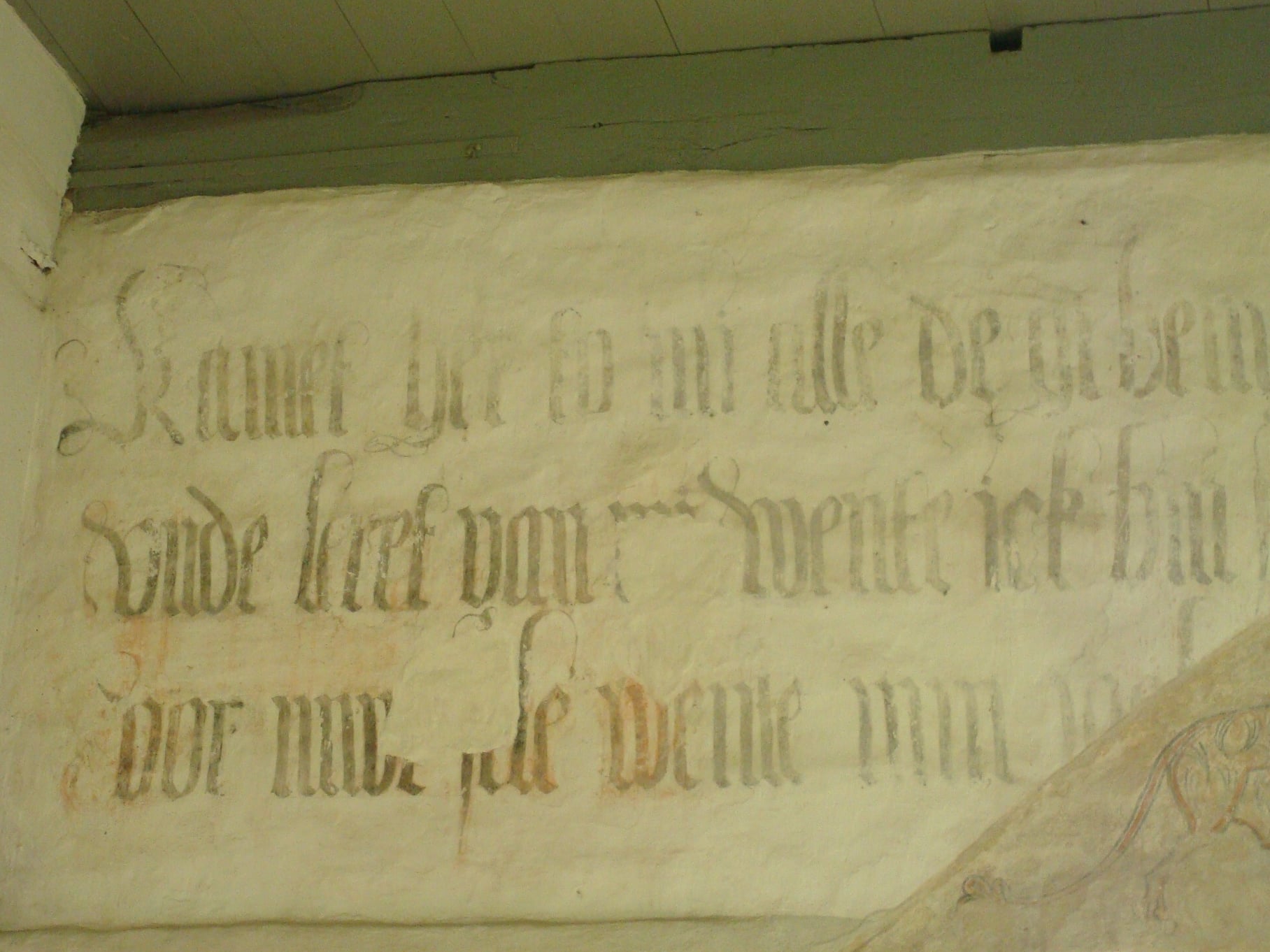
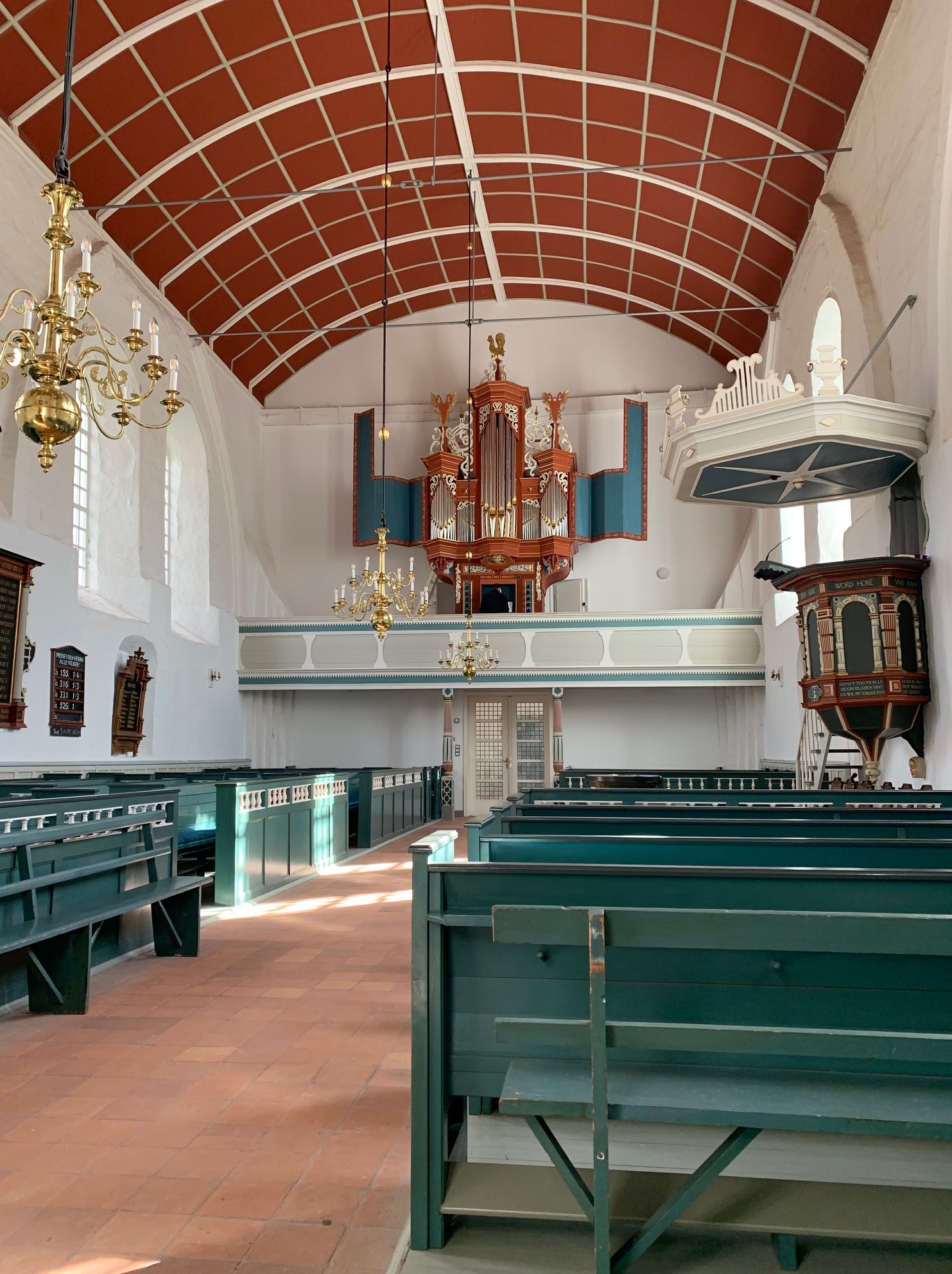
1655 Renaissance Organ, Uttum, Ostfriesland
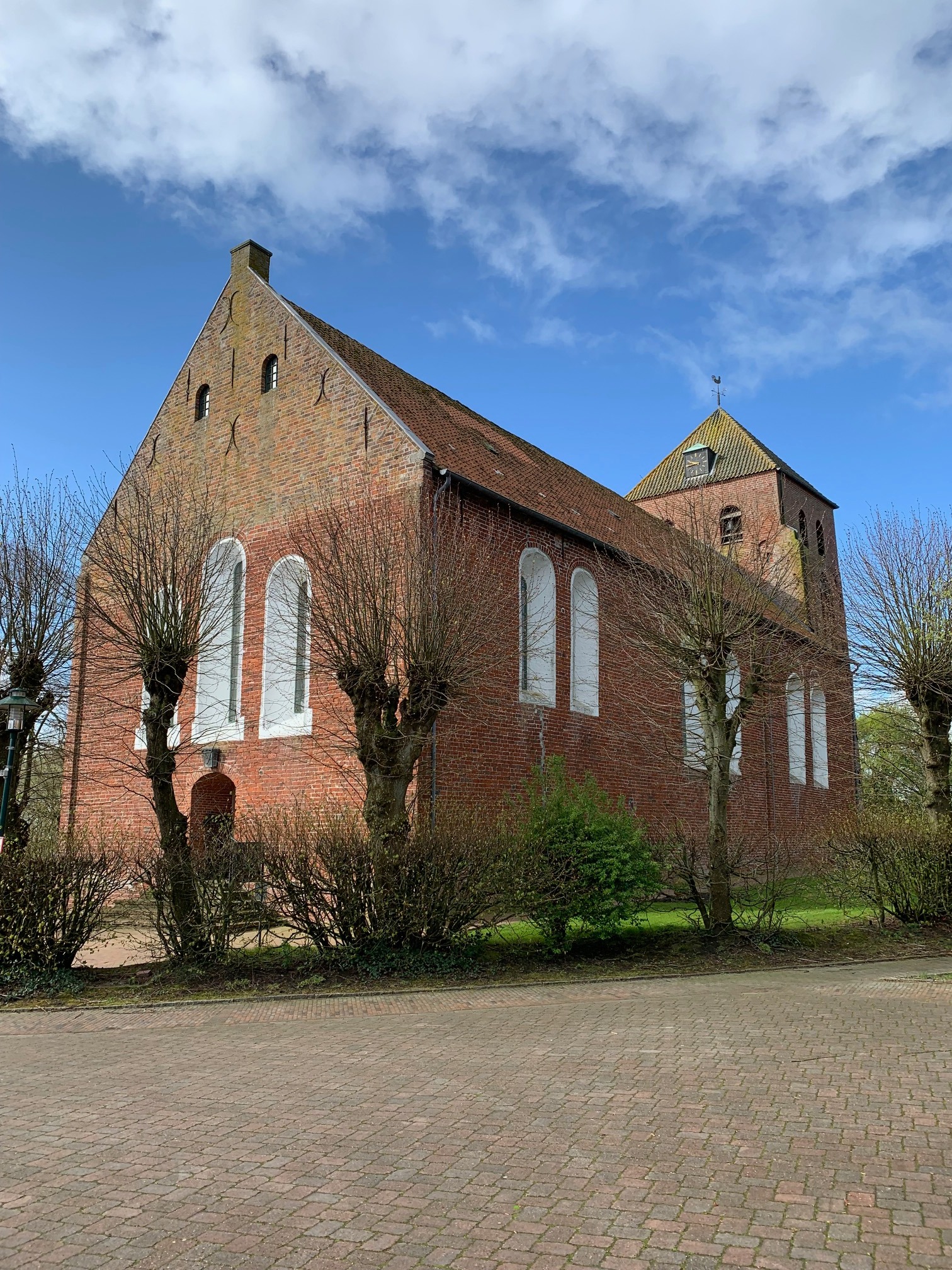
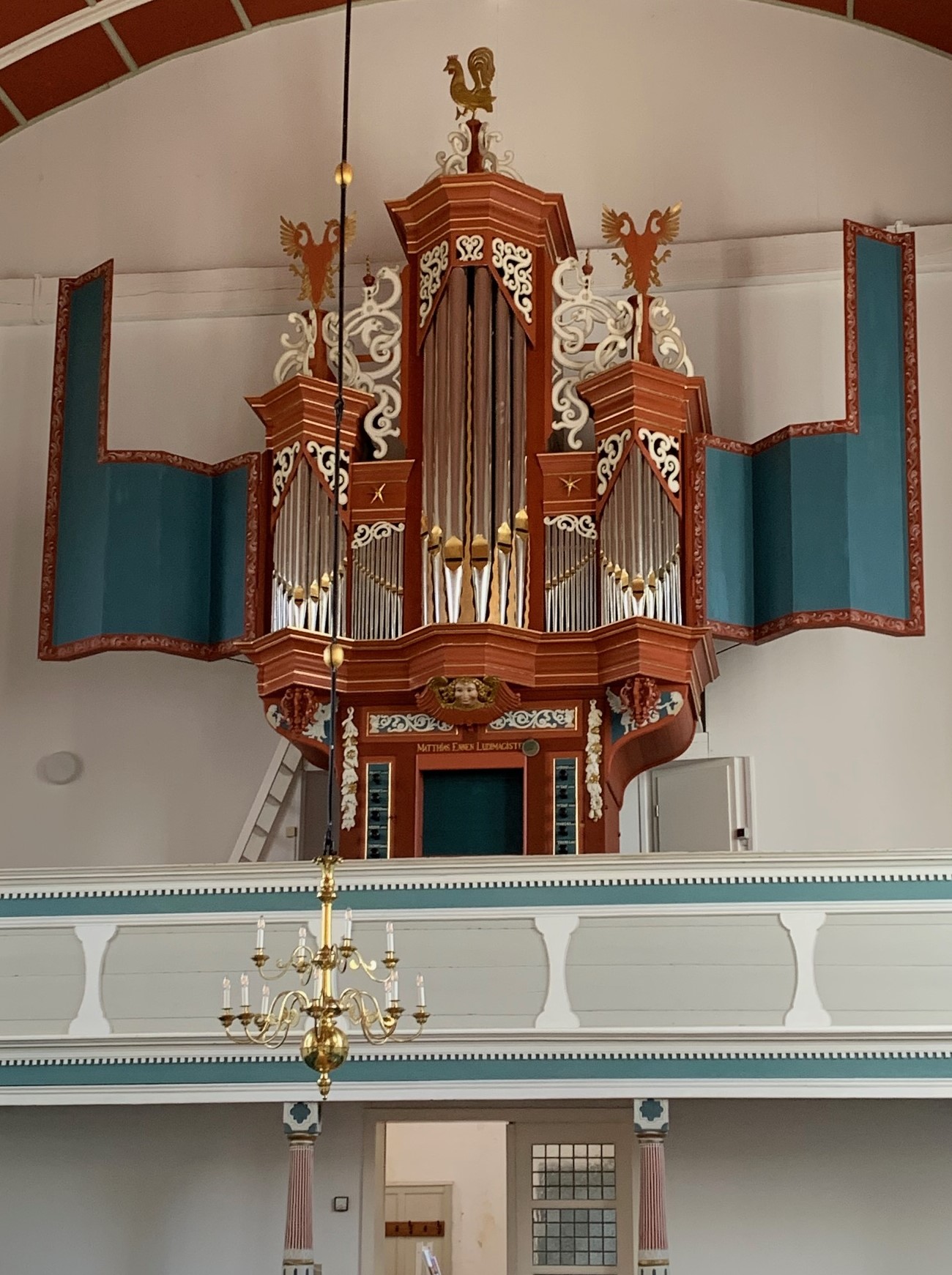
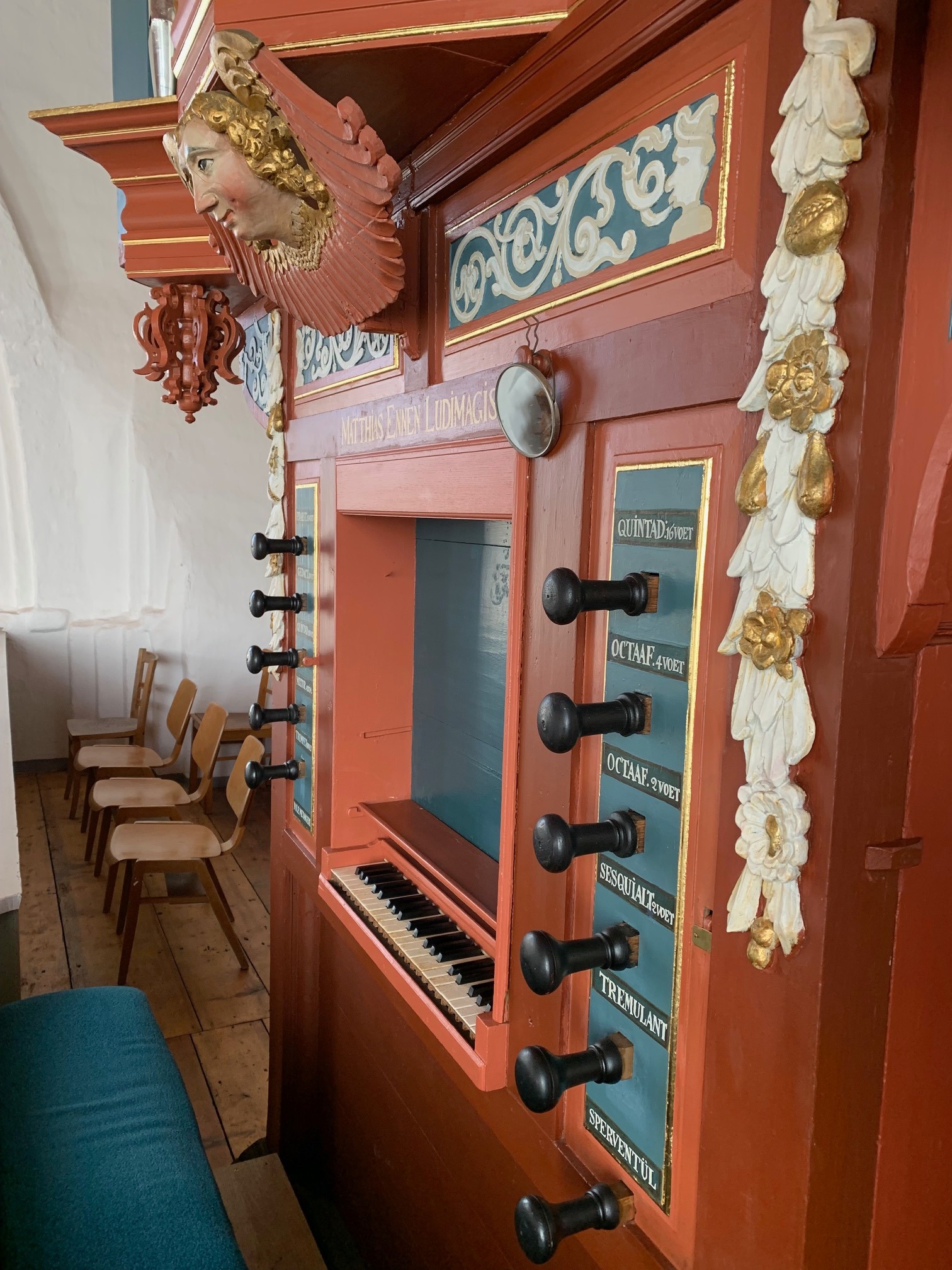
Built in 1655 by an unknown builder. Uttum Church, Ostfriesland, Germany, in Evangelical-Reformed Church, Uttum, East Frisia, Germany. It currently has 1 manual (CDEFGA-c''') and 9 registers.
It was restored in 1956-57 by Ahrend & Brunzema and Ahrend 2020. Ahrend & Brunzema recreated only two registers (the Praestant and Sesquialtera). It was likely constructed using even older pipe material, with some pipework possibly dating back to the Late Gothic period.
- Stoplist - 2020
- Quintadena 16',
- Principal 8'
- Gedakt 8'
- Quintadena 8'
- Octave 4'
- Octave 2'
- Sesquialtera II - 1957
- Mixtur III-IV
- Trompete 8'
- Tremulant
- Cimbelstern
The organ is a pure example of the Renaissance musical ideal: it embodies the "vocal" sound ideal of the Dutch Renaissance masters, favoring a clear, blend-focused tone rather than the powerful, soloistic sounds of later Baroque organs.
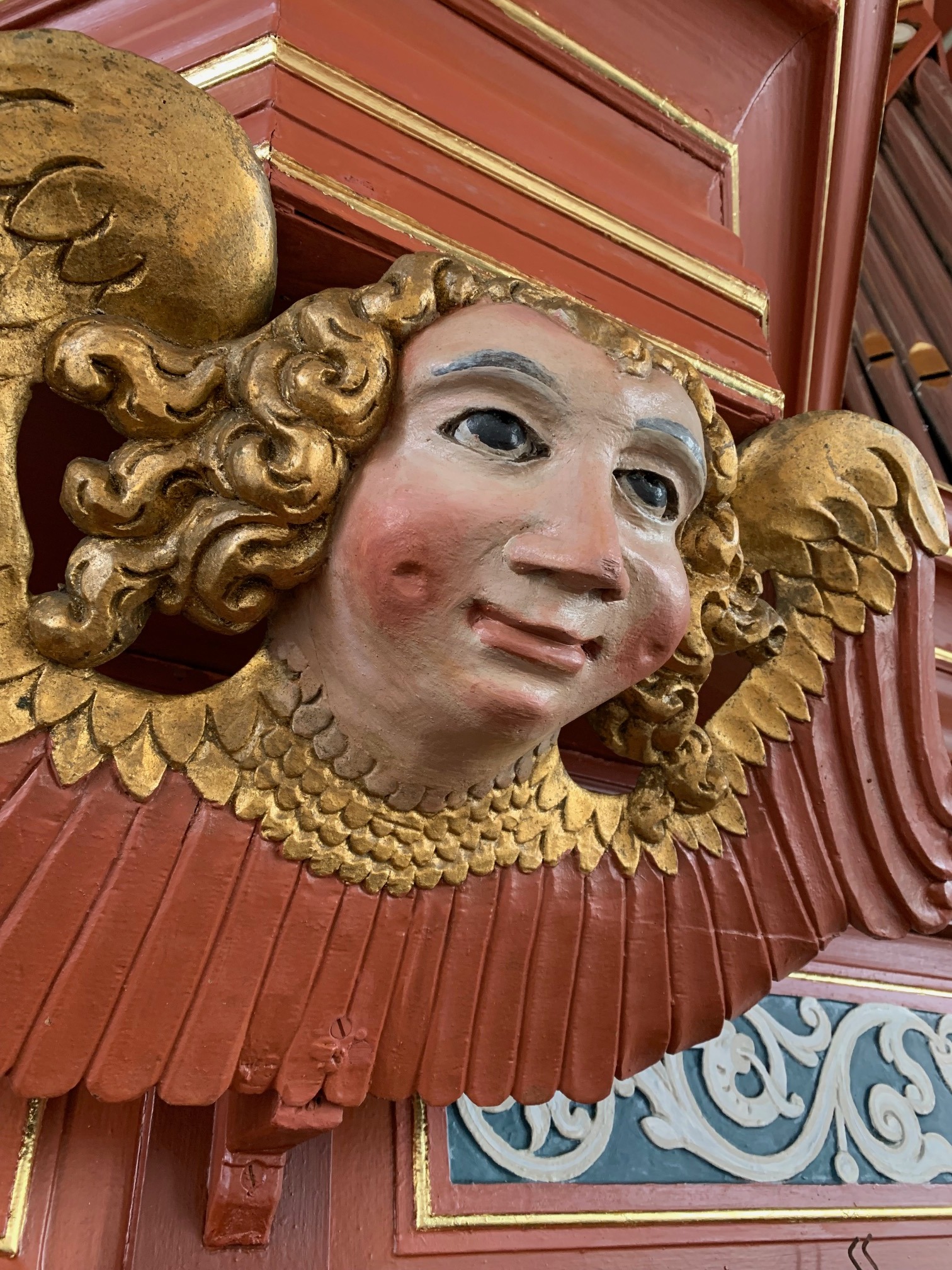
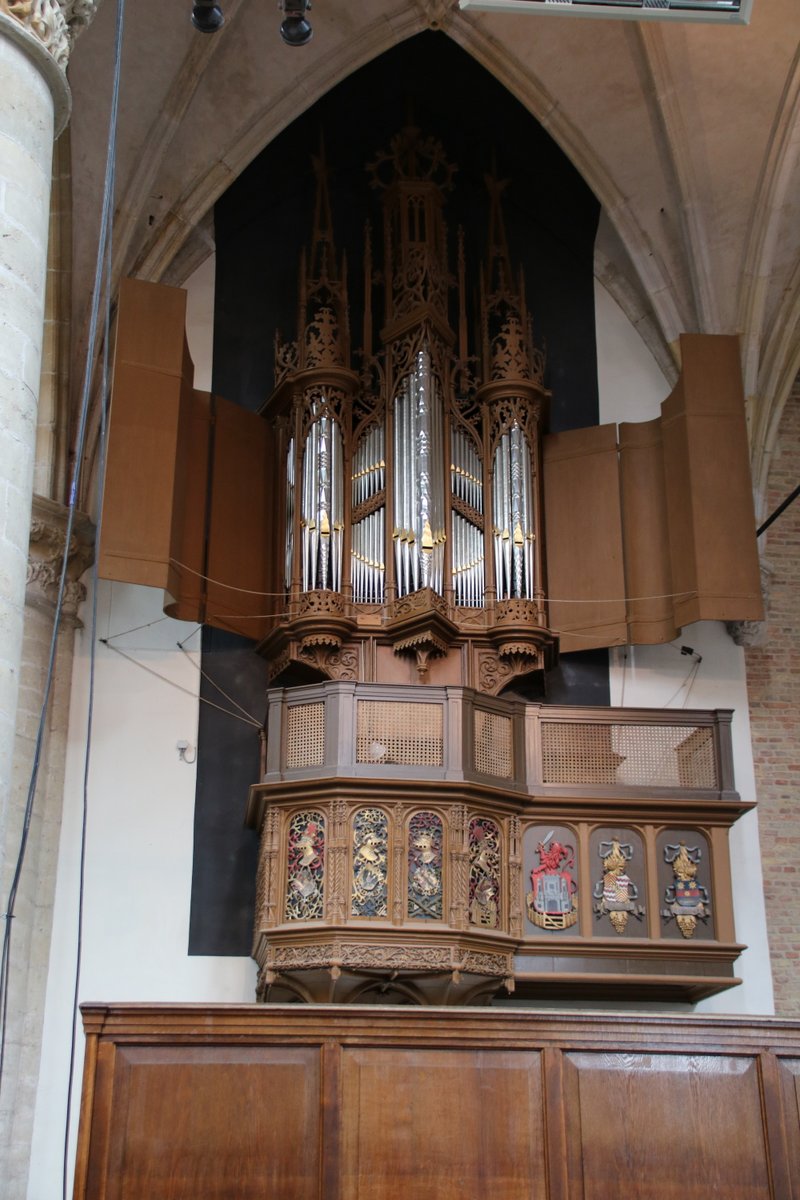
1511 Renaissance Organ, Alkmaar, Sint-Laurenskerk Koororgel
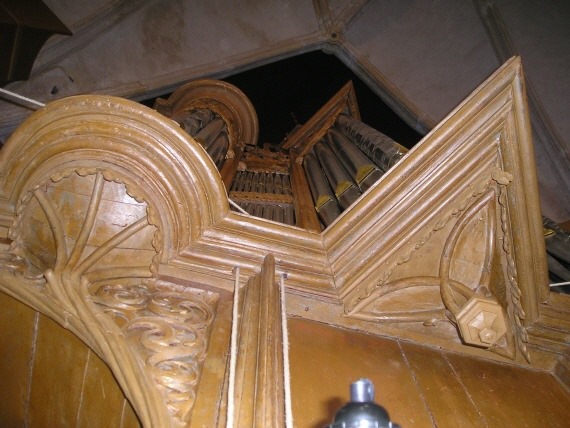
Built in 1511 by Jan van Covelens, this instrument holds the distinction of being the oldest playable organ in the Netherlands. While it has undergone several restorations over the centuries, the most recent major restoration (completed in 2000 by Flentrop Orgelbouw) successfully preserved its historical character and sound. It is positioned against the north wall of the church.
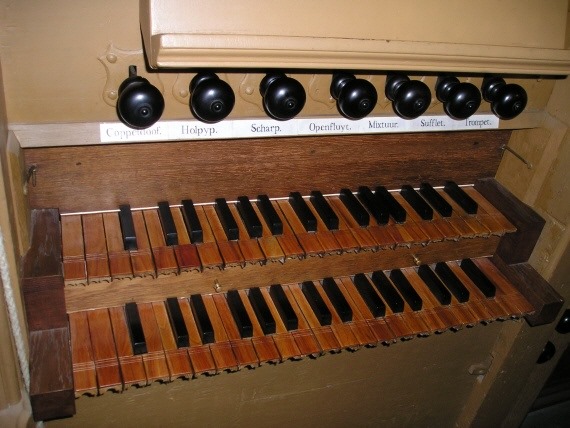
Keyboard compass is FGA–g"a" (short octave, missing G#/Ab); Pedal FGA–c' (missing G#/Ab and D#/Eb). Borstwerk is later 17th-century material. Pitch: a' = 427 Hz
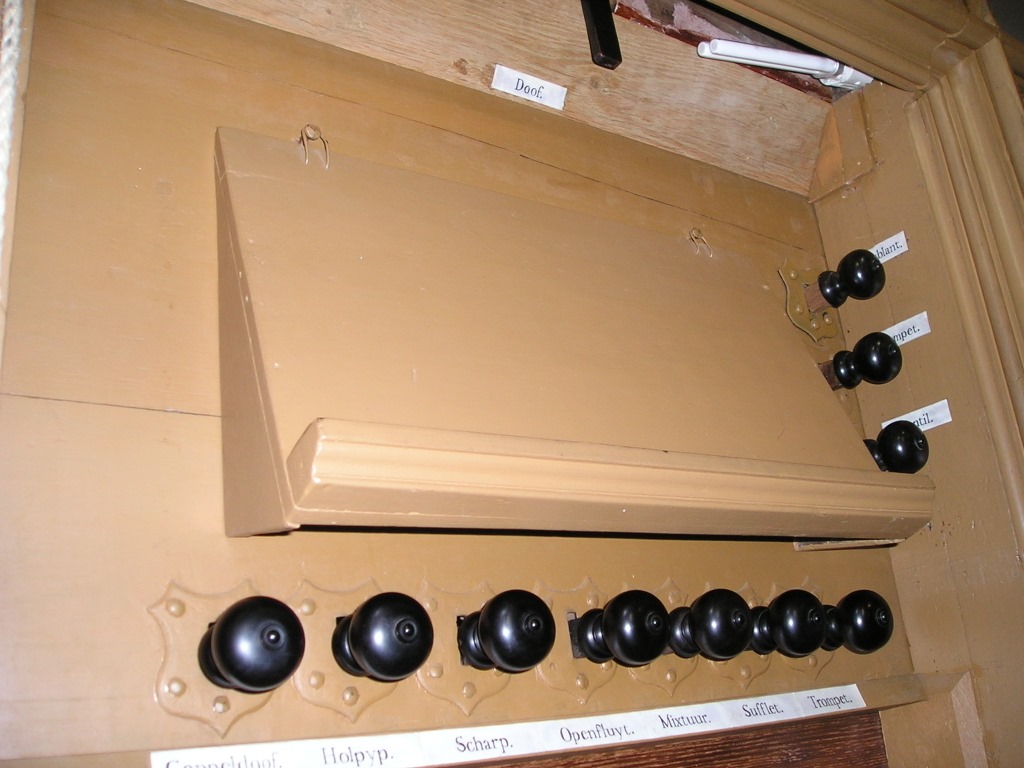
- Stoplist - 2000
- Doof 8'
- Holpijp 8'
- Koppeldoof 4'
- Openfluit 4'
- Sifflet 1-3/5'
- Mixtuur II-VI ranks
- Scherp III-VI ranks
- Trompet 8'
- Borstwerk (17th-century material)
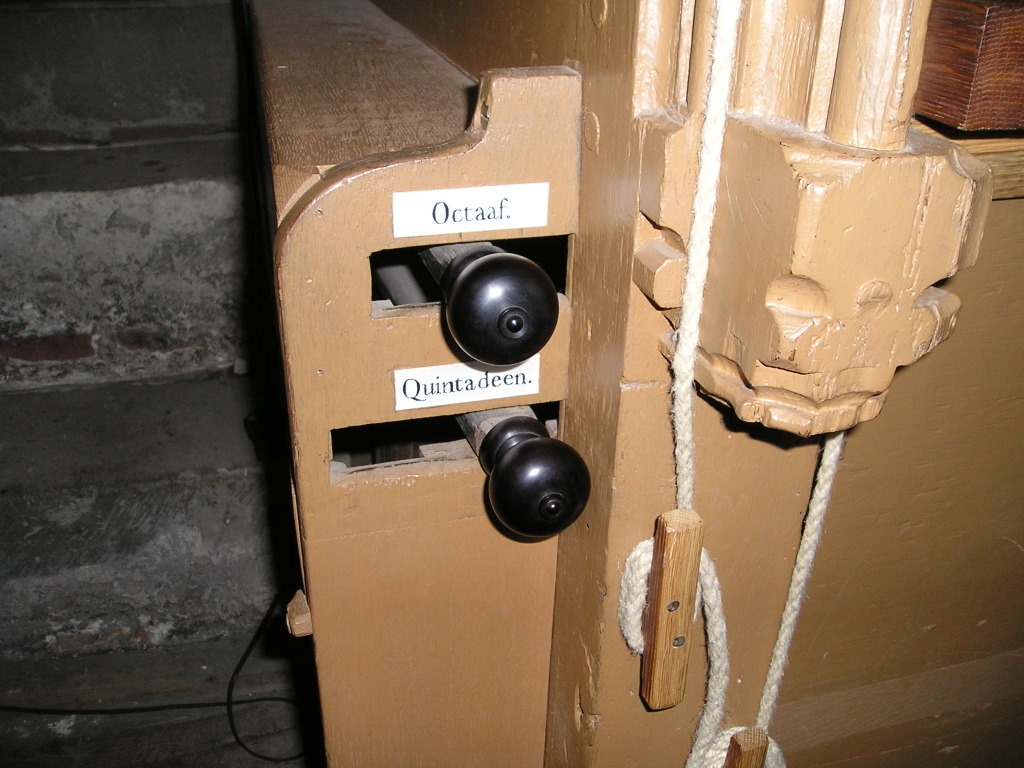
- Quintadeen 8'
- Fluit 4'
- Octaaf 2'
- Octaaf 1' (discant)
- Pedaal
- Trompet 8'
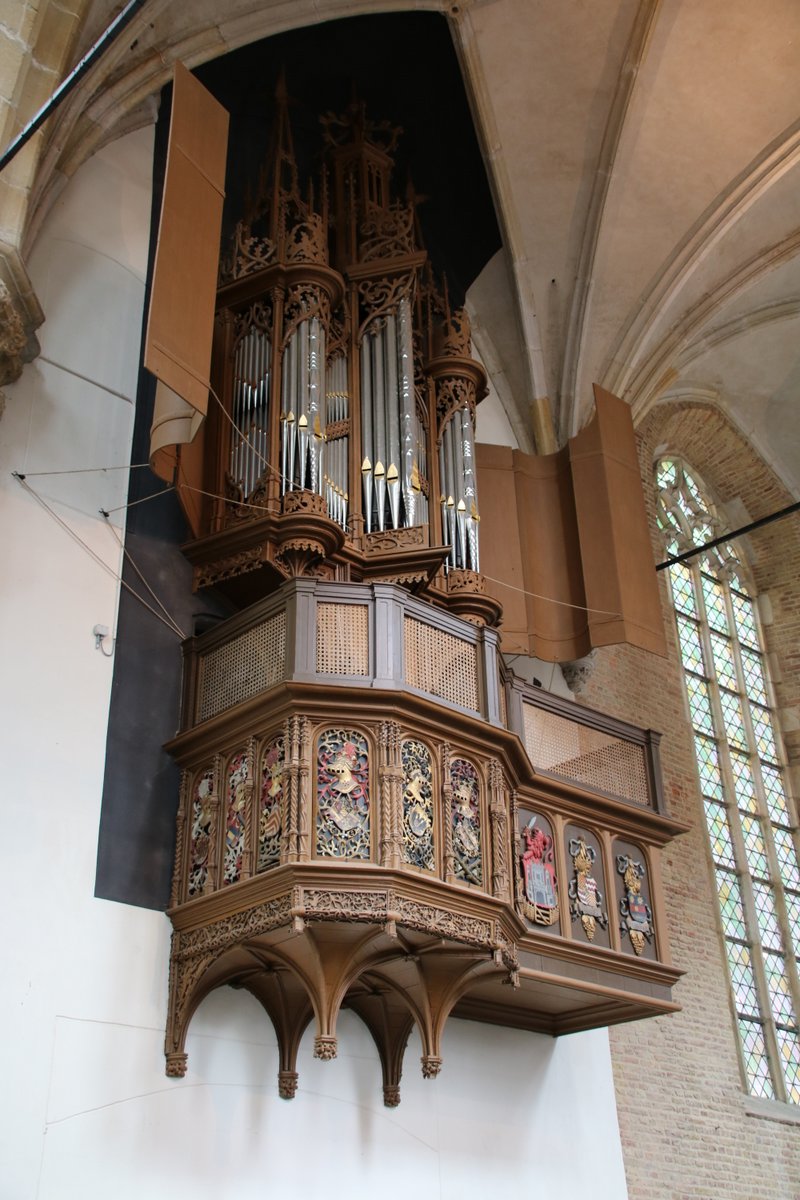
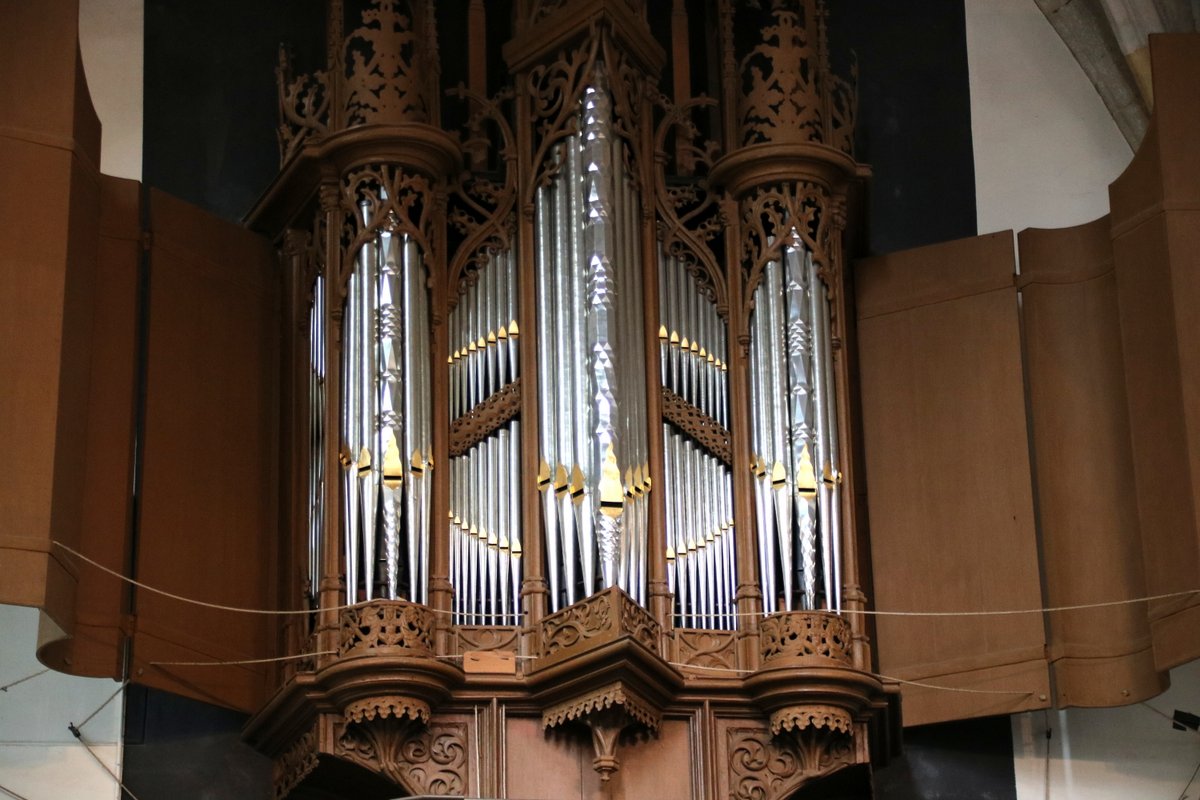
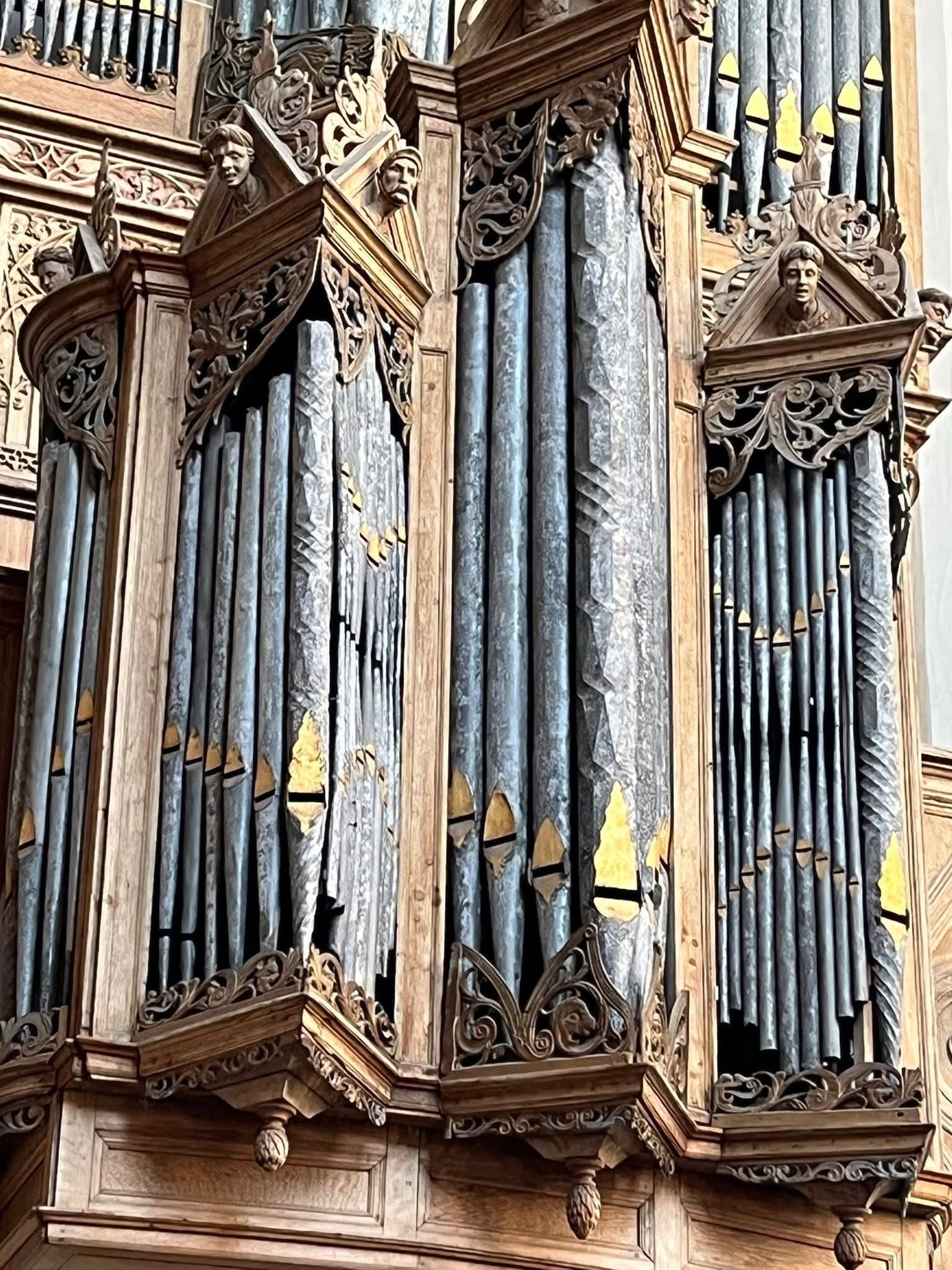
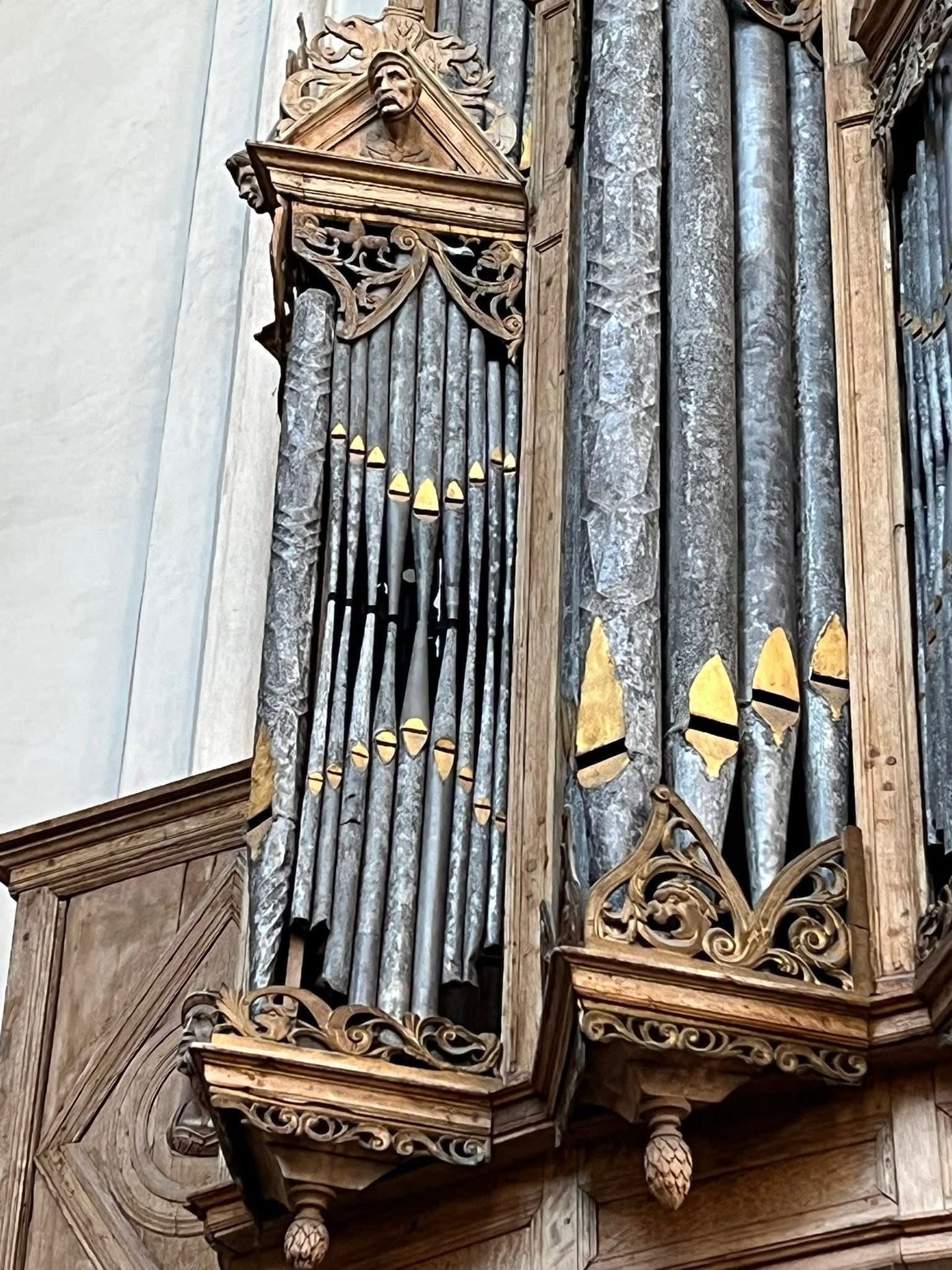
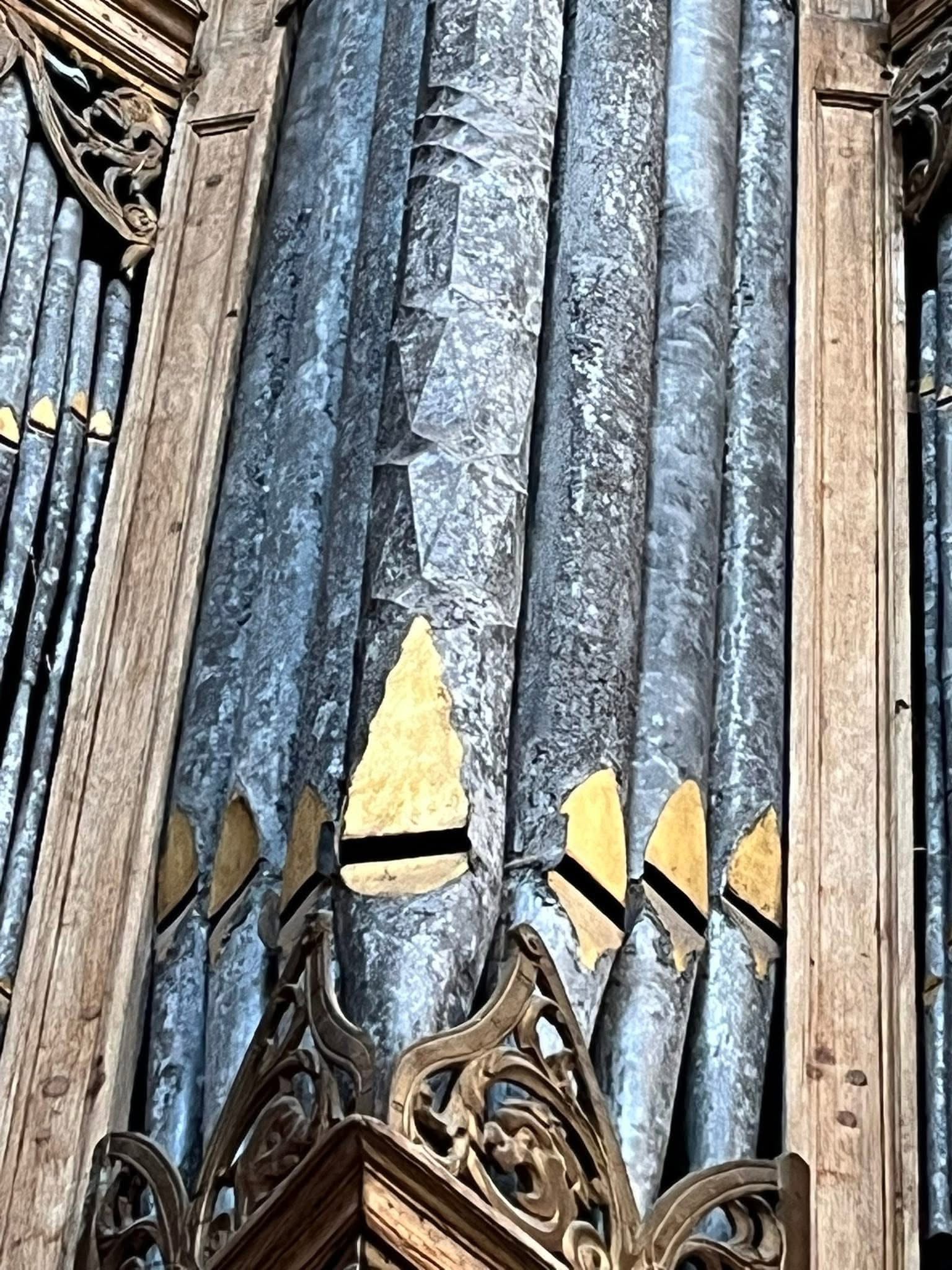
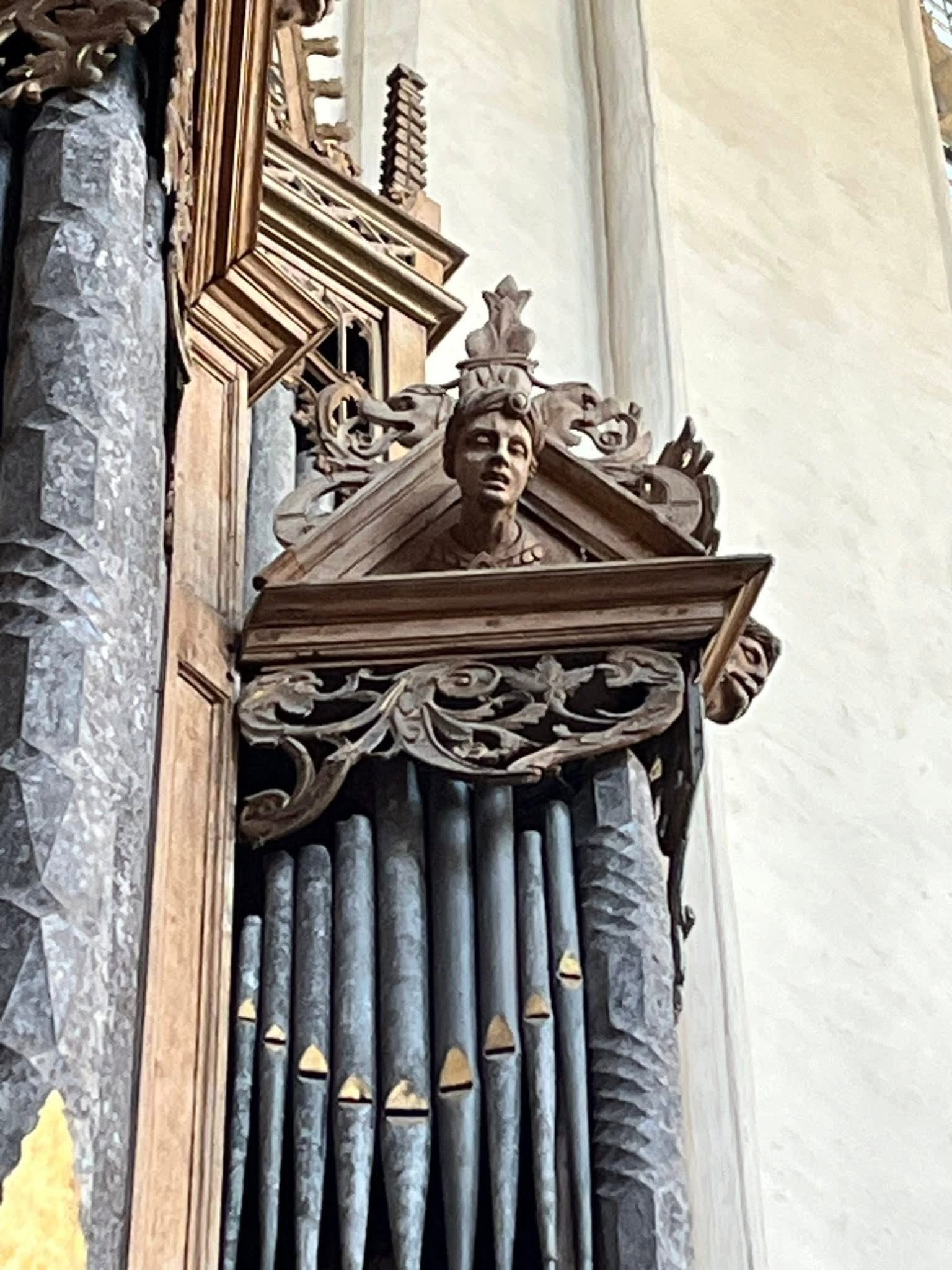
1479 Renaissance Organ, Middelburg Kookerk organ
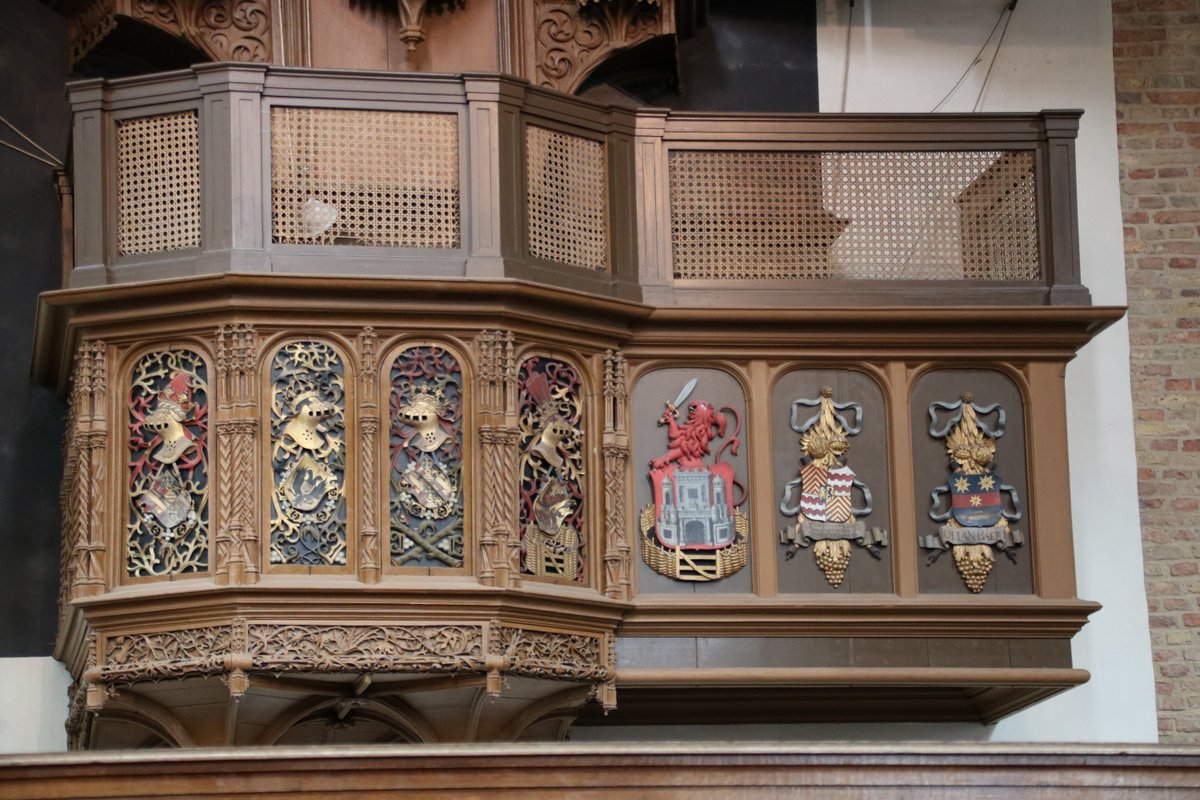
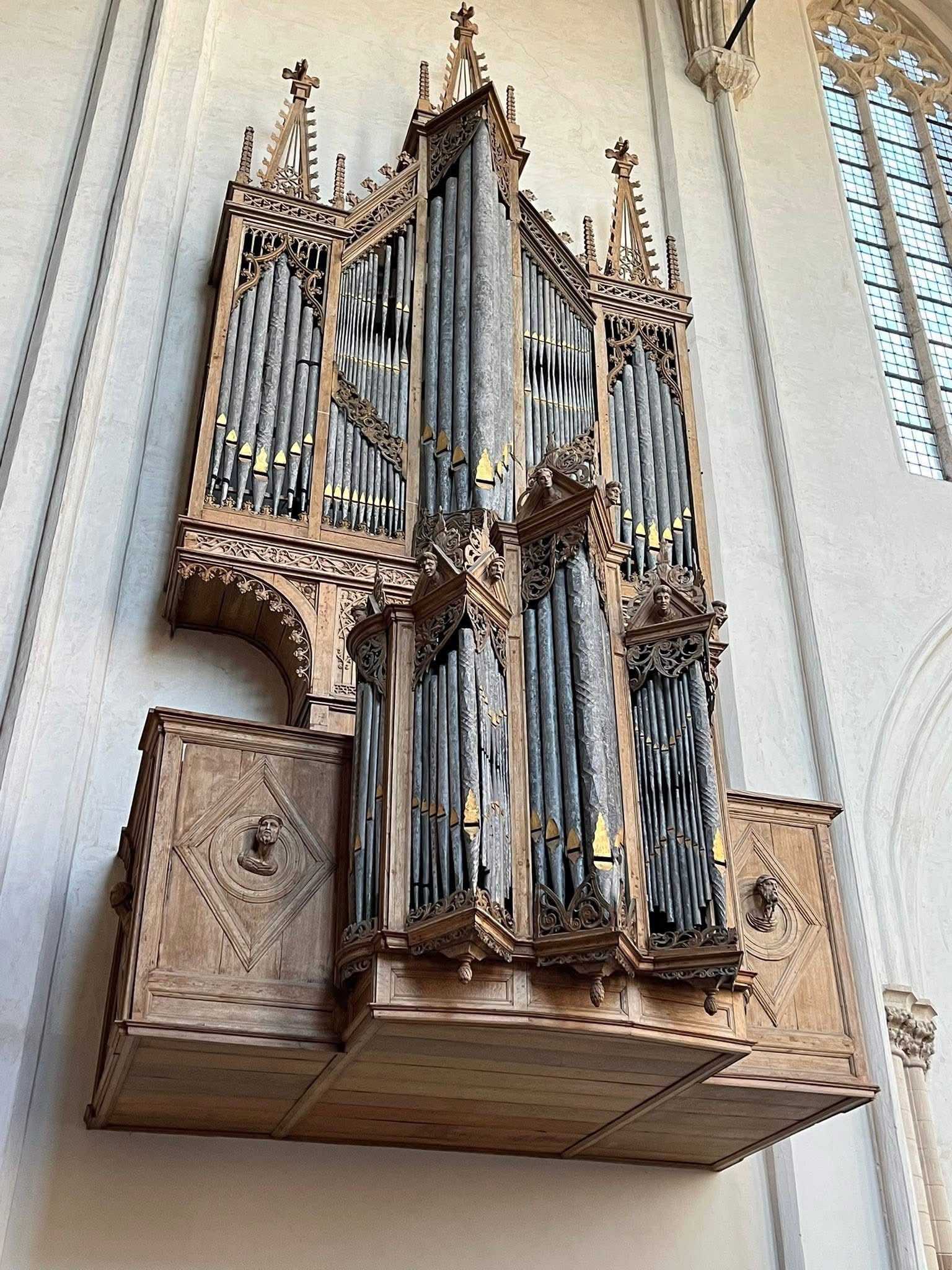
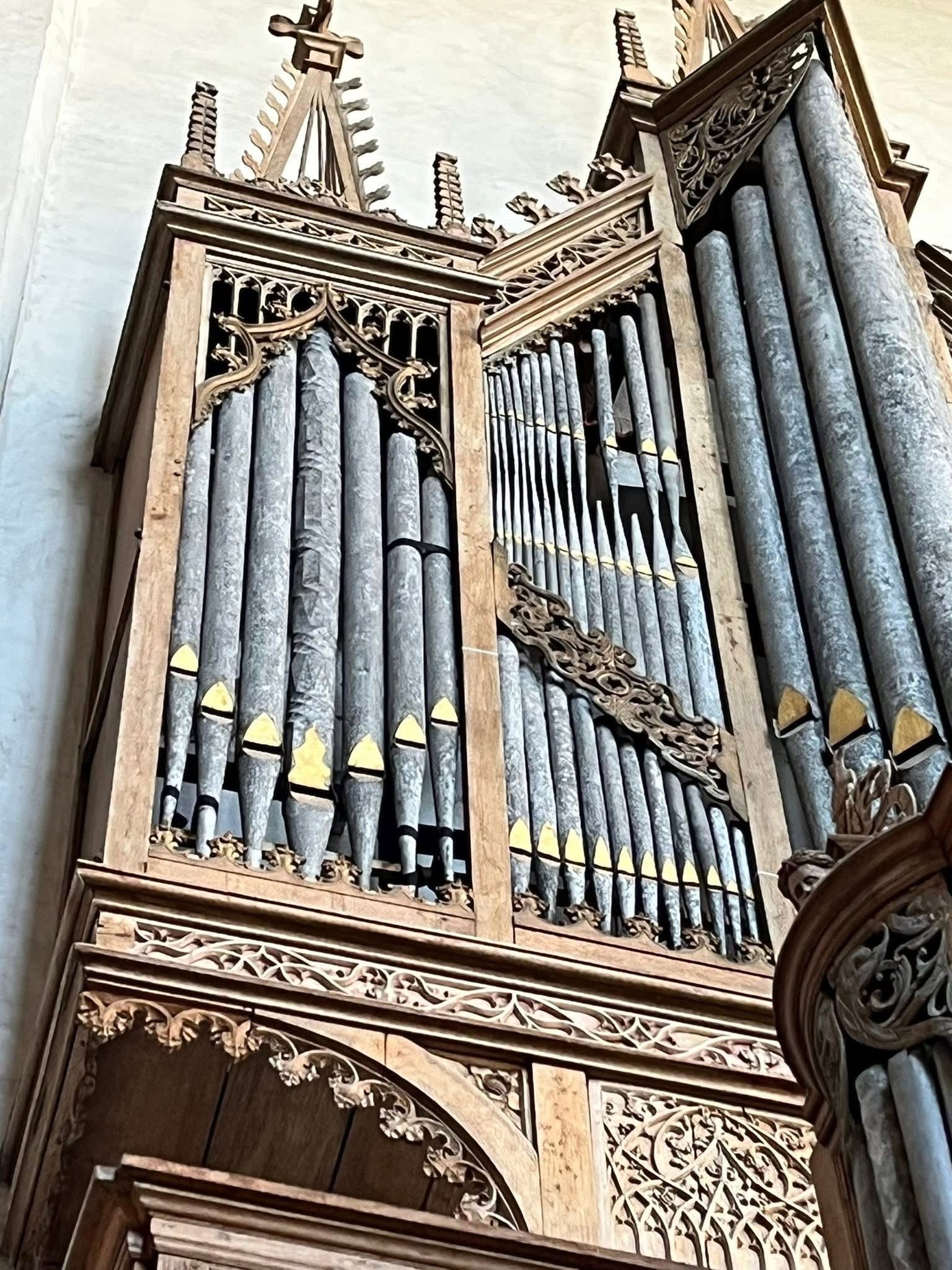
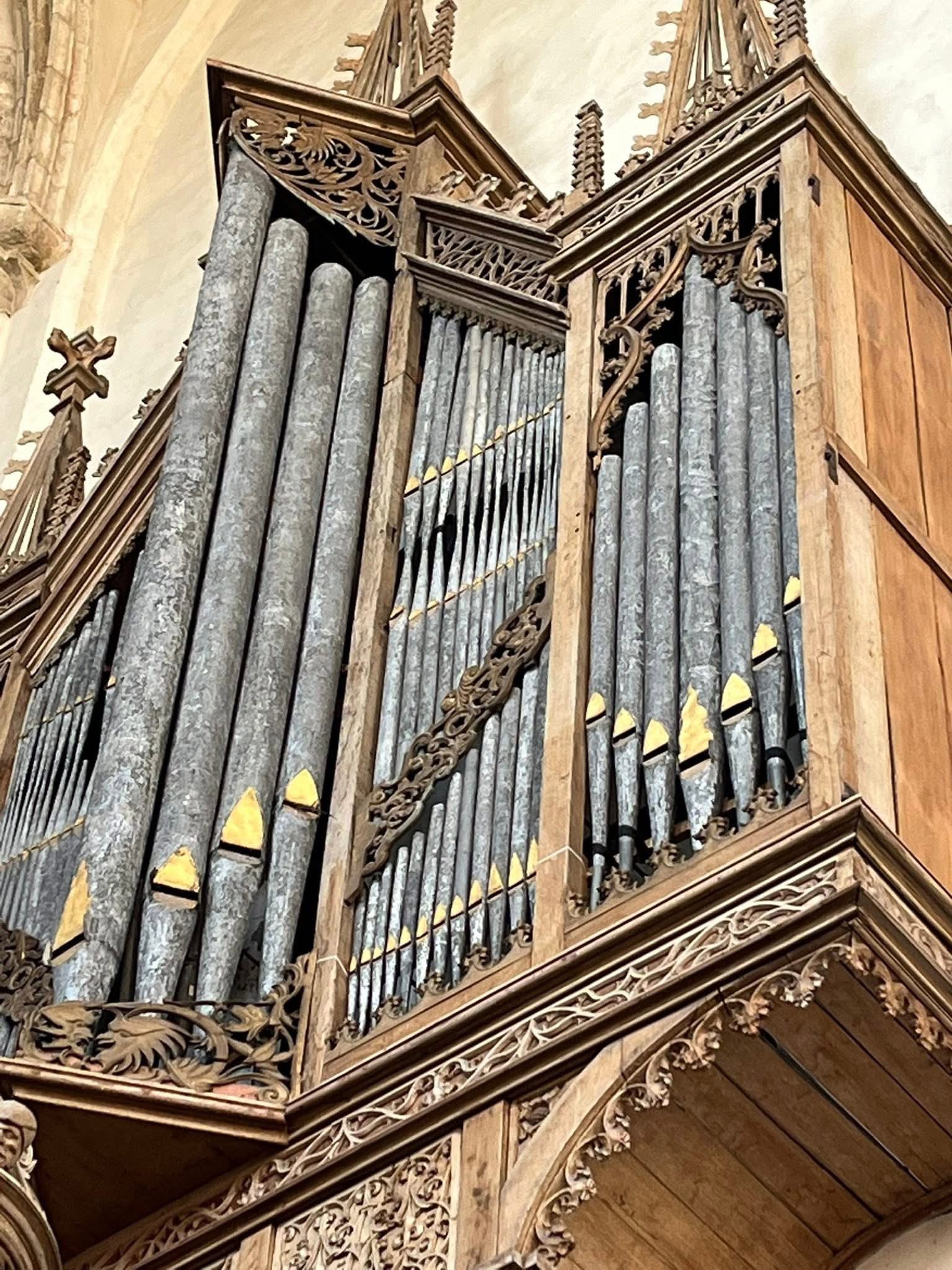
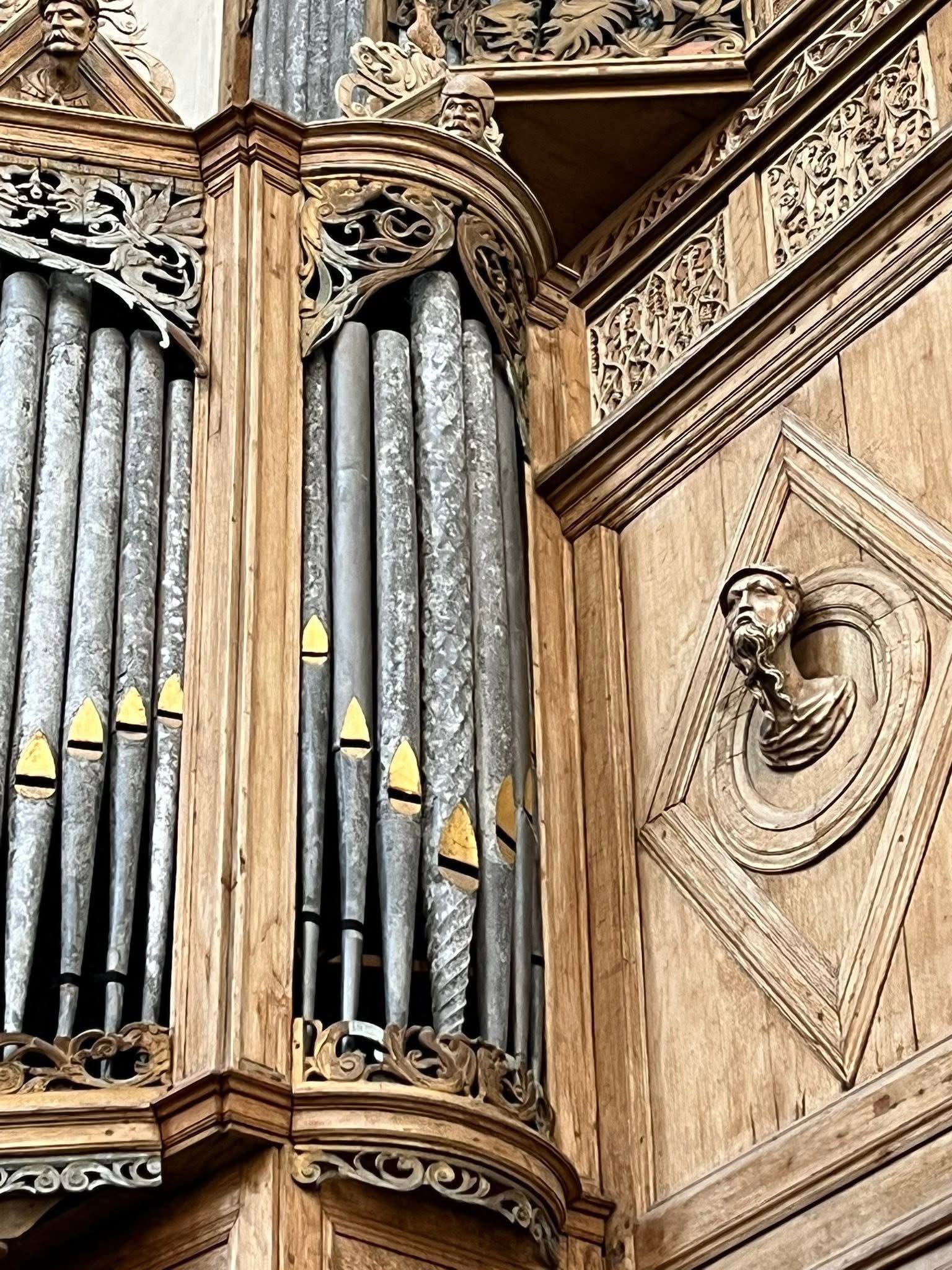
The organ in the Middelburg Koorkerk has a world-famous, 15th-century organ case, with a 1969 modern organ inside it. The 15th-Century Historic Organ Case was build between 1478 and 1481 by Peter Gerritsz from Utrecht, making it the oldest surviving organ case in the Netherlands.
The main case is late-Gothic, while the "rugwerk" (choir organ) section was added around 1560 in a Renaissance style. Originally built for the Nicolaïkerk in Utrecht. After various moves, the case was loaned to the Koorkerk in 1952.
(Photos from Léon Berben’s Facebook Page.)
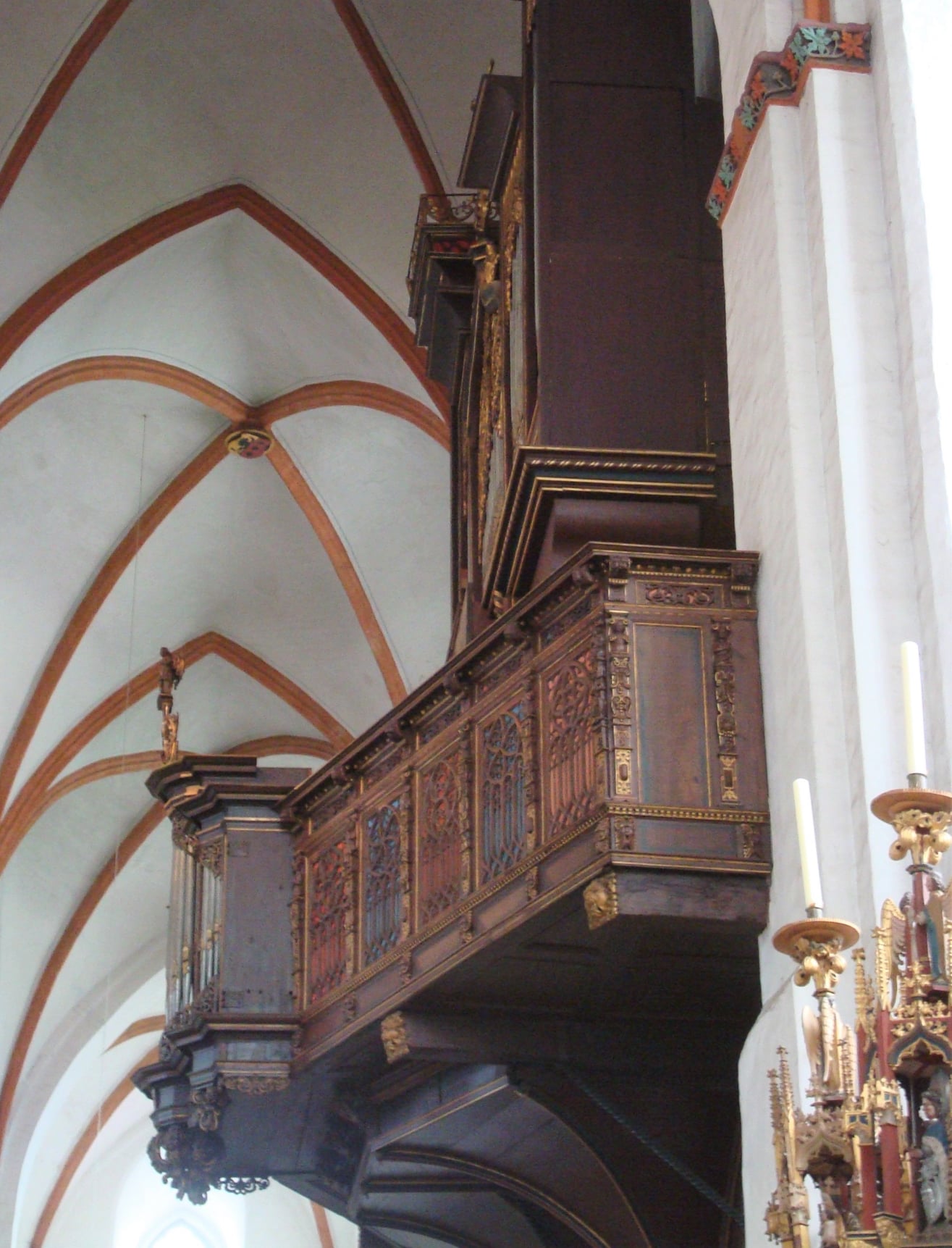
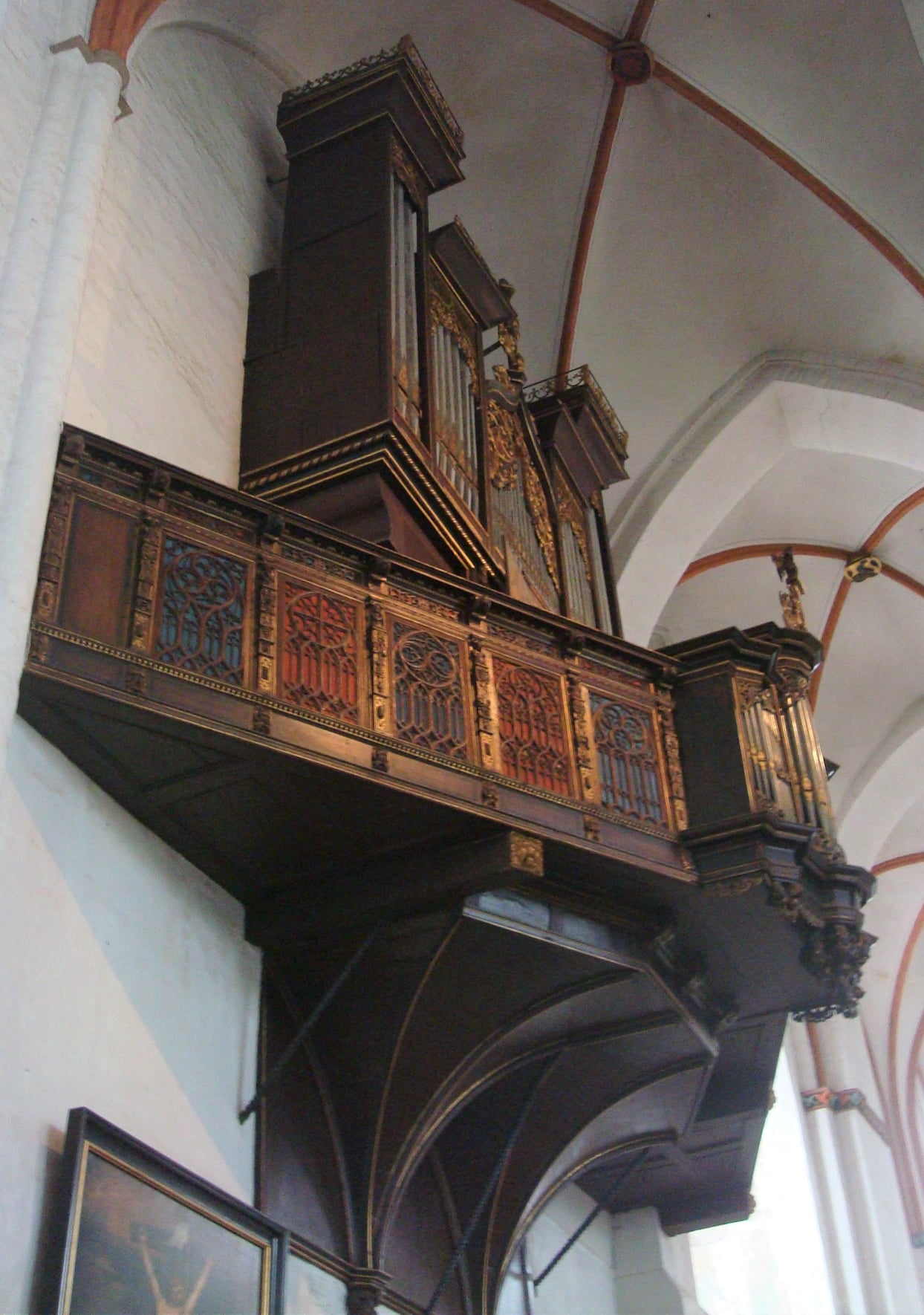
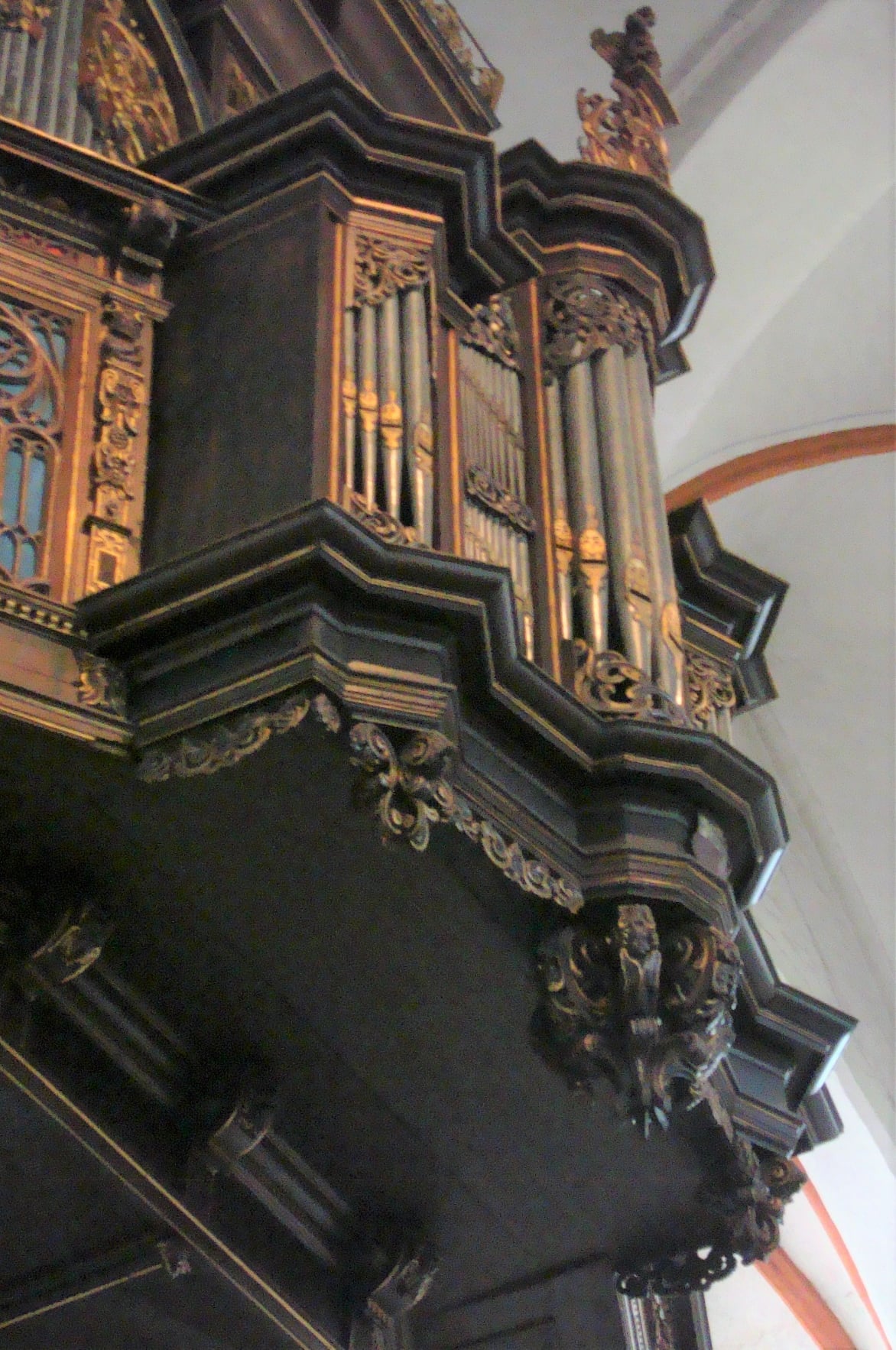
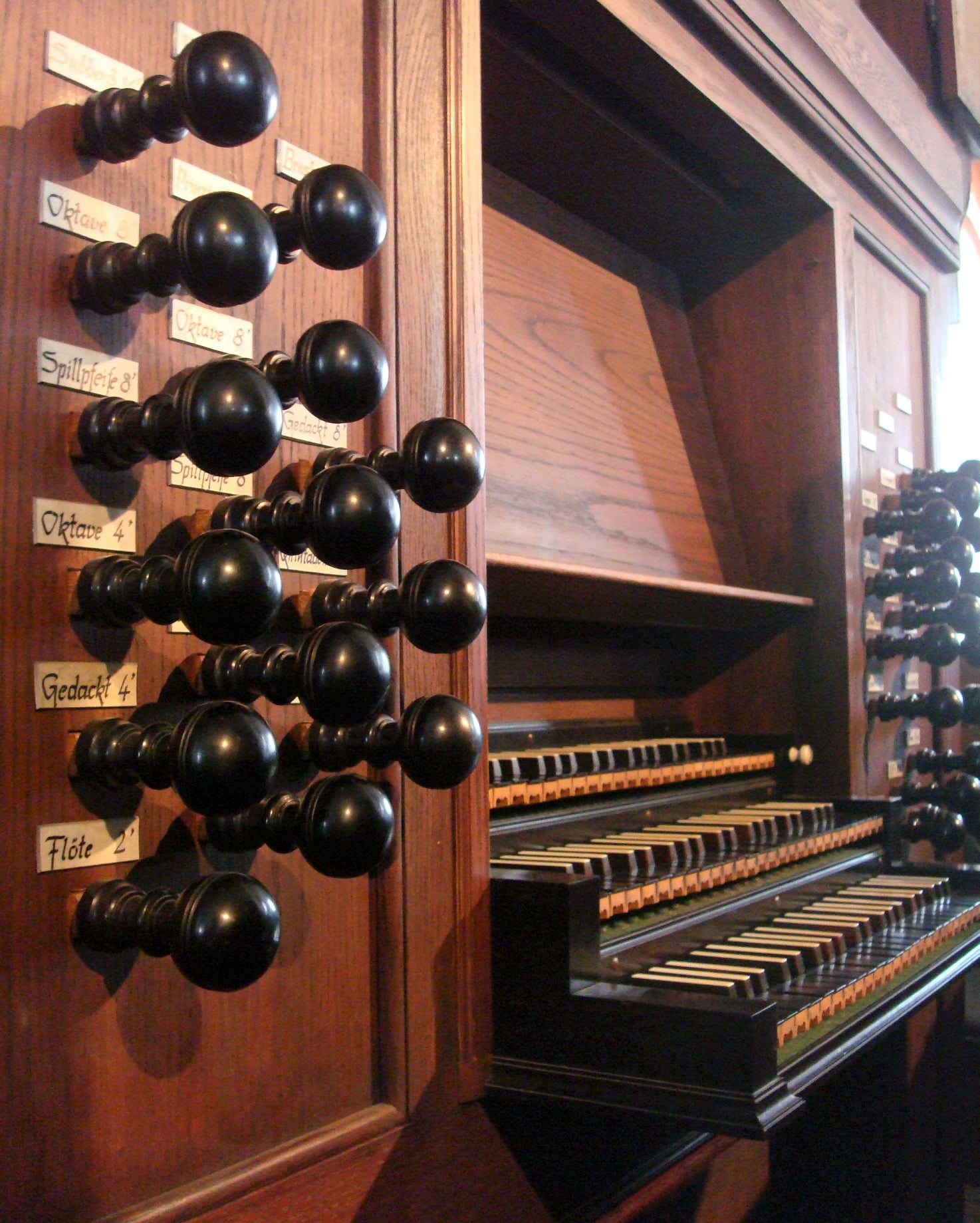
1467/1636 - Stellwagen Organ, St Jacobi, Lübeck
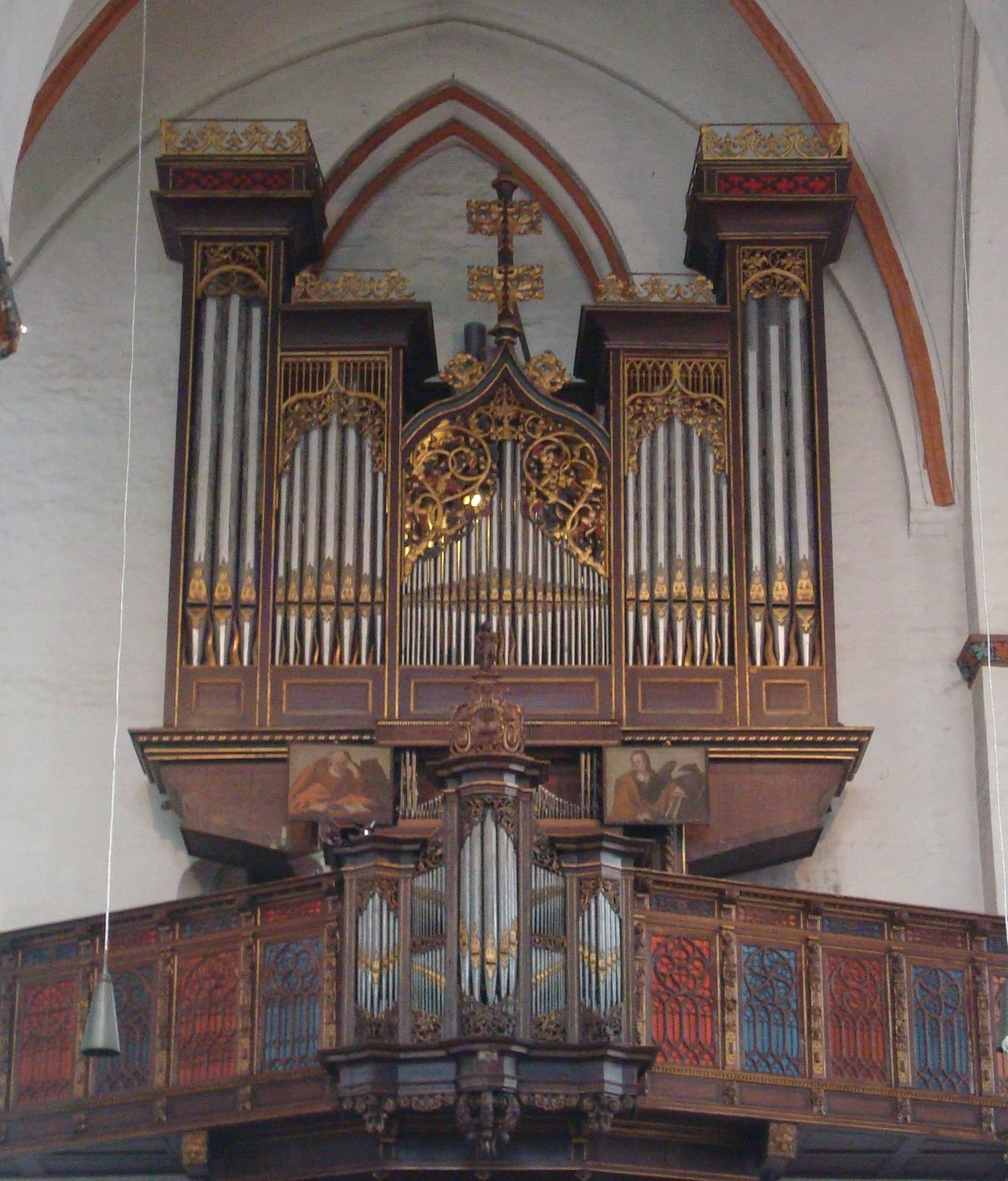
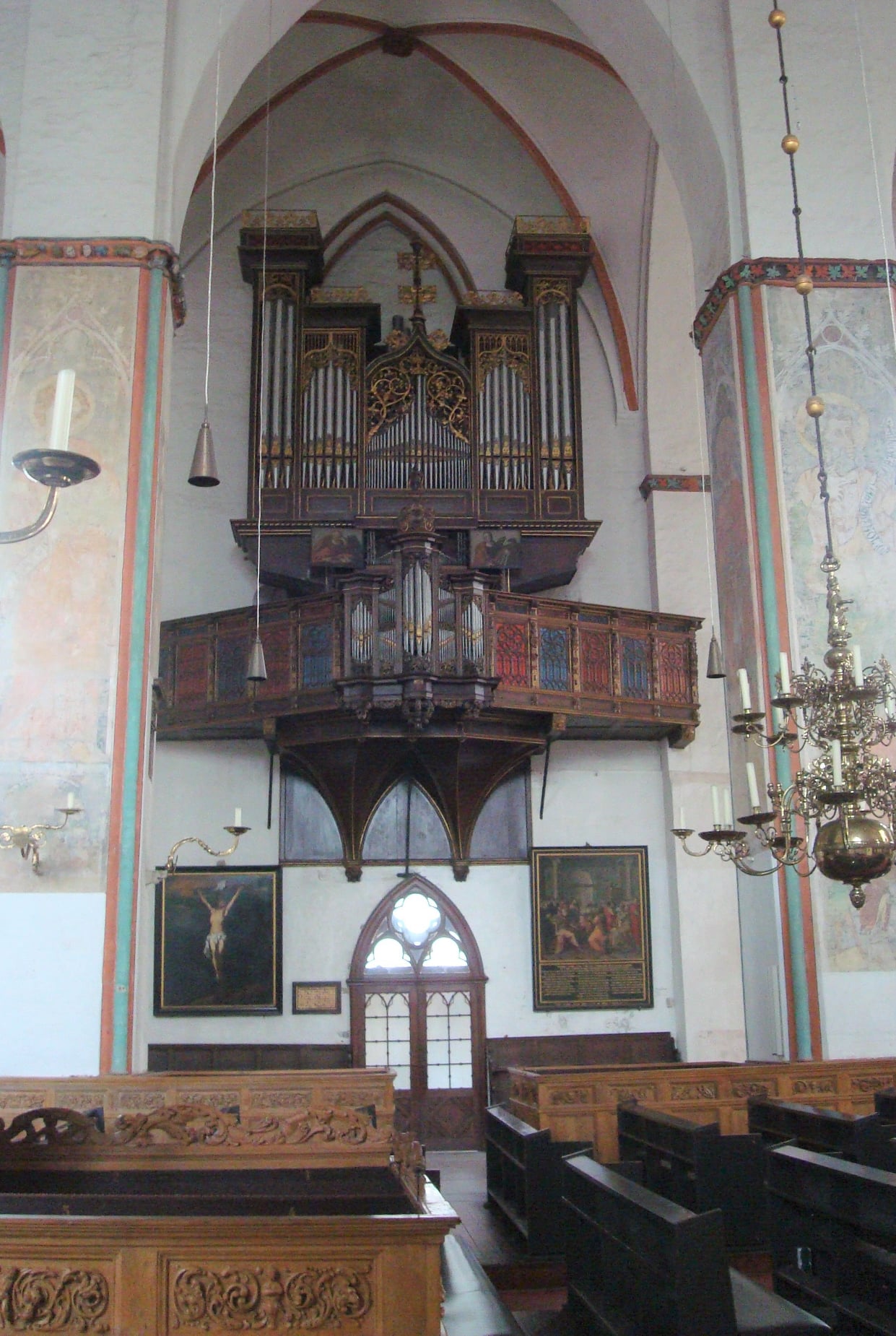
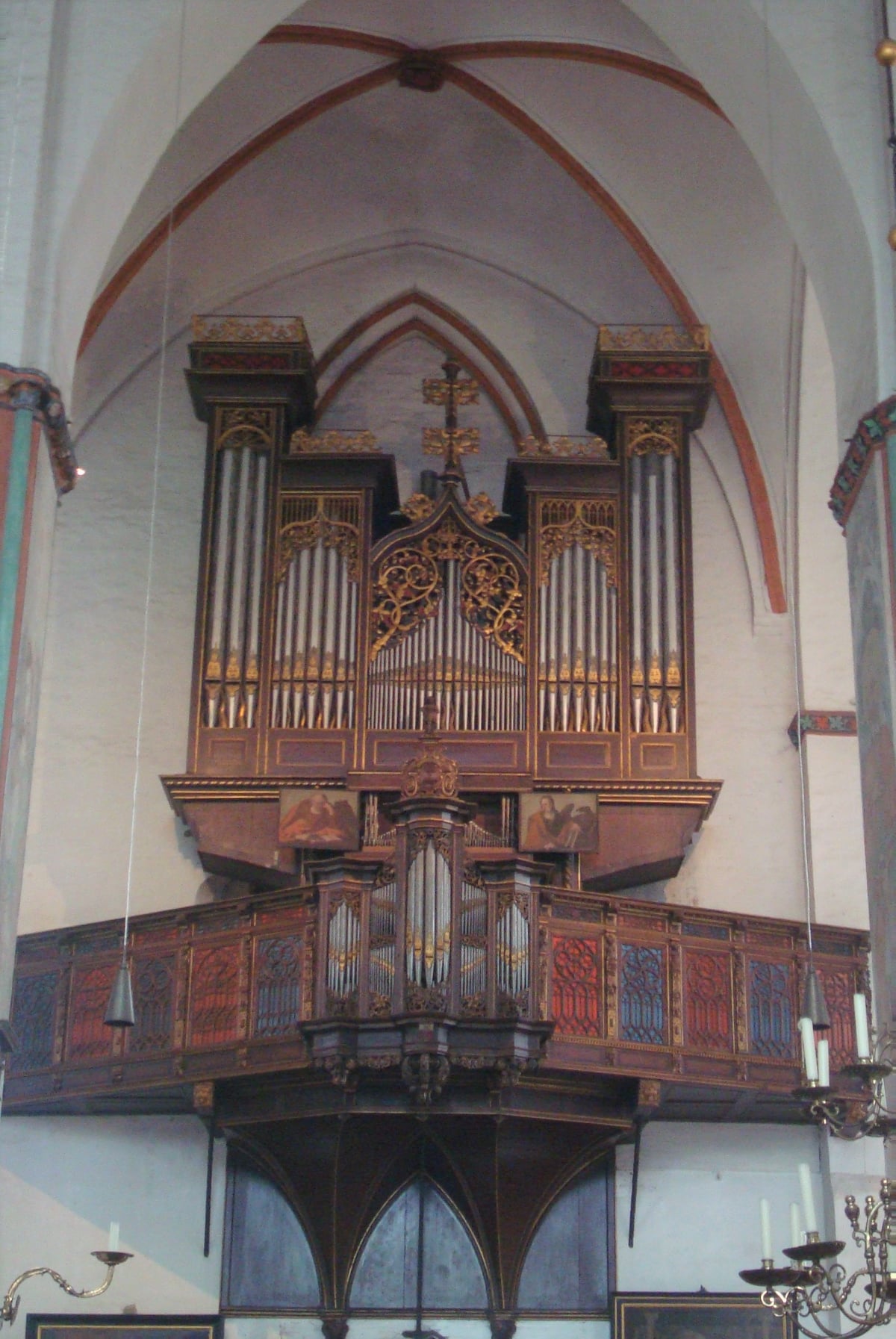
The Stellwagen Organ at St. Jacobi (St. Jakobi) in Lübeck is one of the world's most significant surviving examples of North German organ building, known for its rich history and preserved Renaissance and Gothic pipework. The organ is known as the "Kleine Orgel" (Small Organ) to distinguish it from the larger organ in the church.
Built by Friedrich Stellwagen 1637. The organ contains older material: pipes in the Hauptwerk, c. 1500 by unknown builder. Reconstruction 1977-78 by Hillebrandt, and addition of 11 (9) stops in the pedal. IIIP/33 (31). Pitch a’= 440 Hz. Tuning Werckmeister. Manual compass CDEFGA-c'''. Pedal compass C-d'. Photo's 2013.
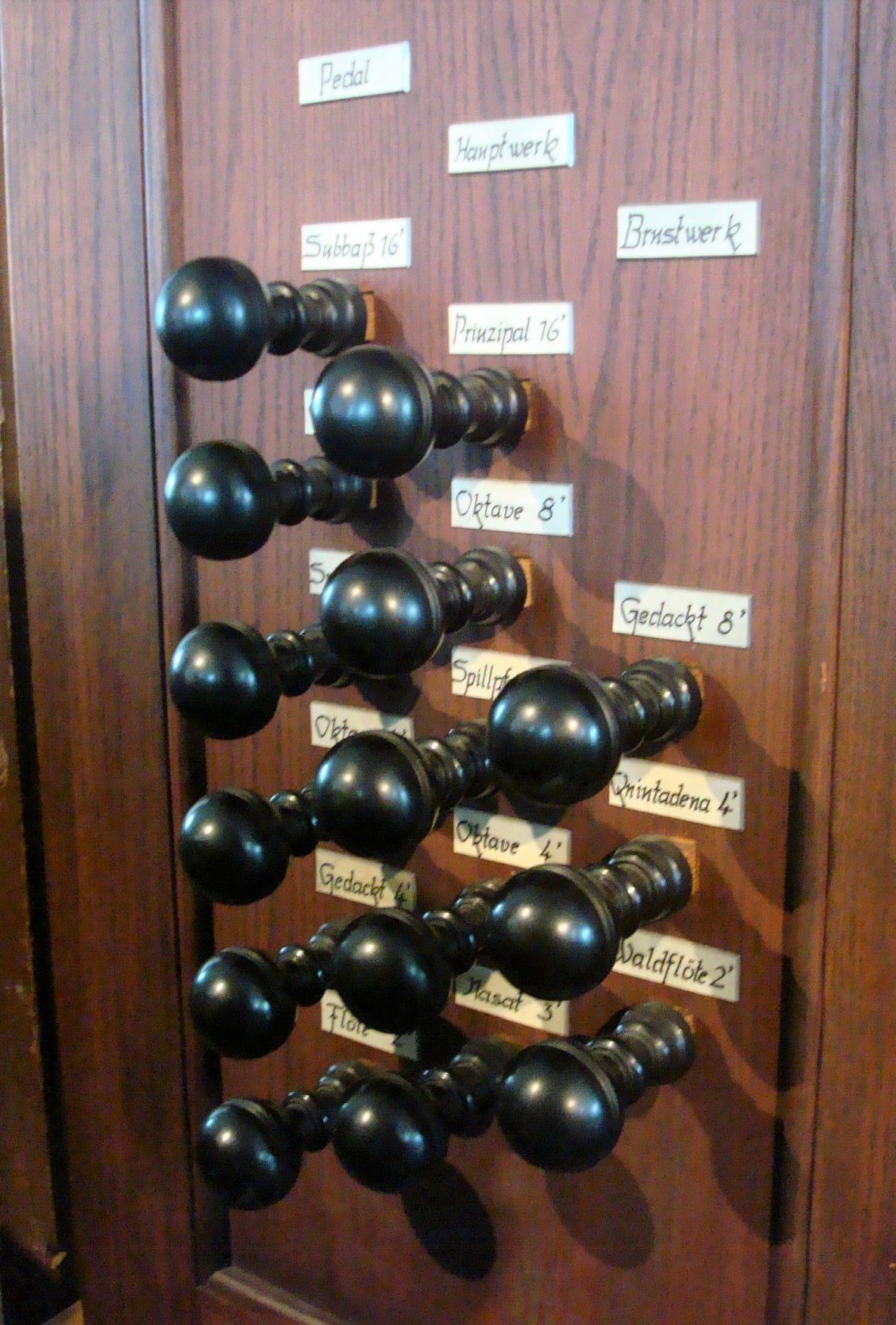
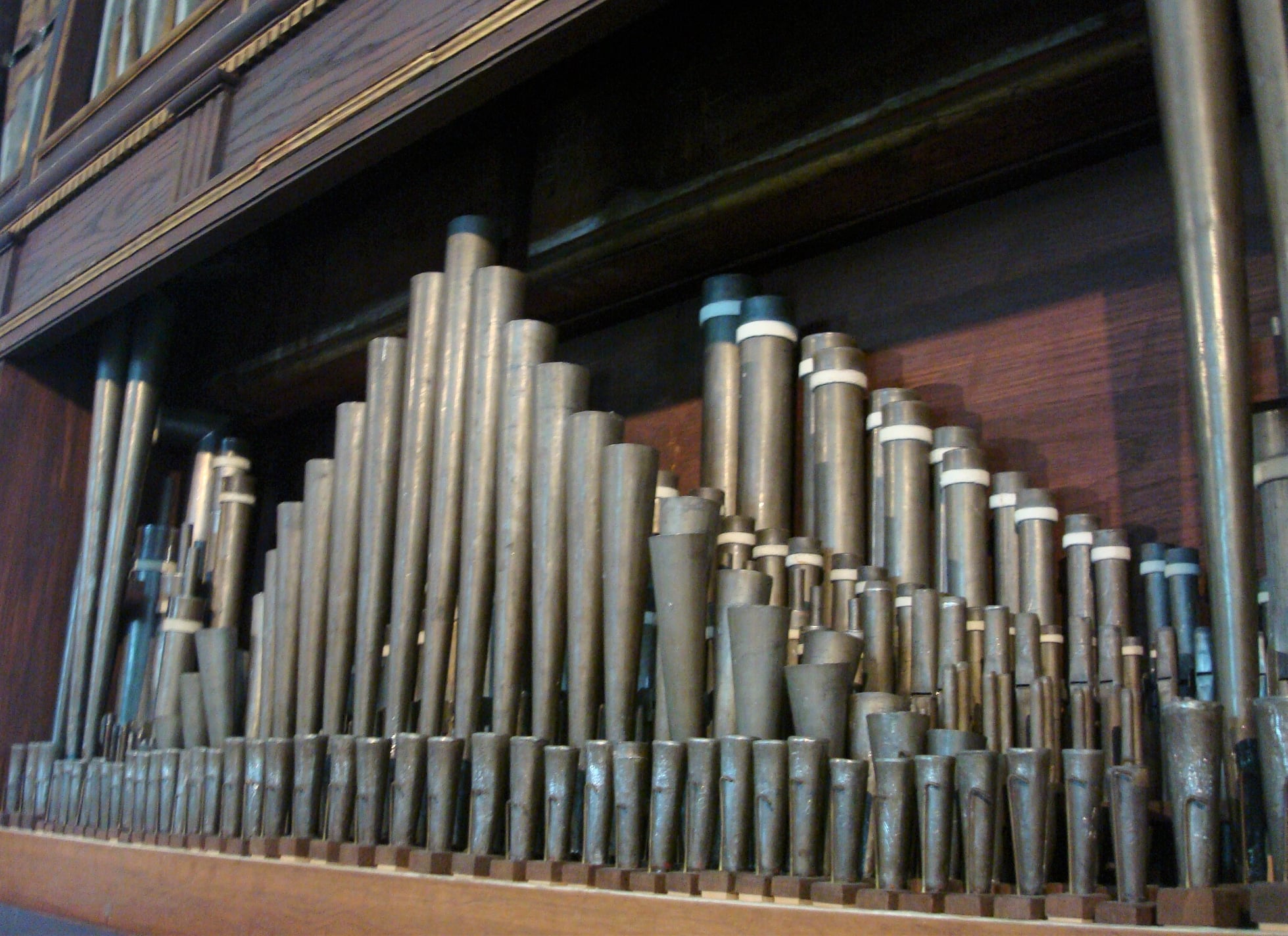
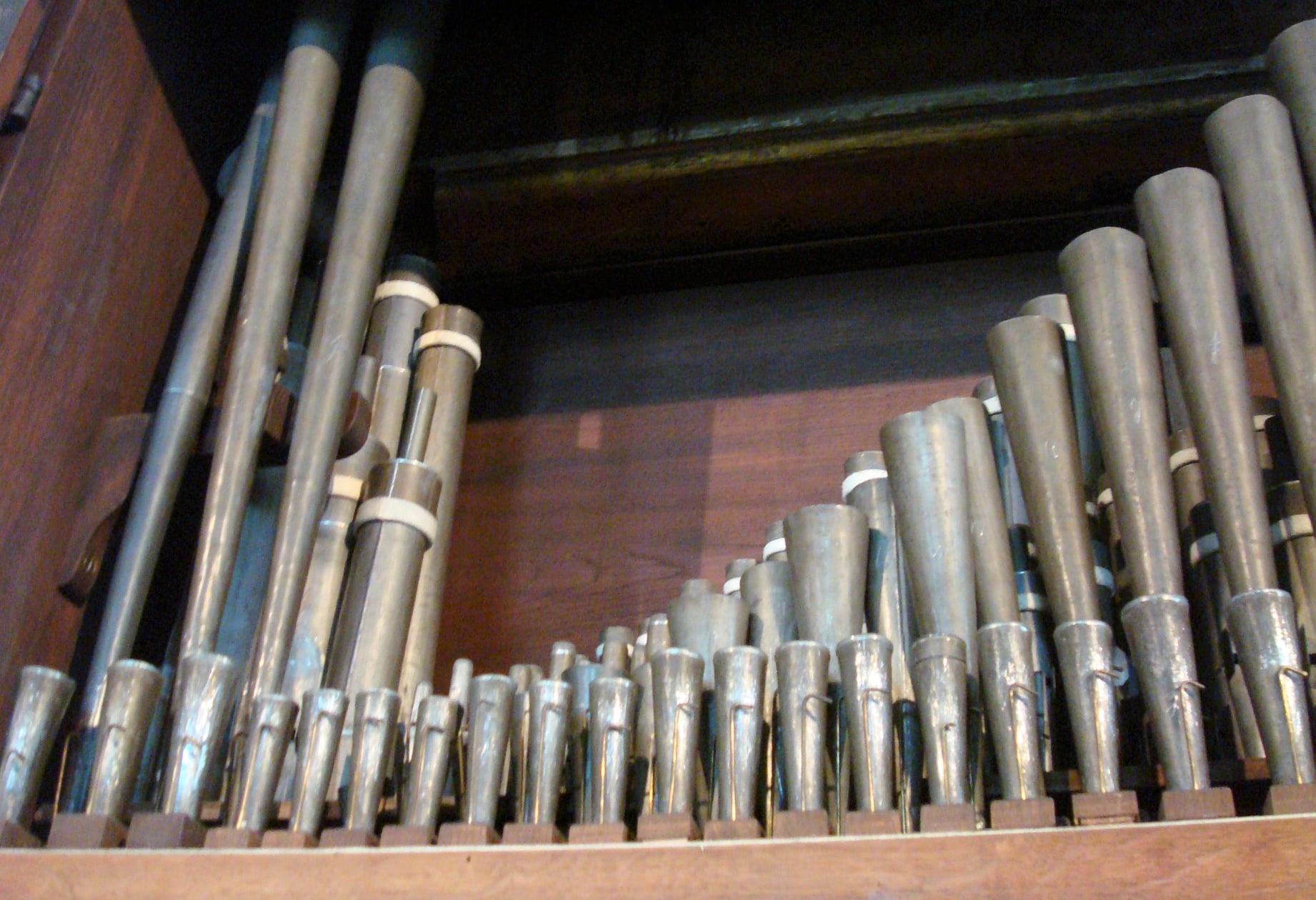
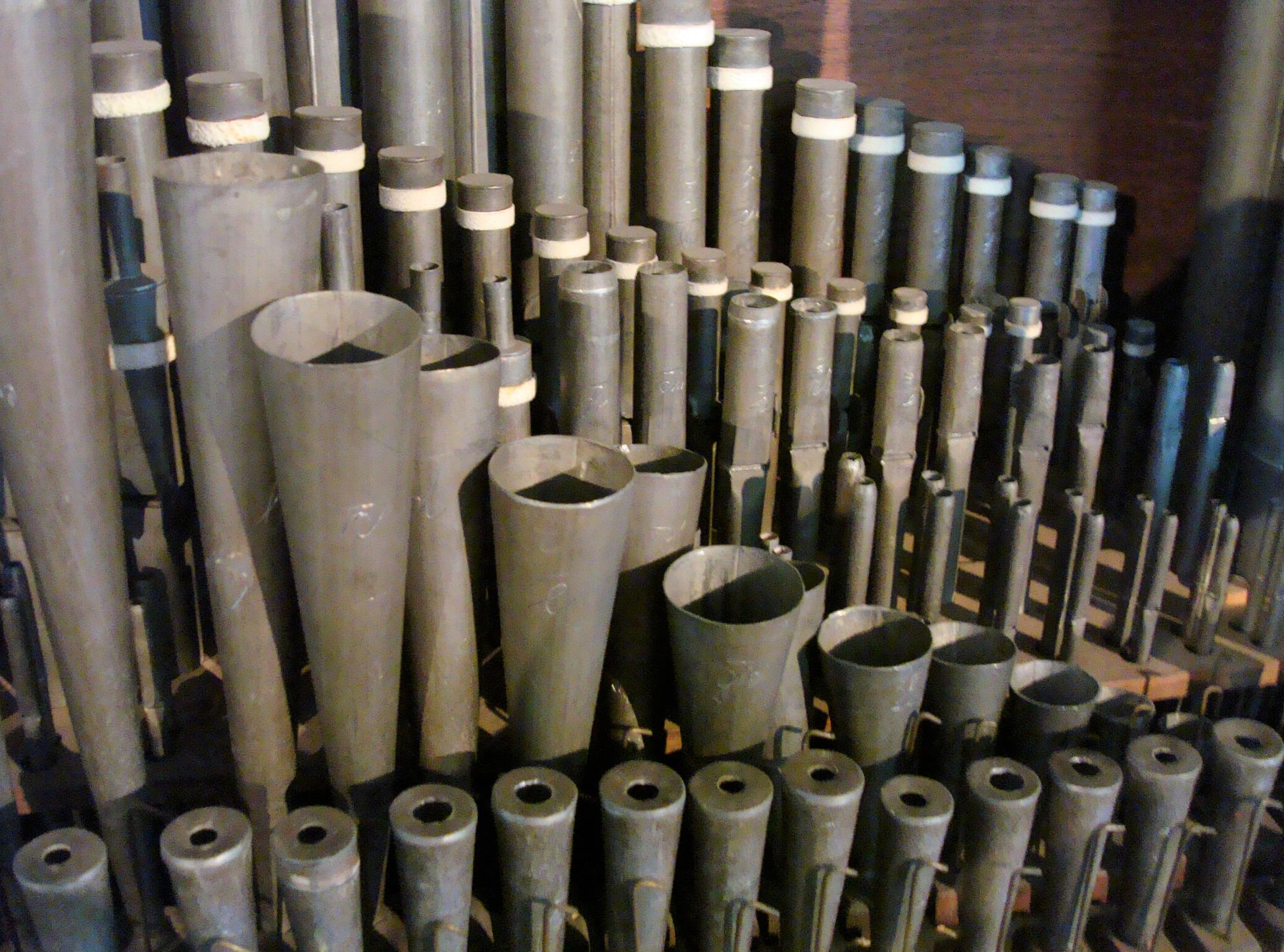
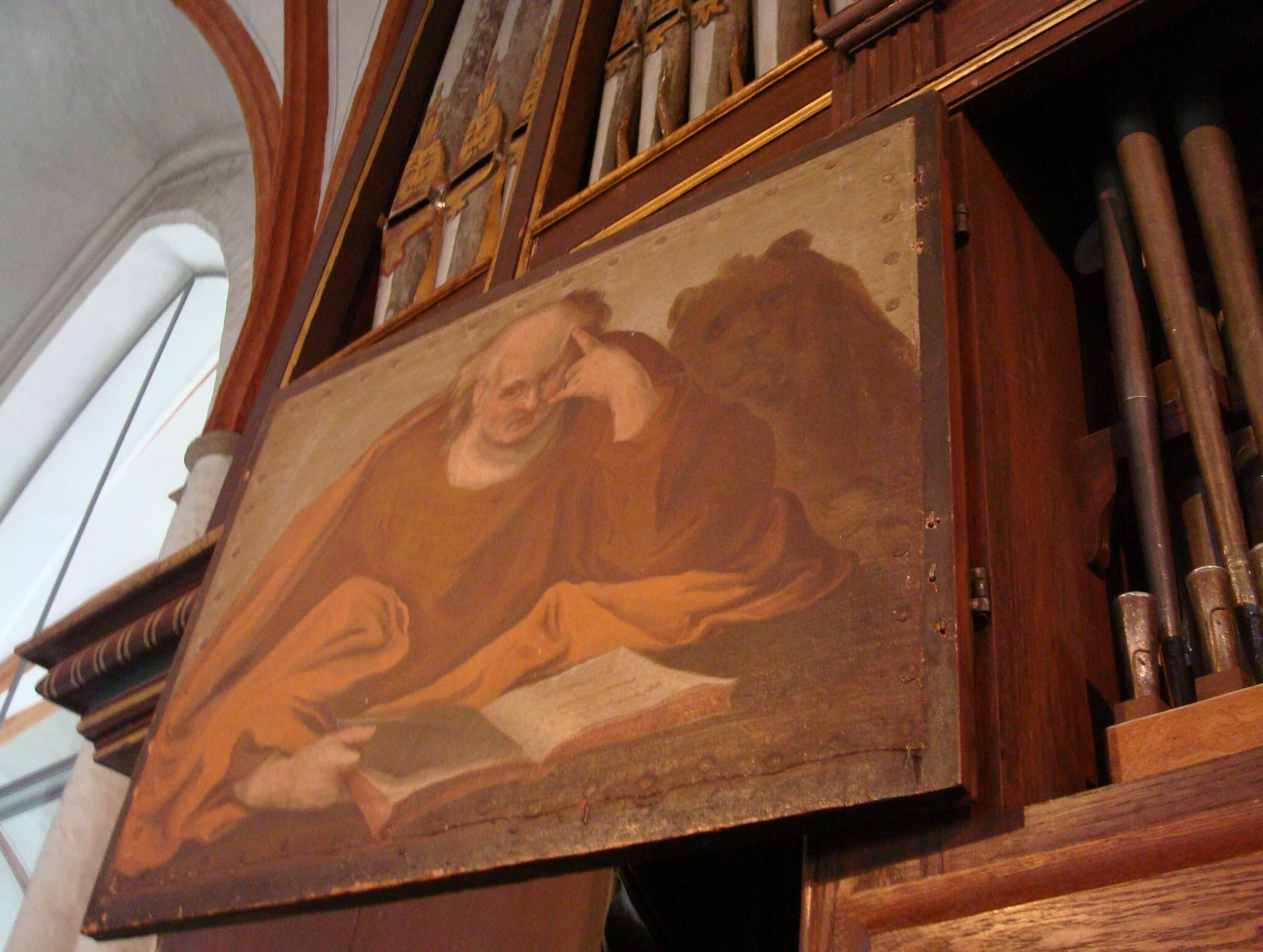
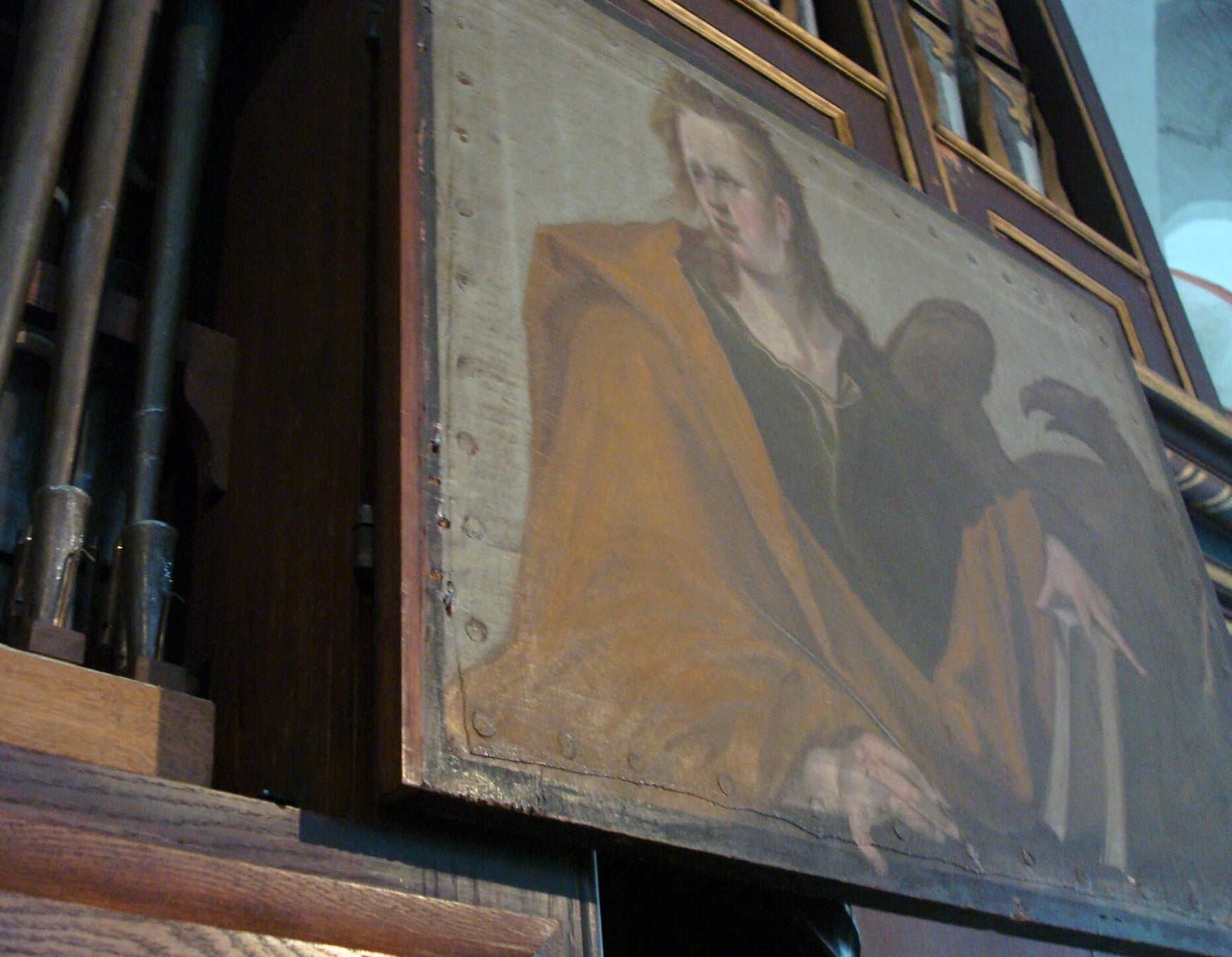
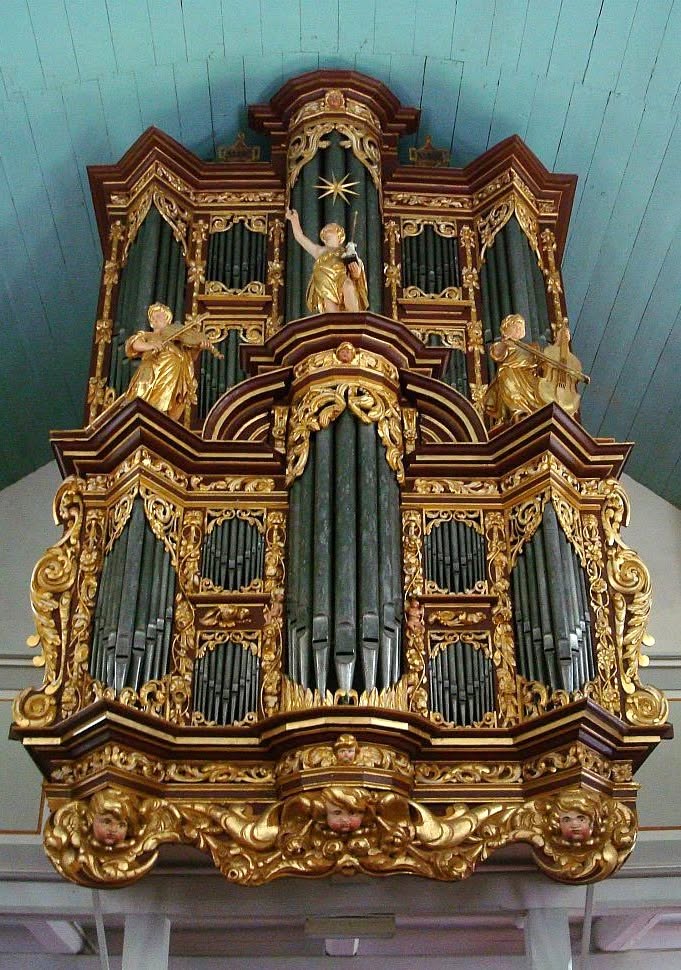
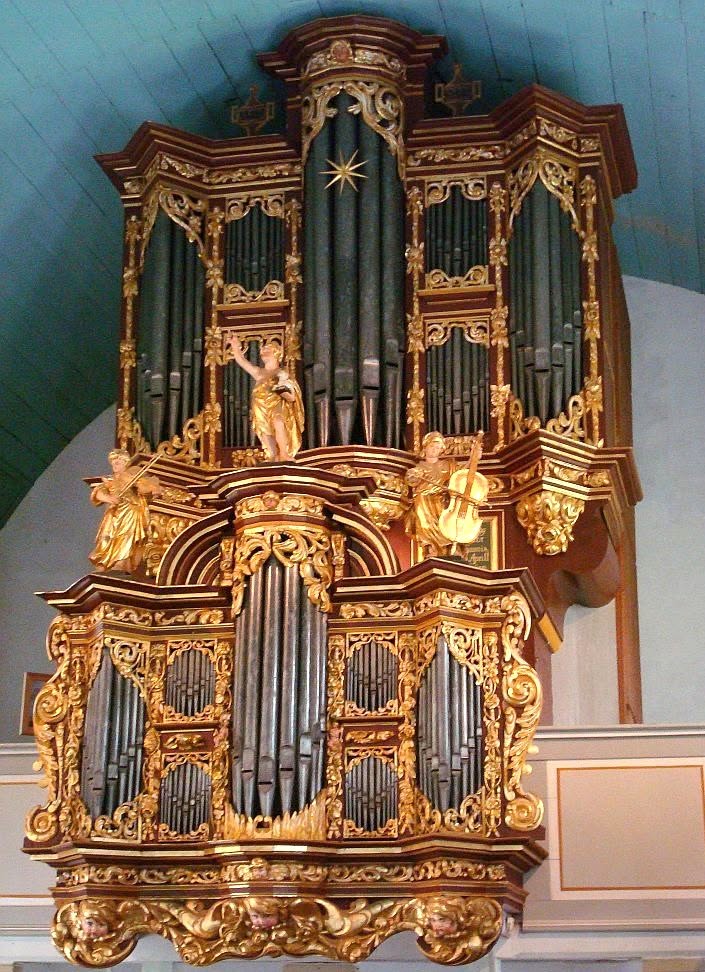
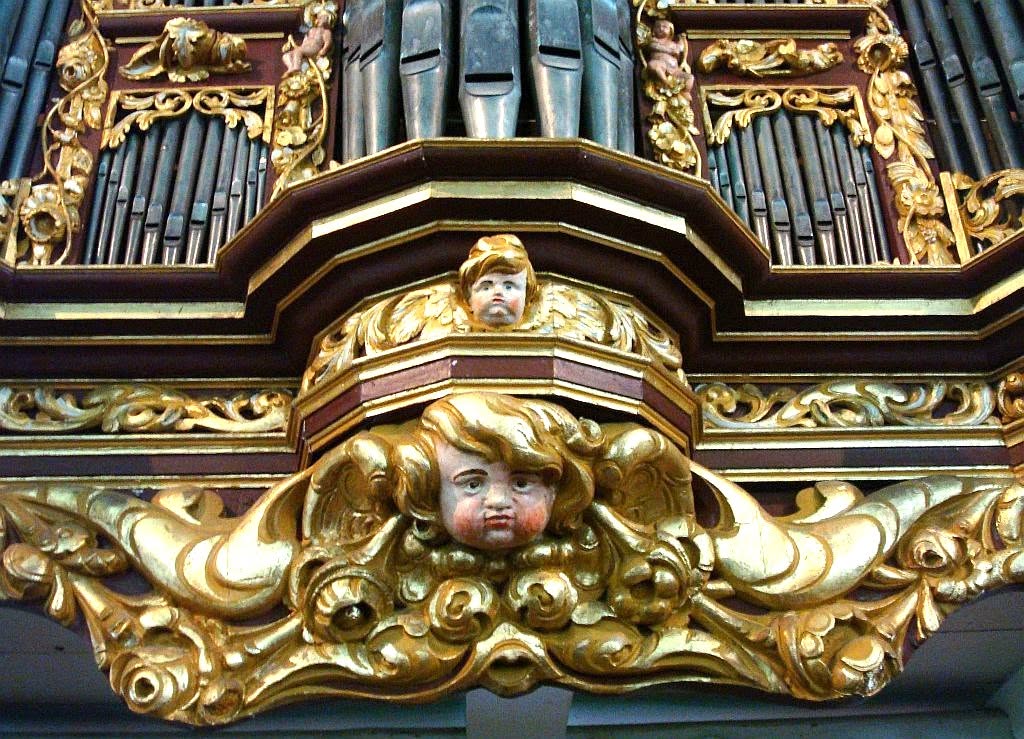
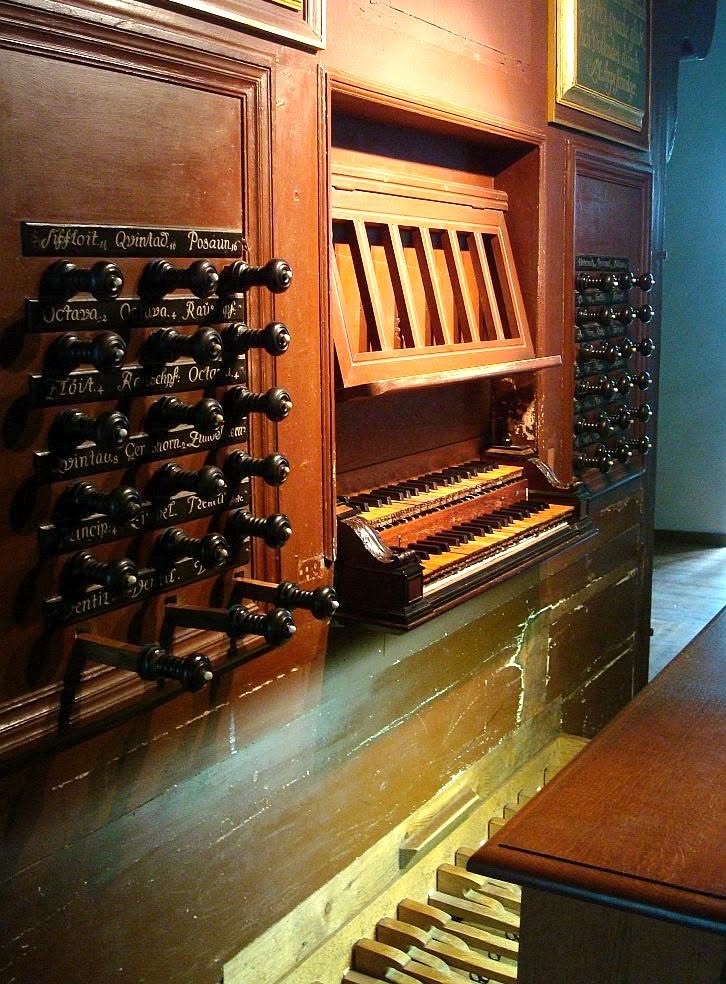
Arp Schnitger, Cappel, Germany
The Arp Schnitger organ in Cappel's St. Peter and Paul Church is a globally significant instrument, widely considered the best-preserved and most sonically authentic large two-manual organ from 17th-century northern Germany.
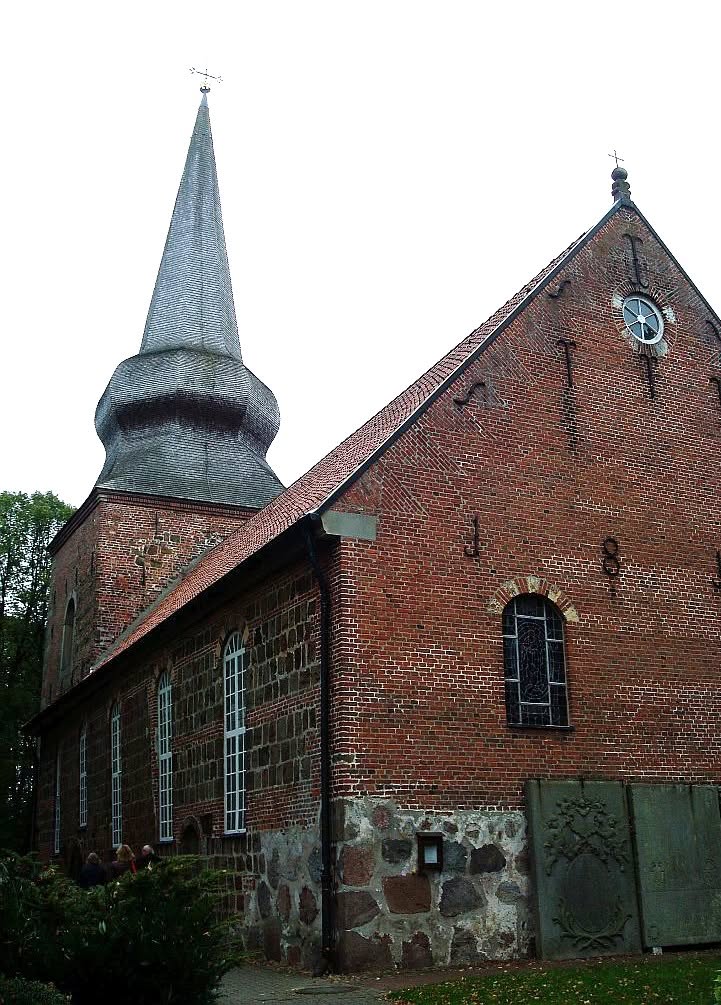
Arp Schnitger, Stade, Germany (Niedersachsen)
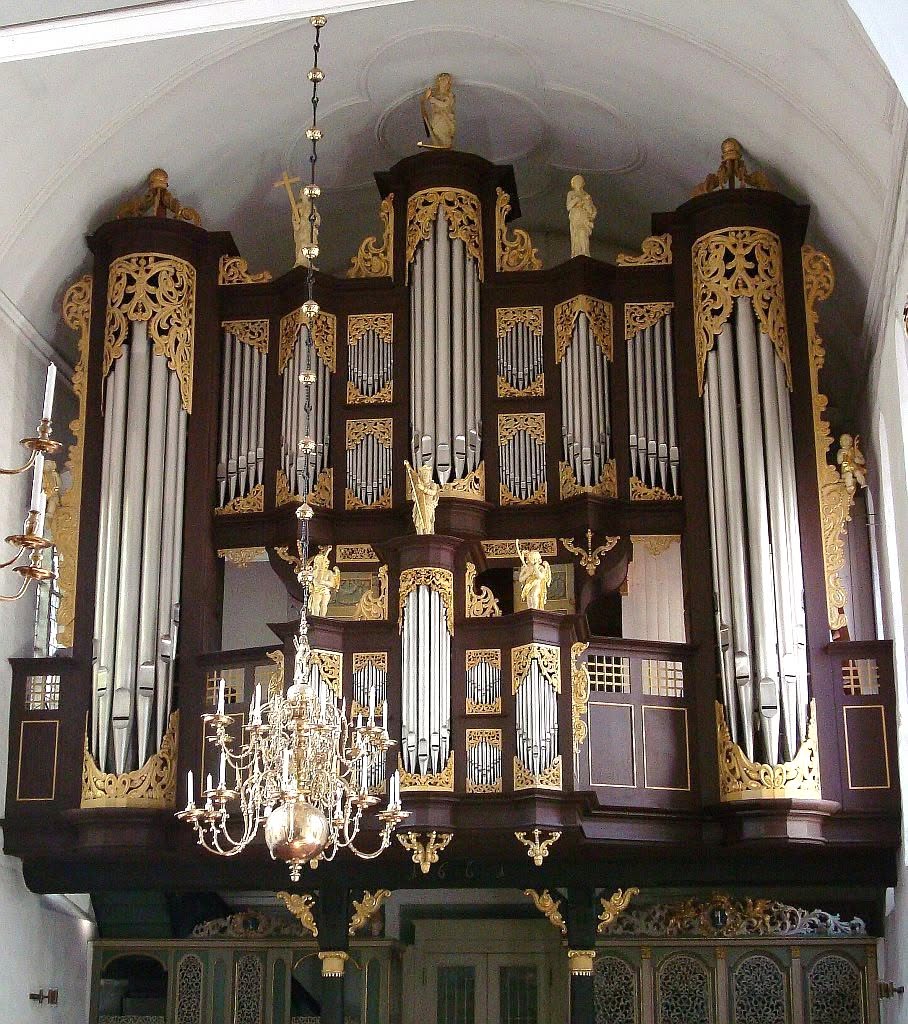
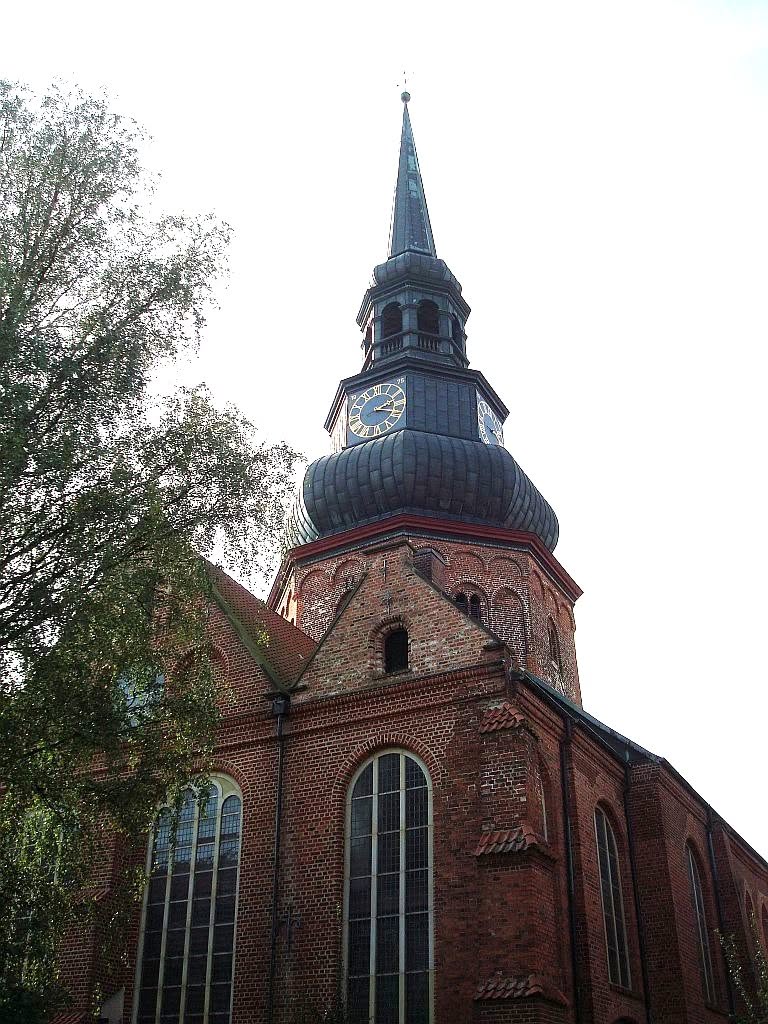
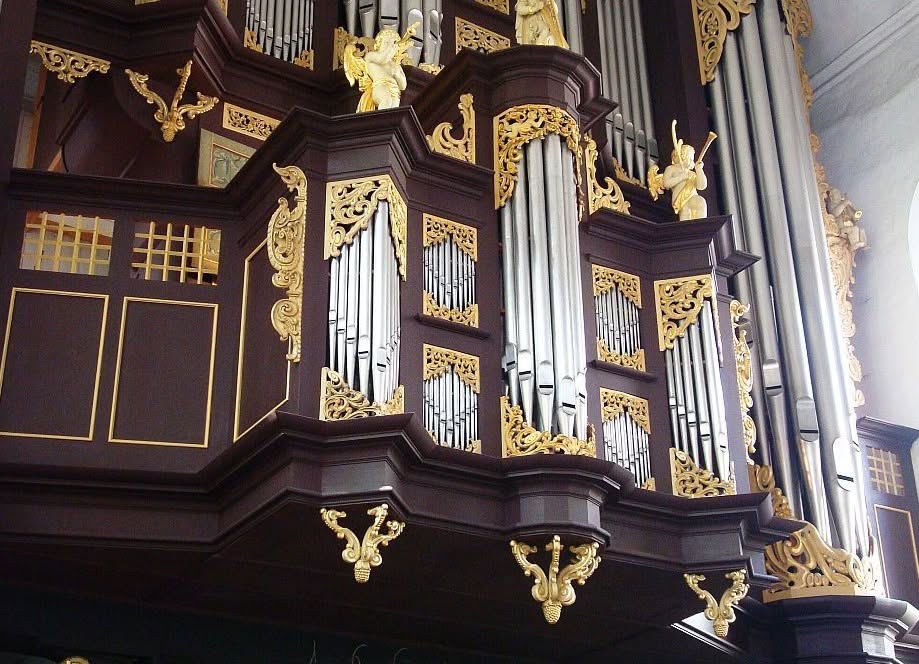
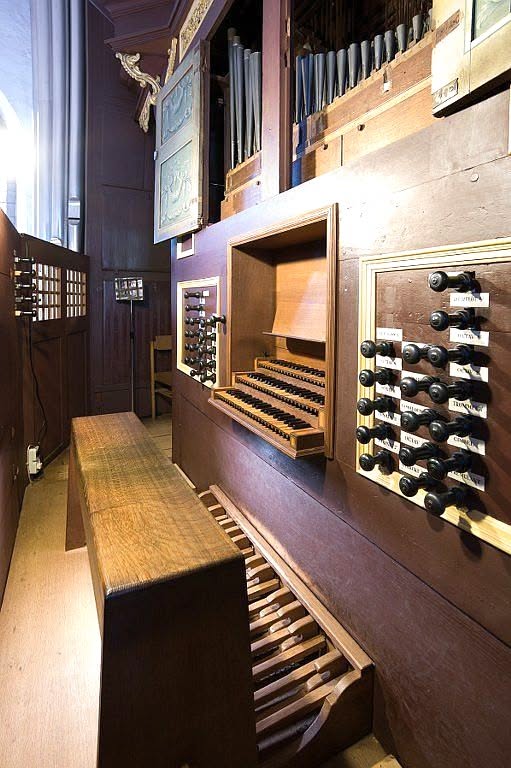
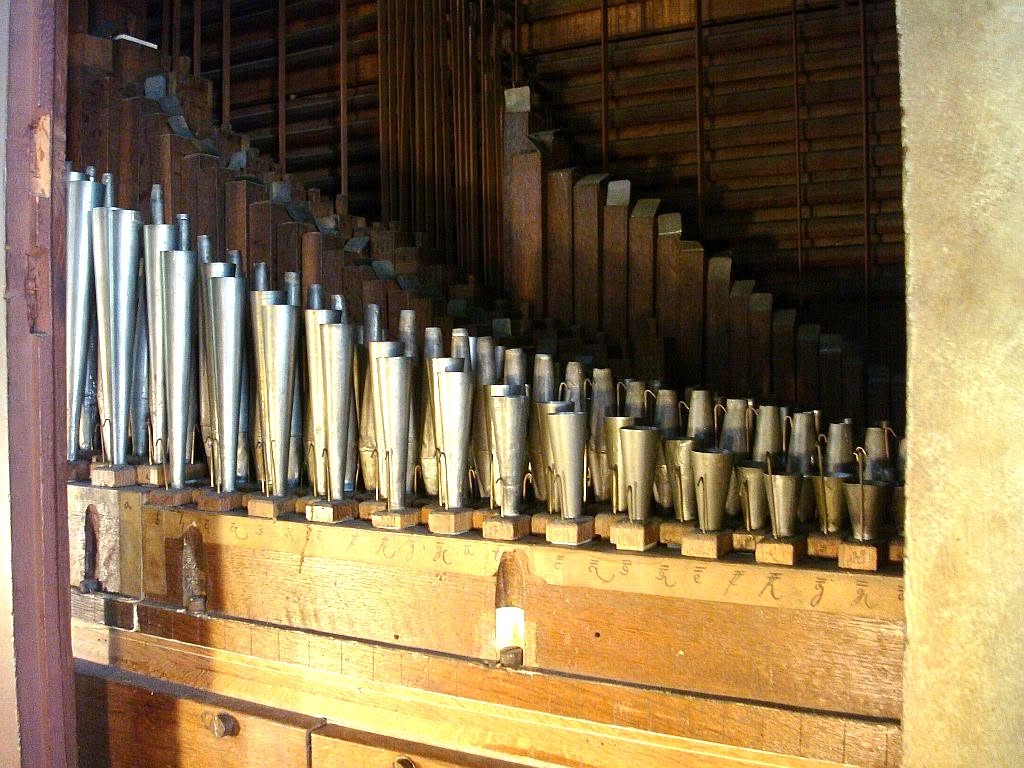
Stade, Germany (Niedersachsen) - St Cosmae et Damianikirche. Berendt Huess and Arp Schnitger 1675. Last works: reconstruction Jürgen Ahrend 1975 and restoration Rowan West 2017. III/P/42.
(Photos 2011 by Tjalling Roosjen's Facebook post.)
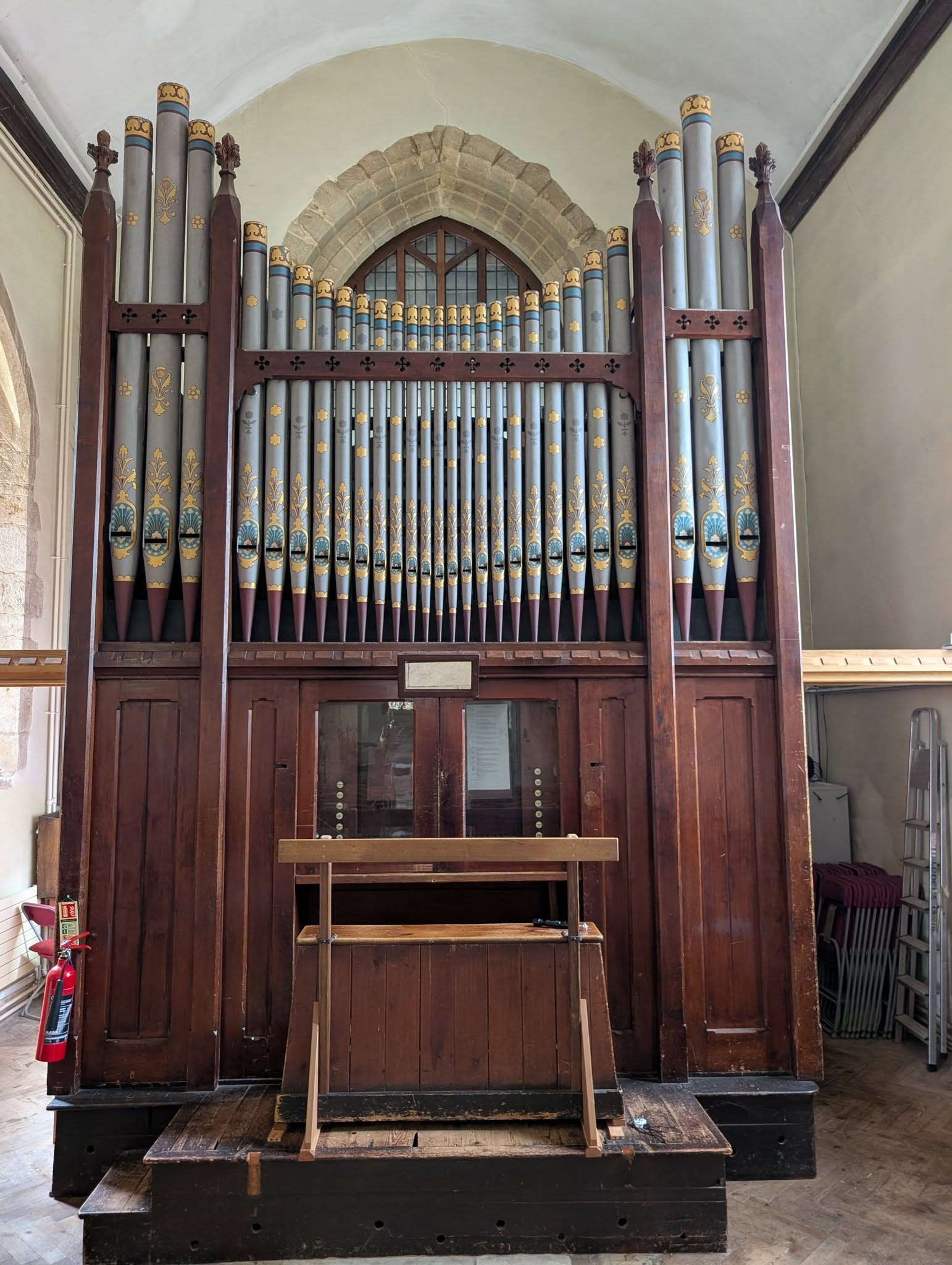
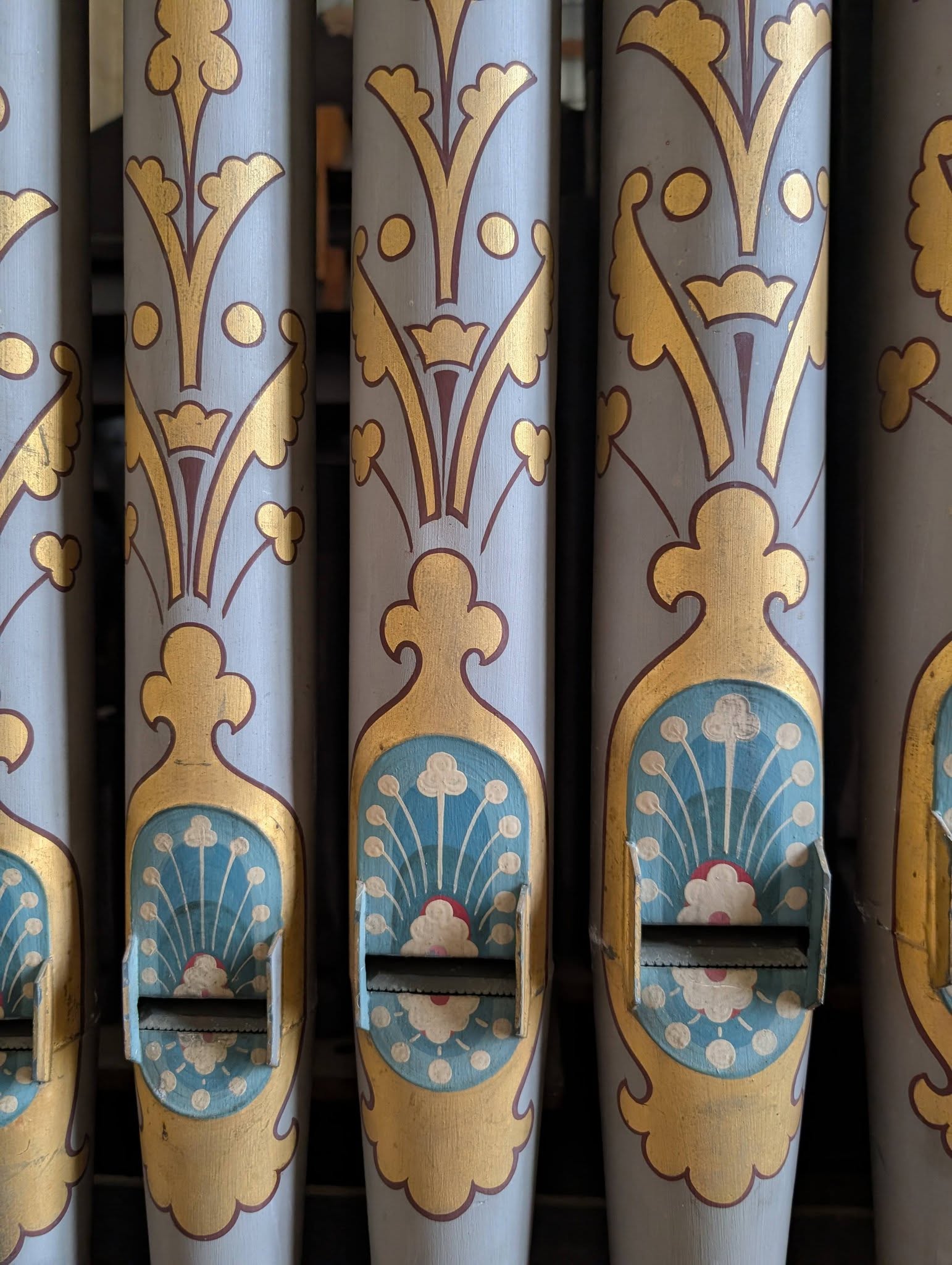
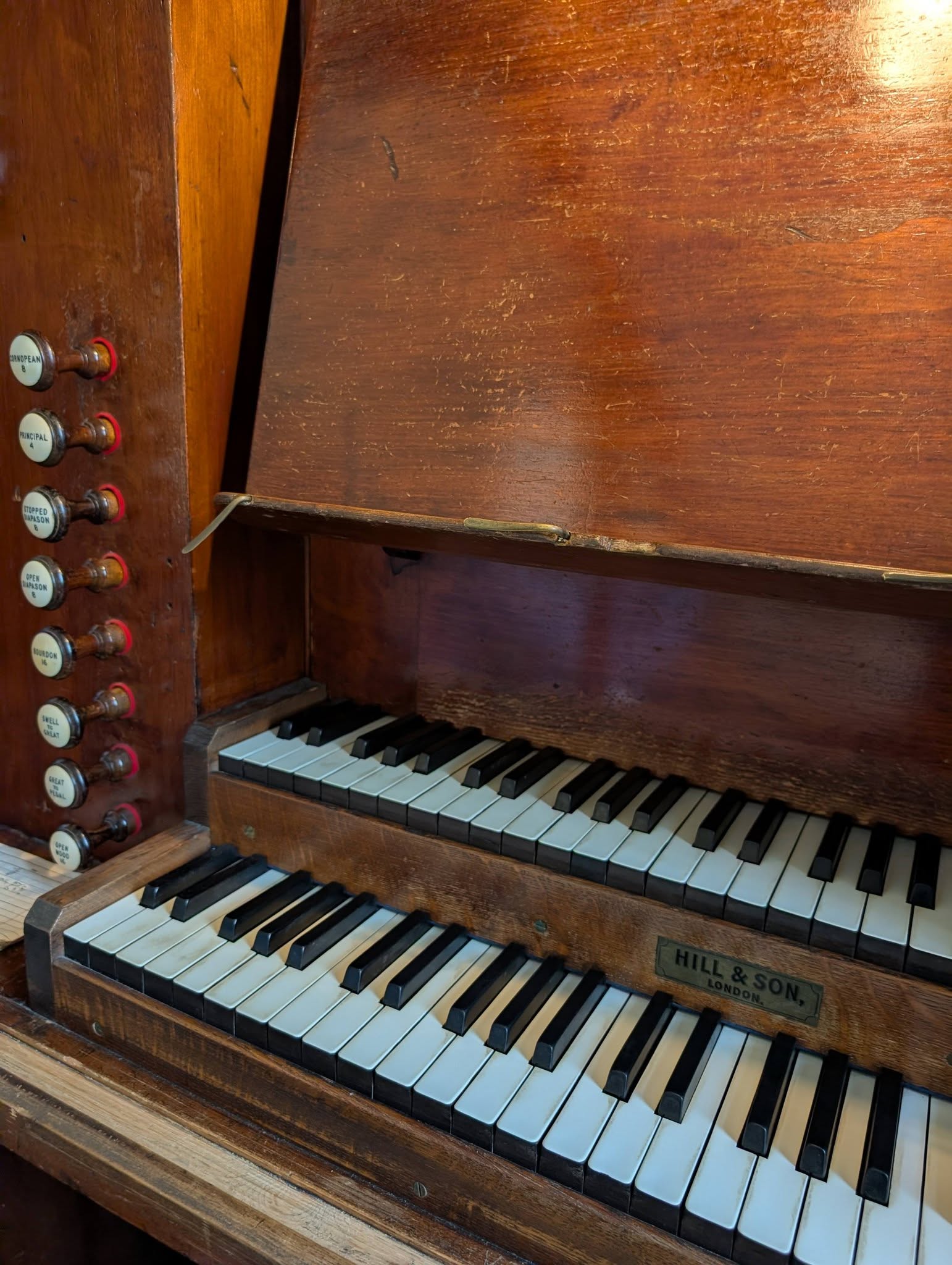
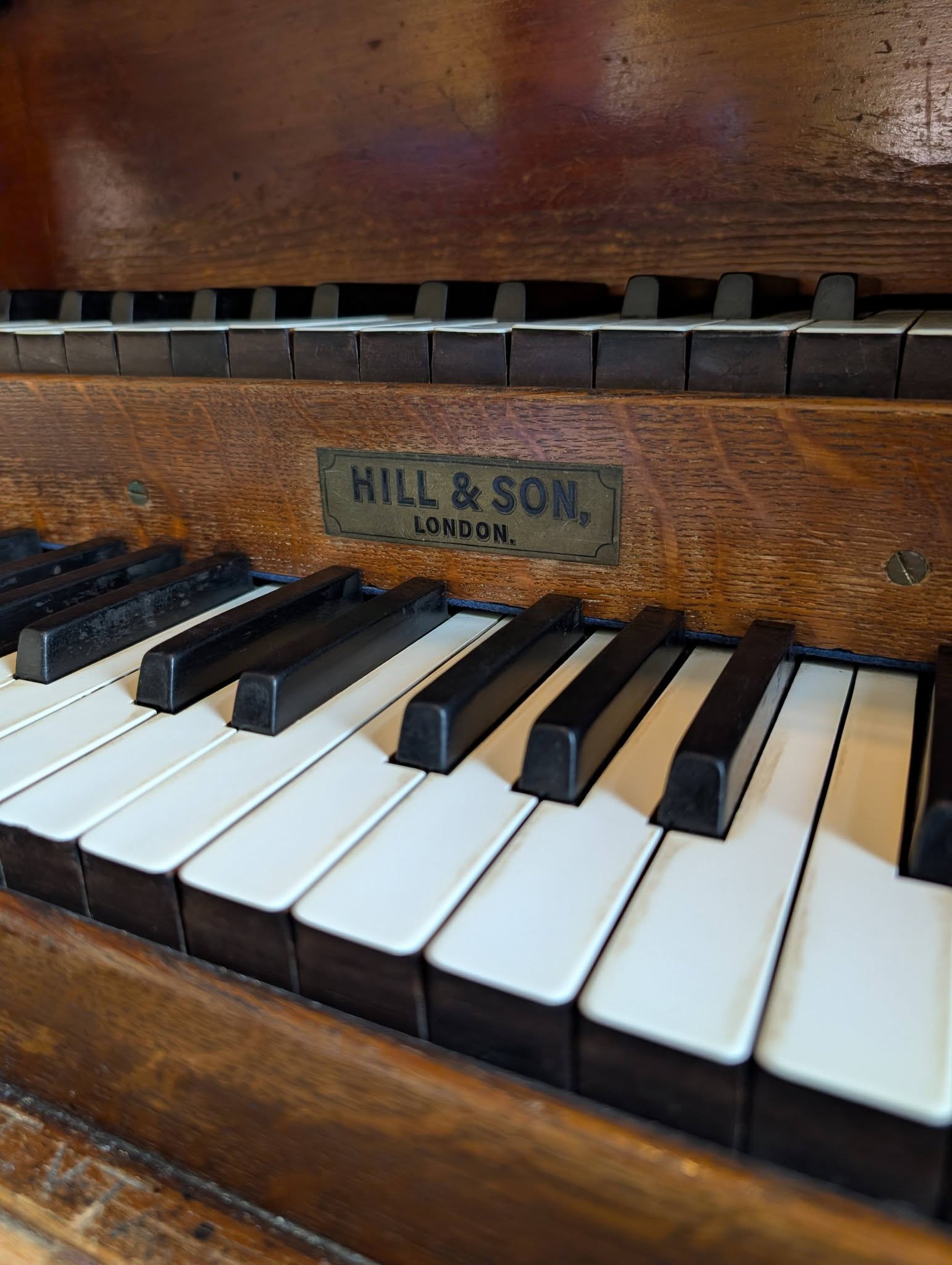
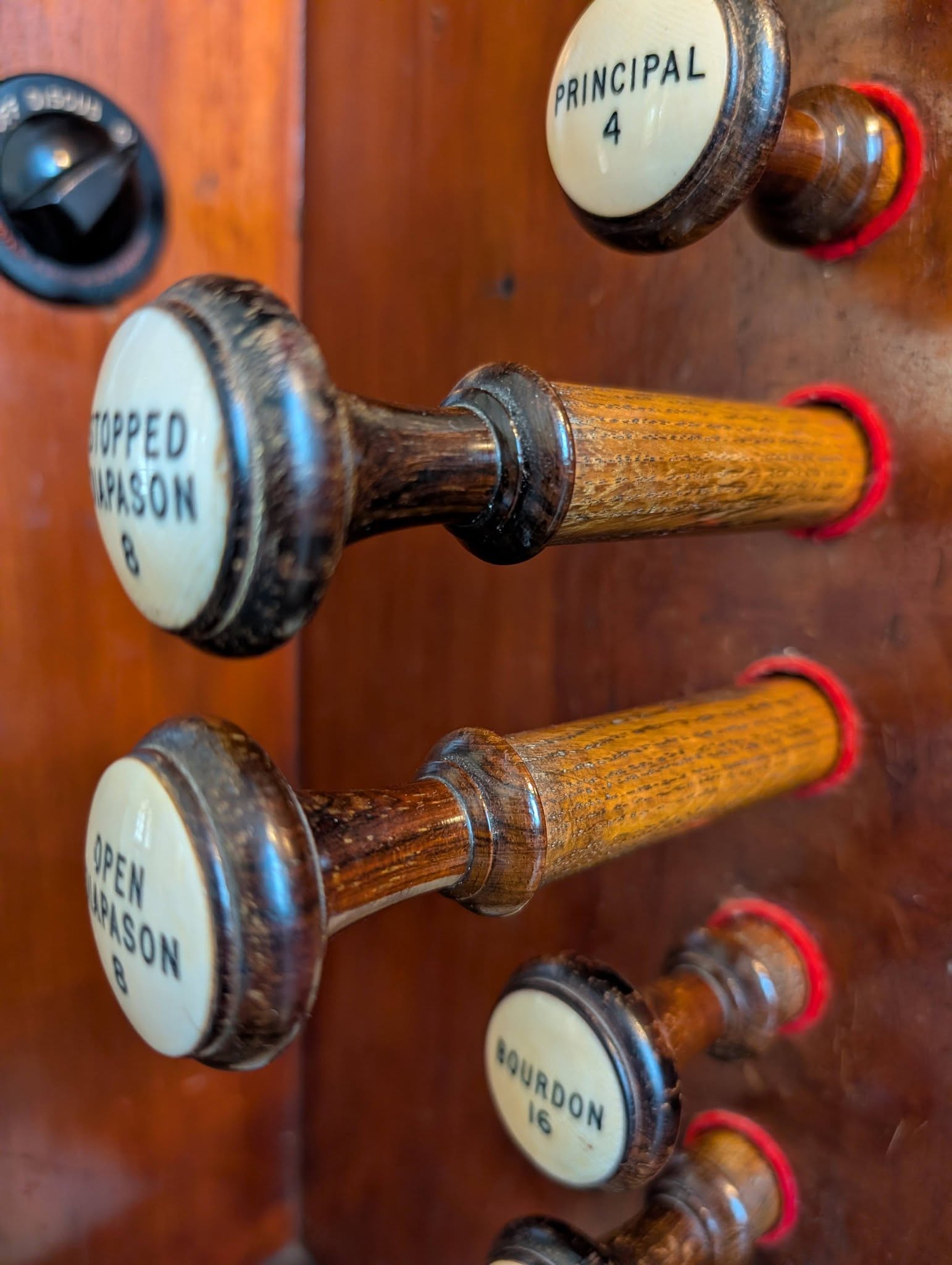
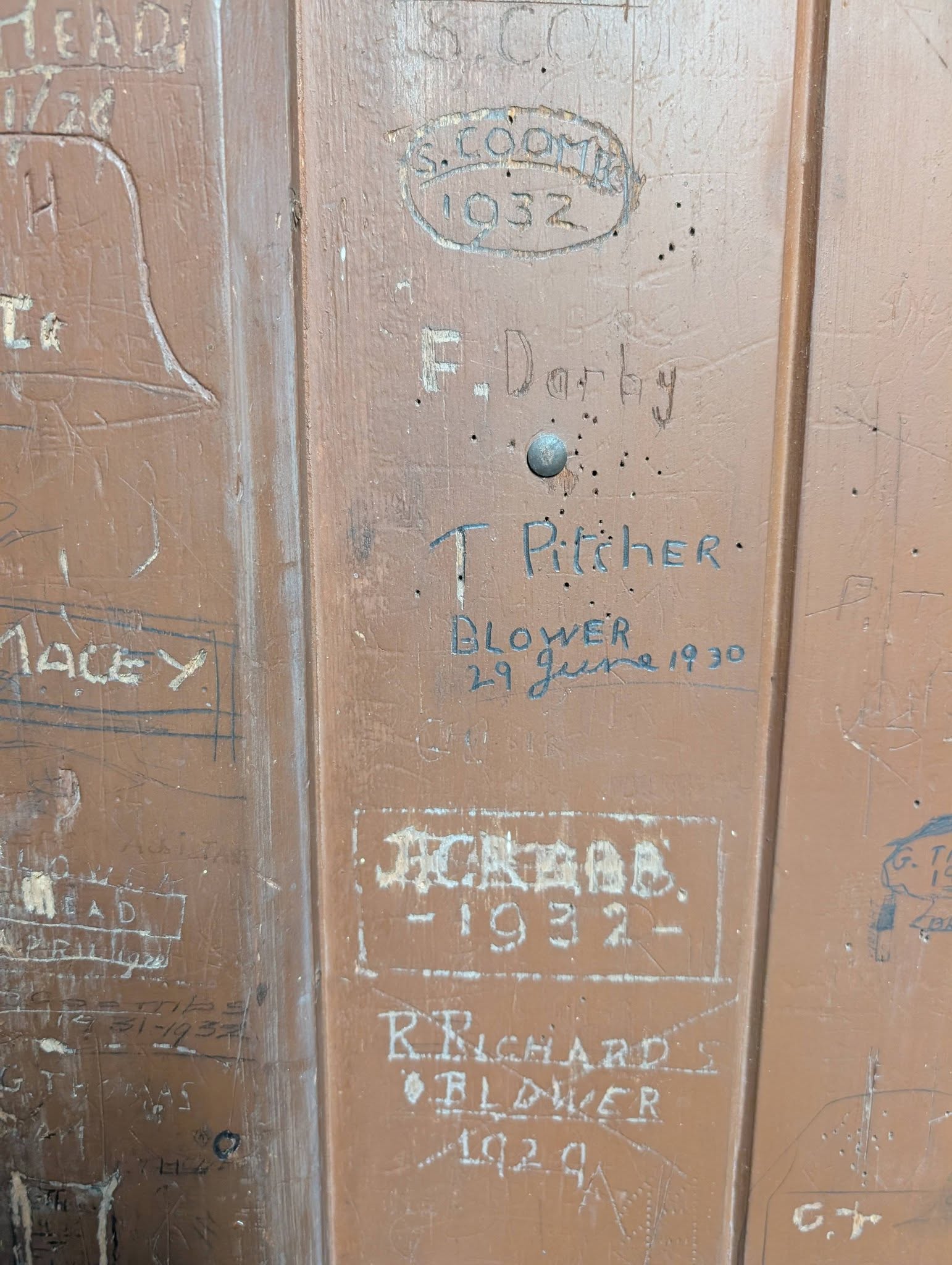
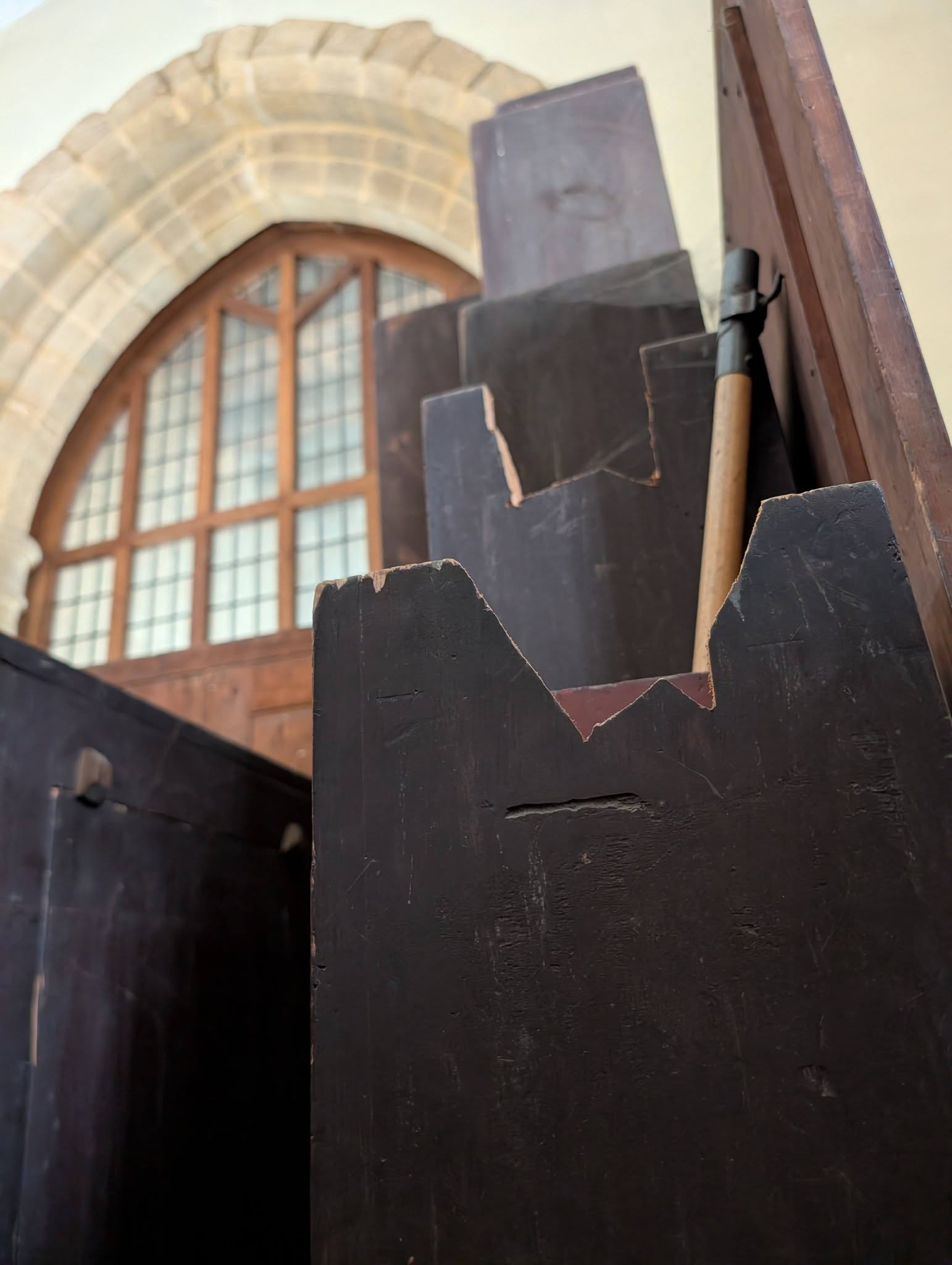
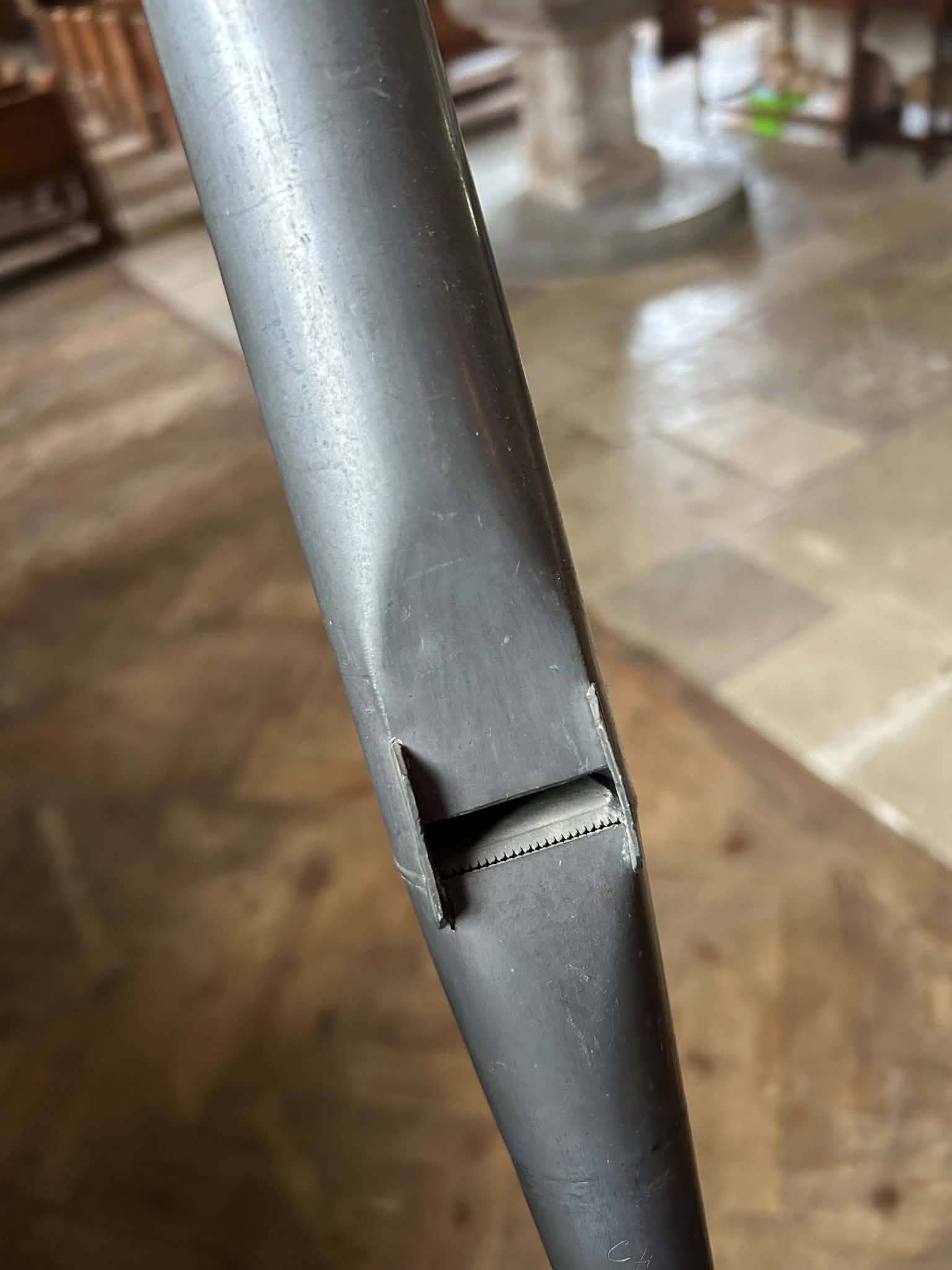
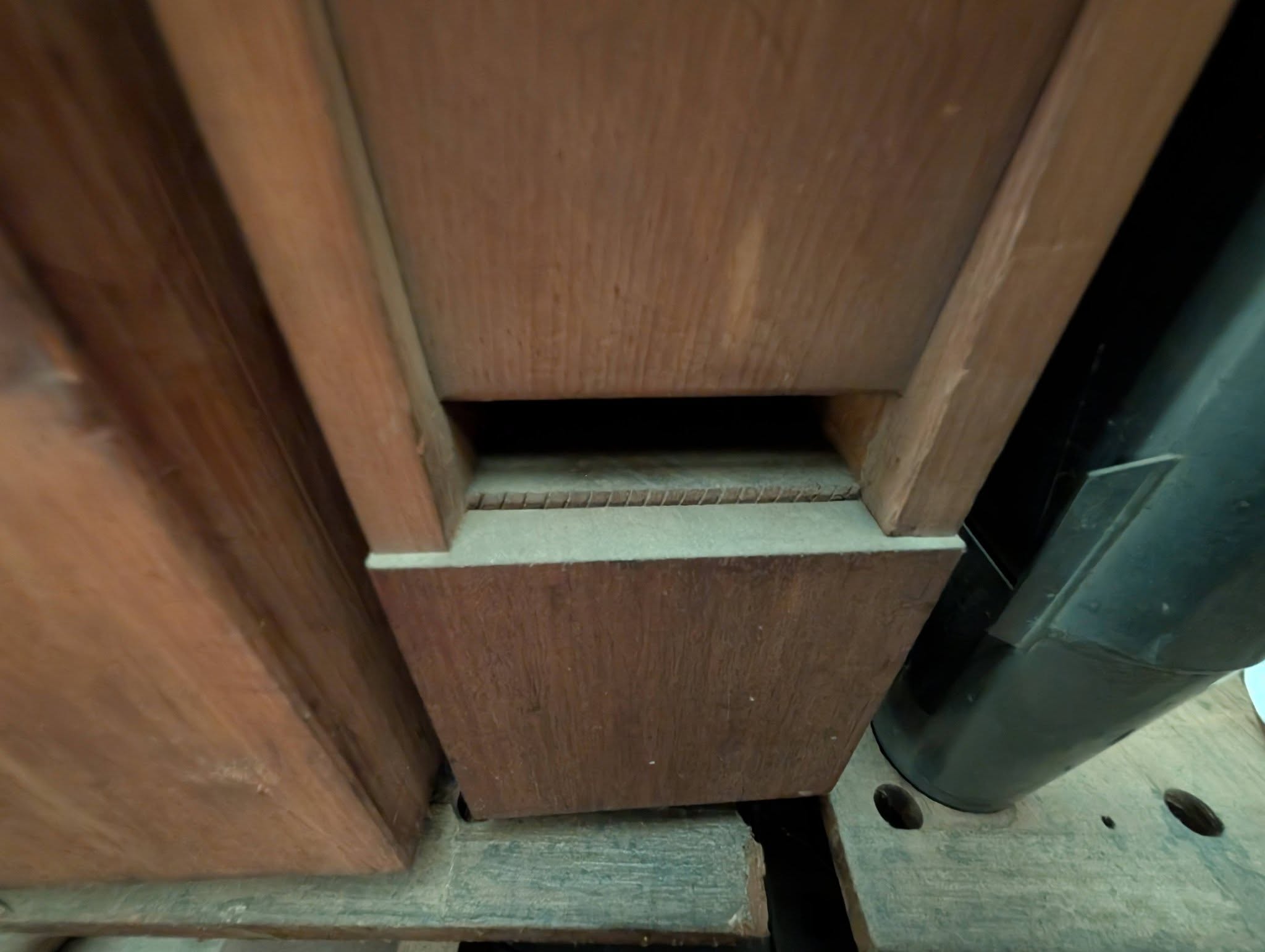
1864 - William Hill & Son, Loders, Dorset
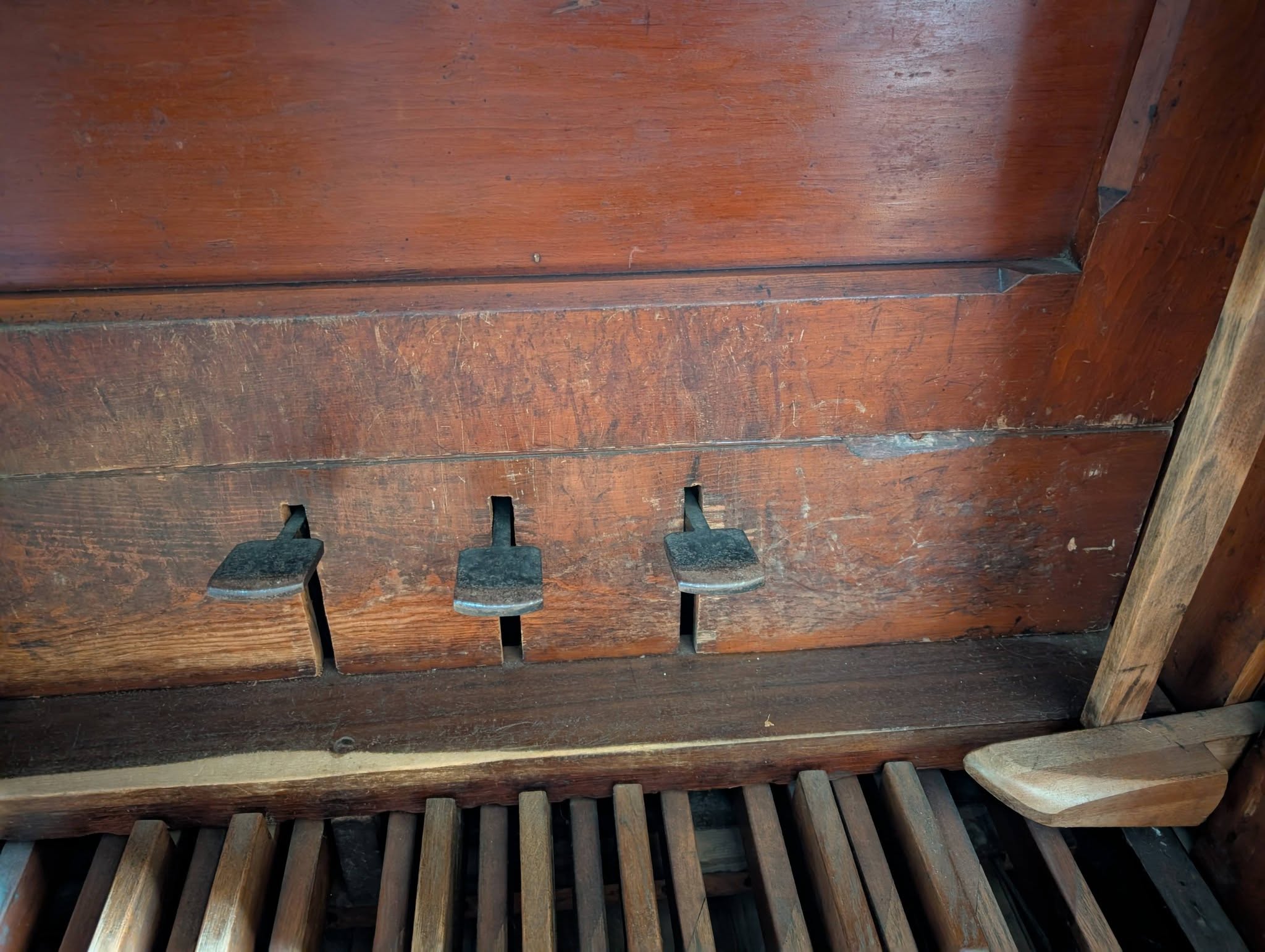
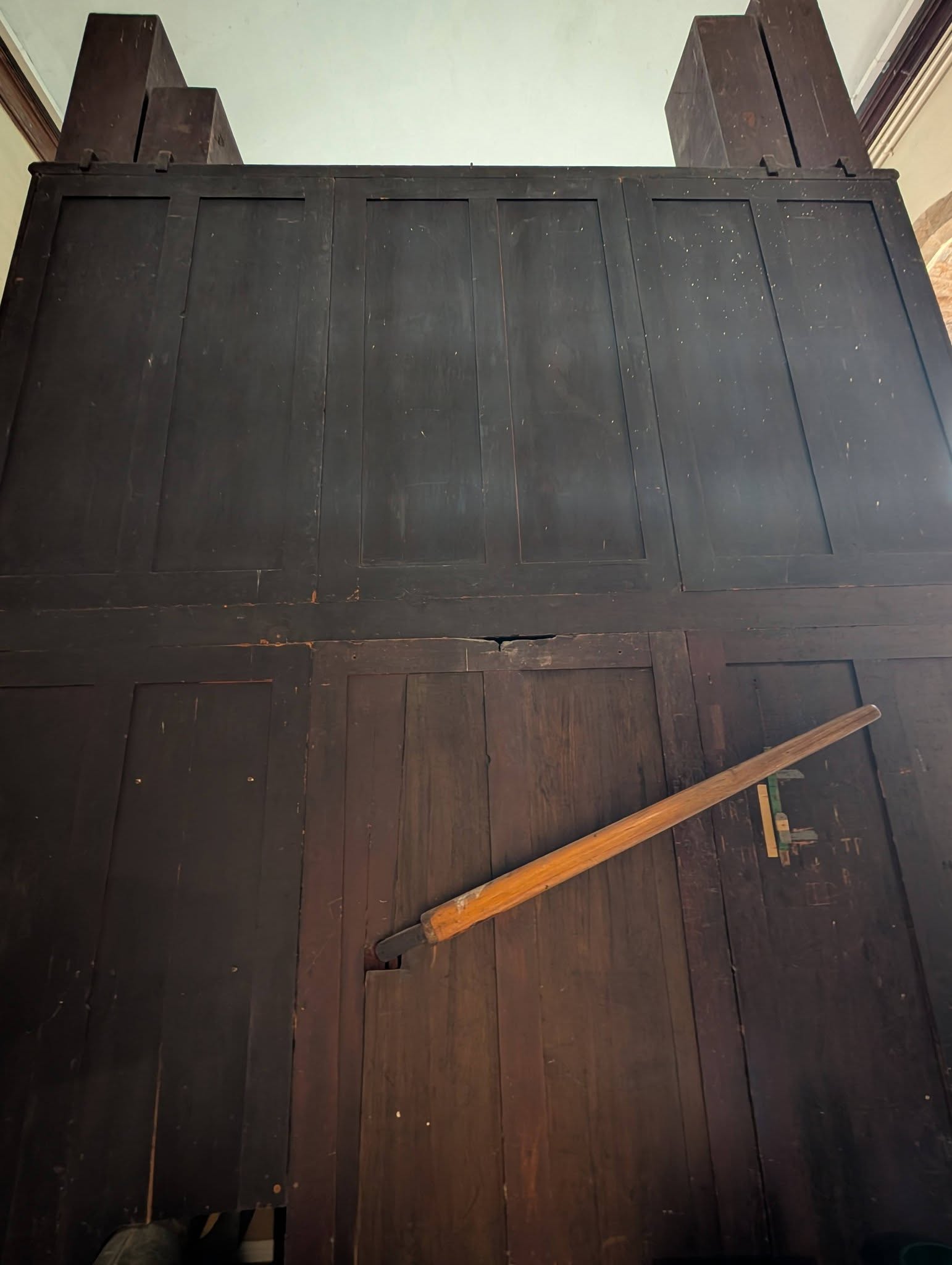
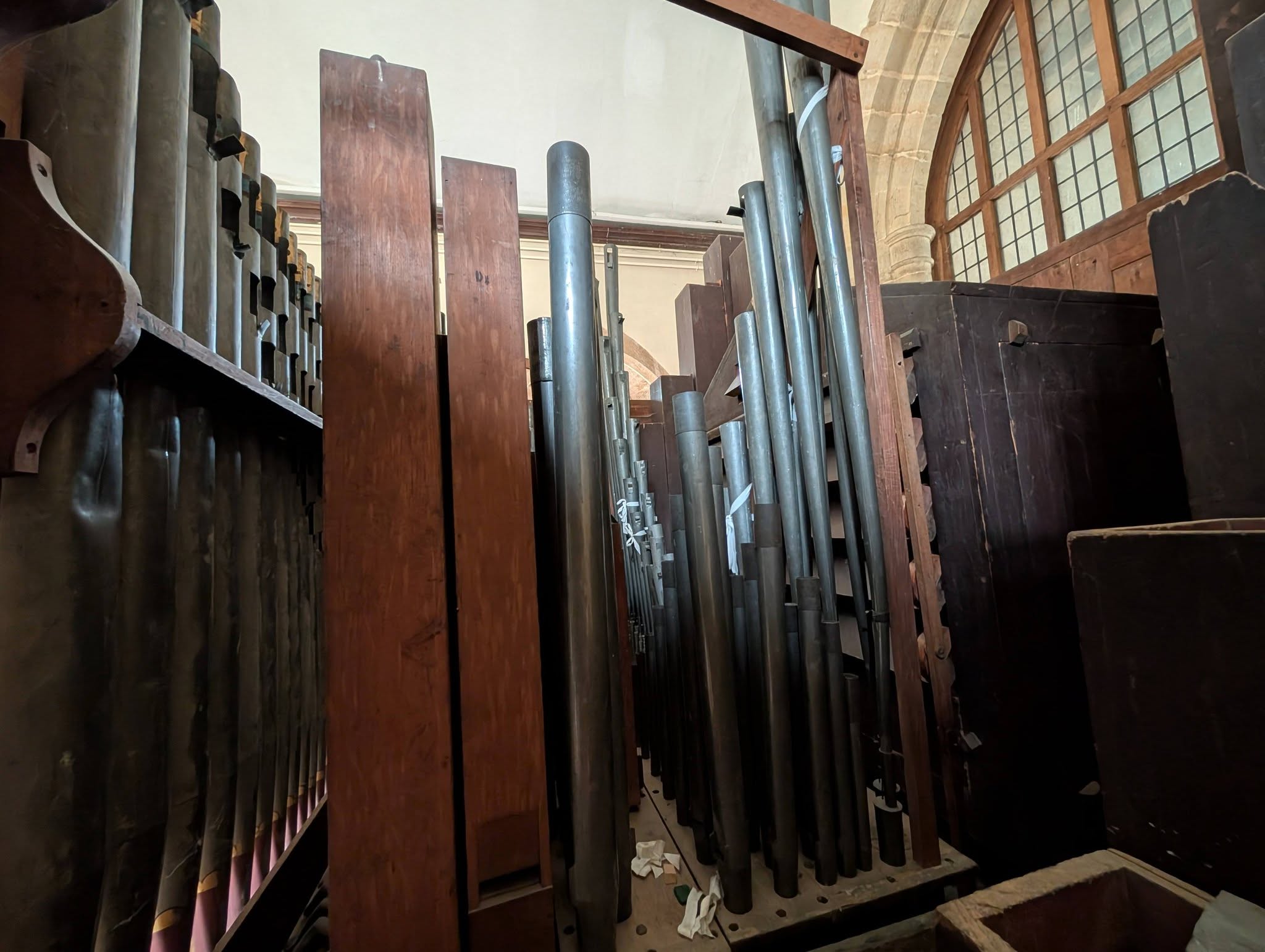
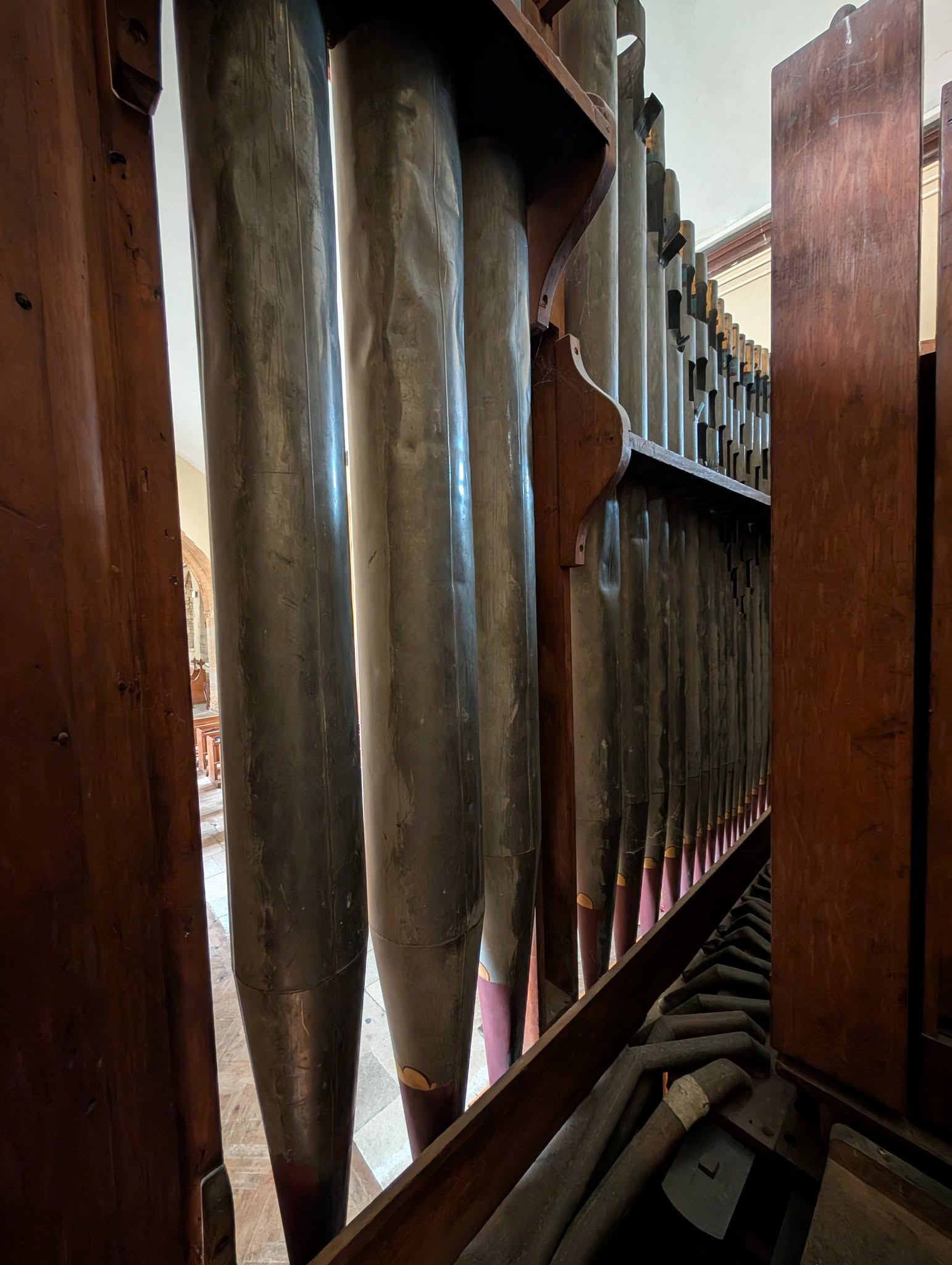
This organ of the early times when Thomas Hill became partner of his father, was constructed to be placed on the west end gallery in St Bartholomew's Crewkerne at a cost of £365. 1906 it was moved to Loders replacing a small organ of an unknown builder. The sound is fresh and powerful. Note the narrow scaled Trumpet like that in the 1845 organ of Ashton under Line.
Photos and notes 2026 by Hannes Ludwig.
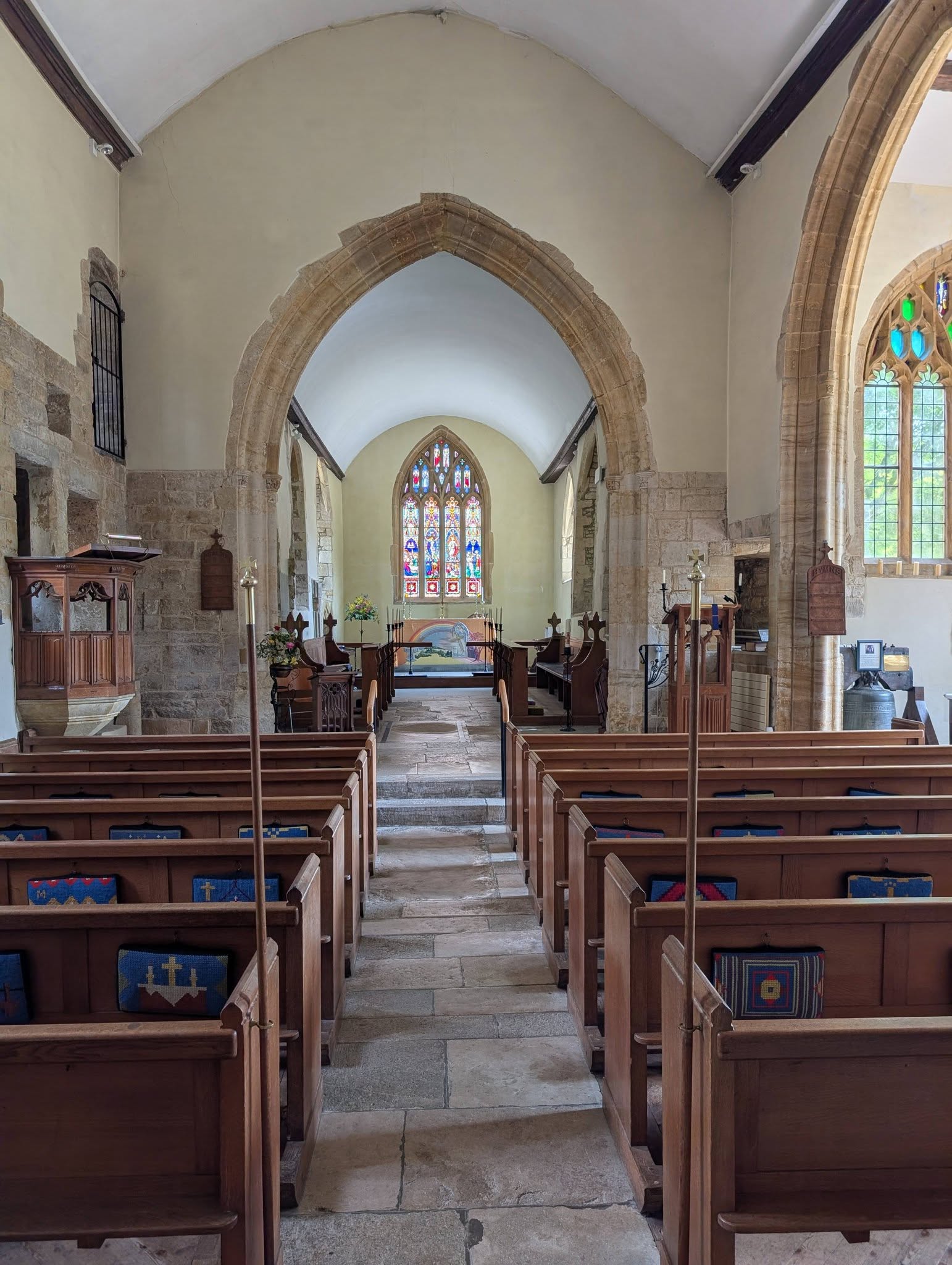
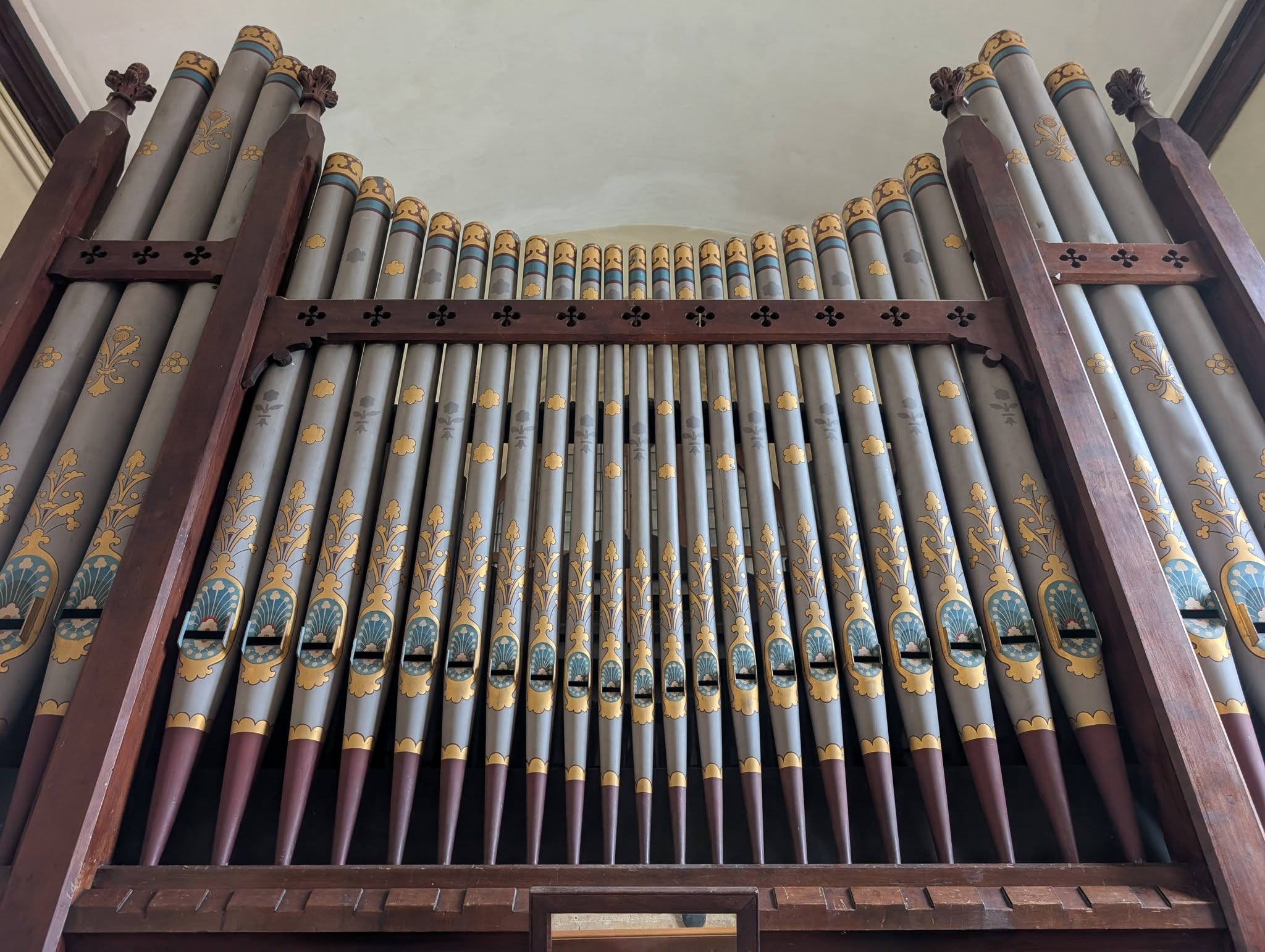
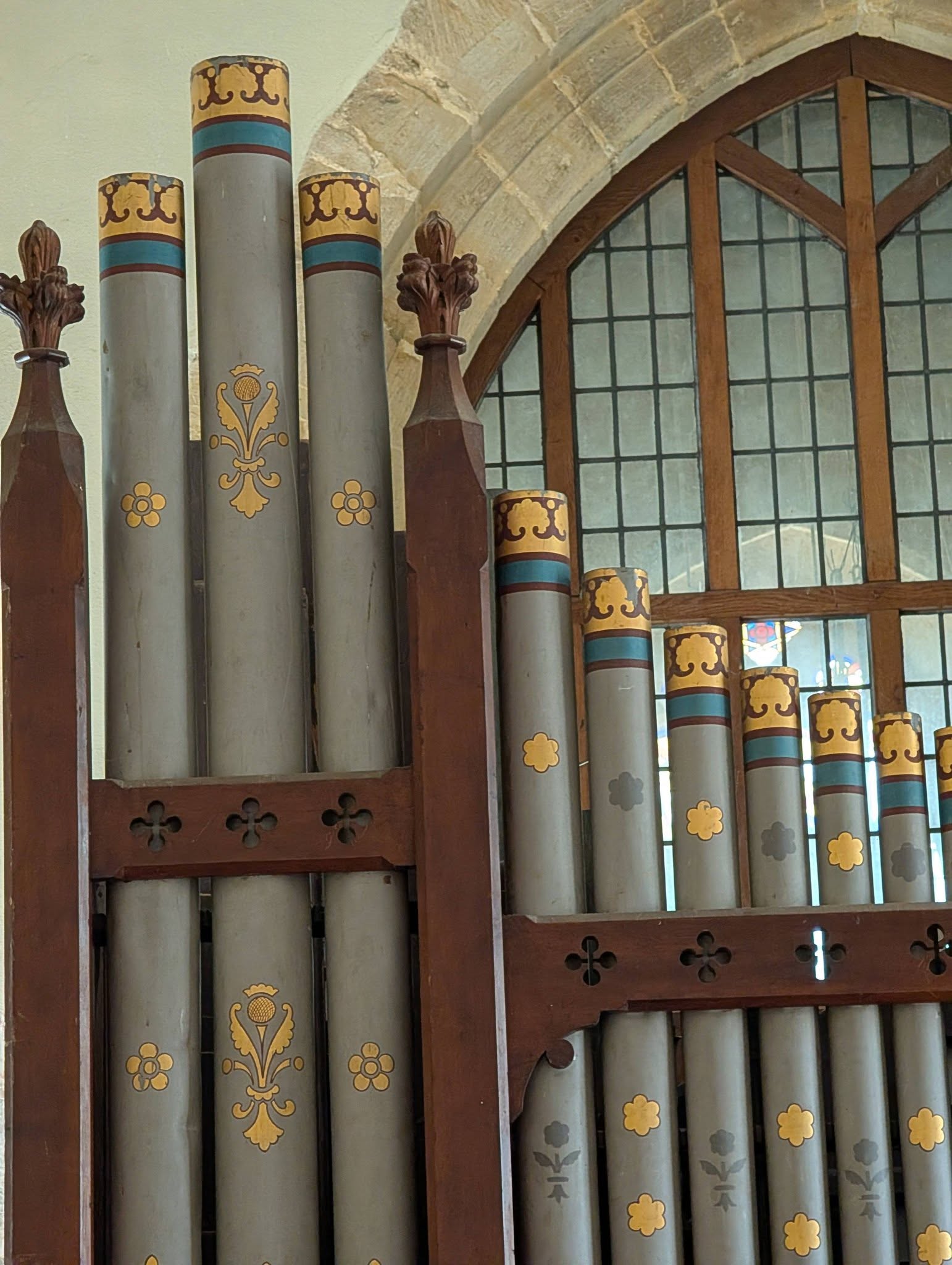
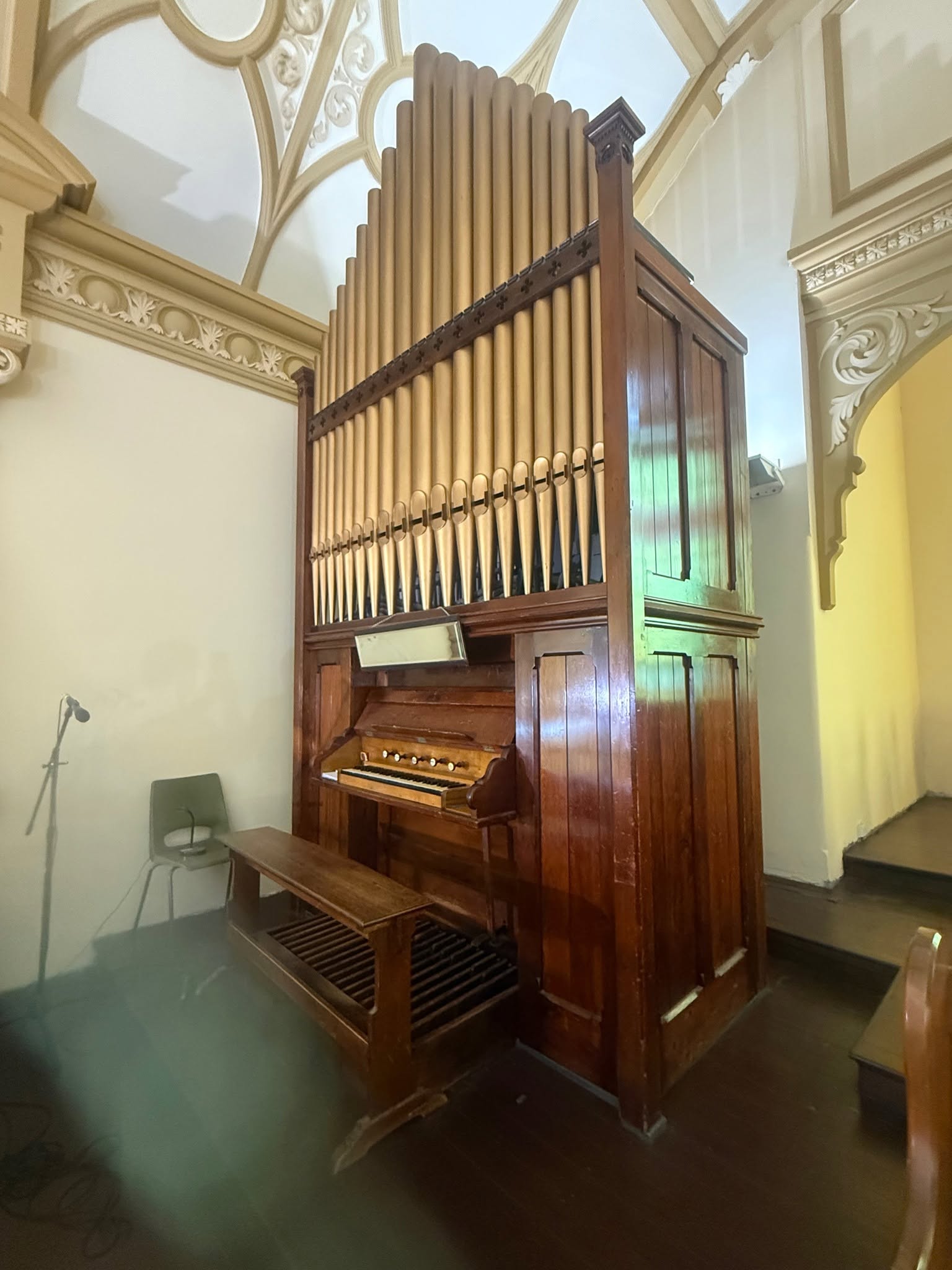
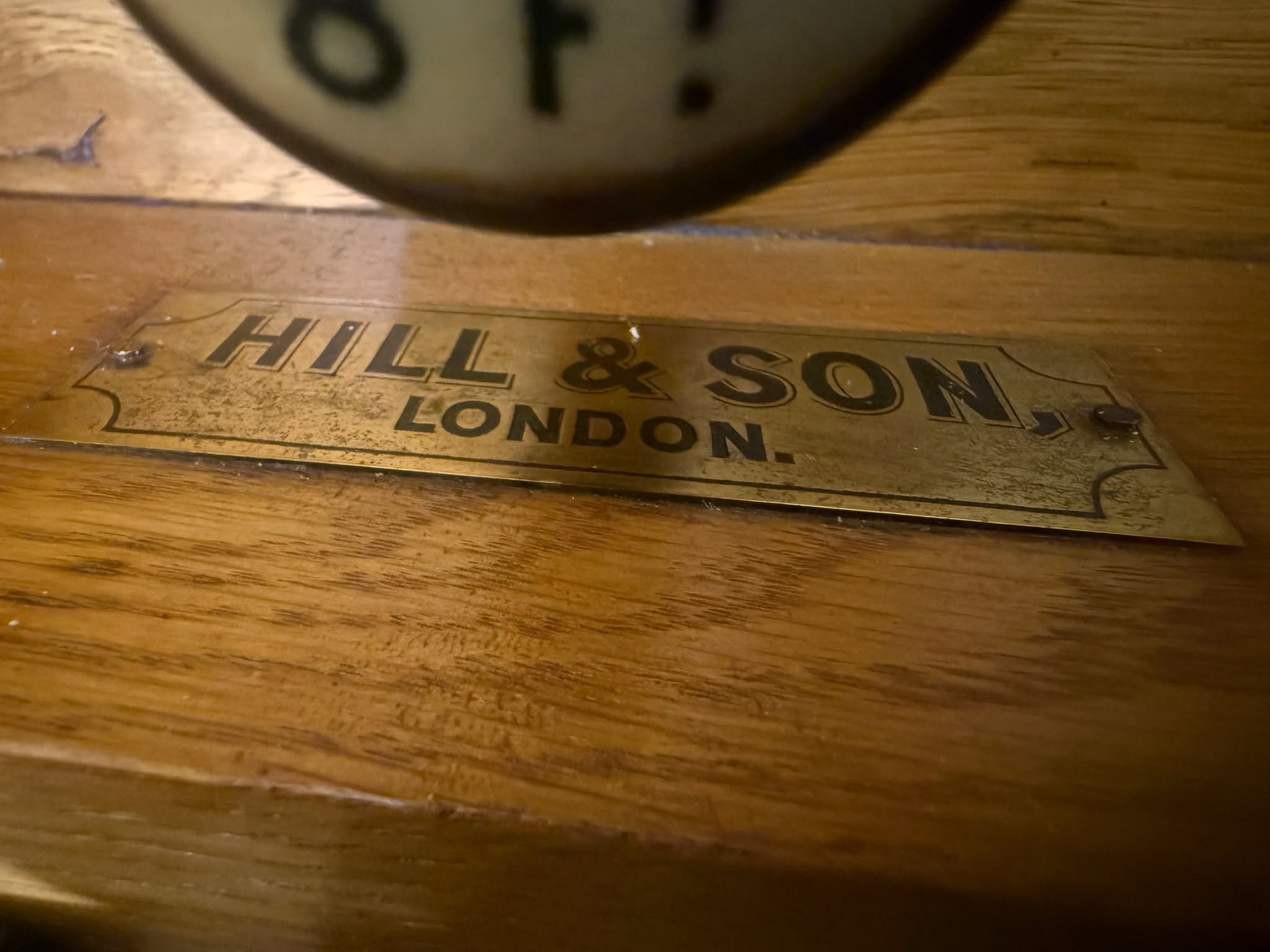
1872 - Hill & Son, St Augustine’s Church, Yarraville, Australia
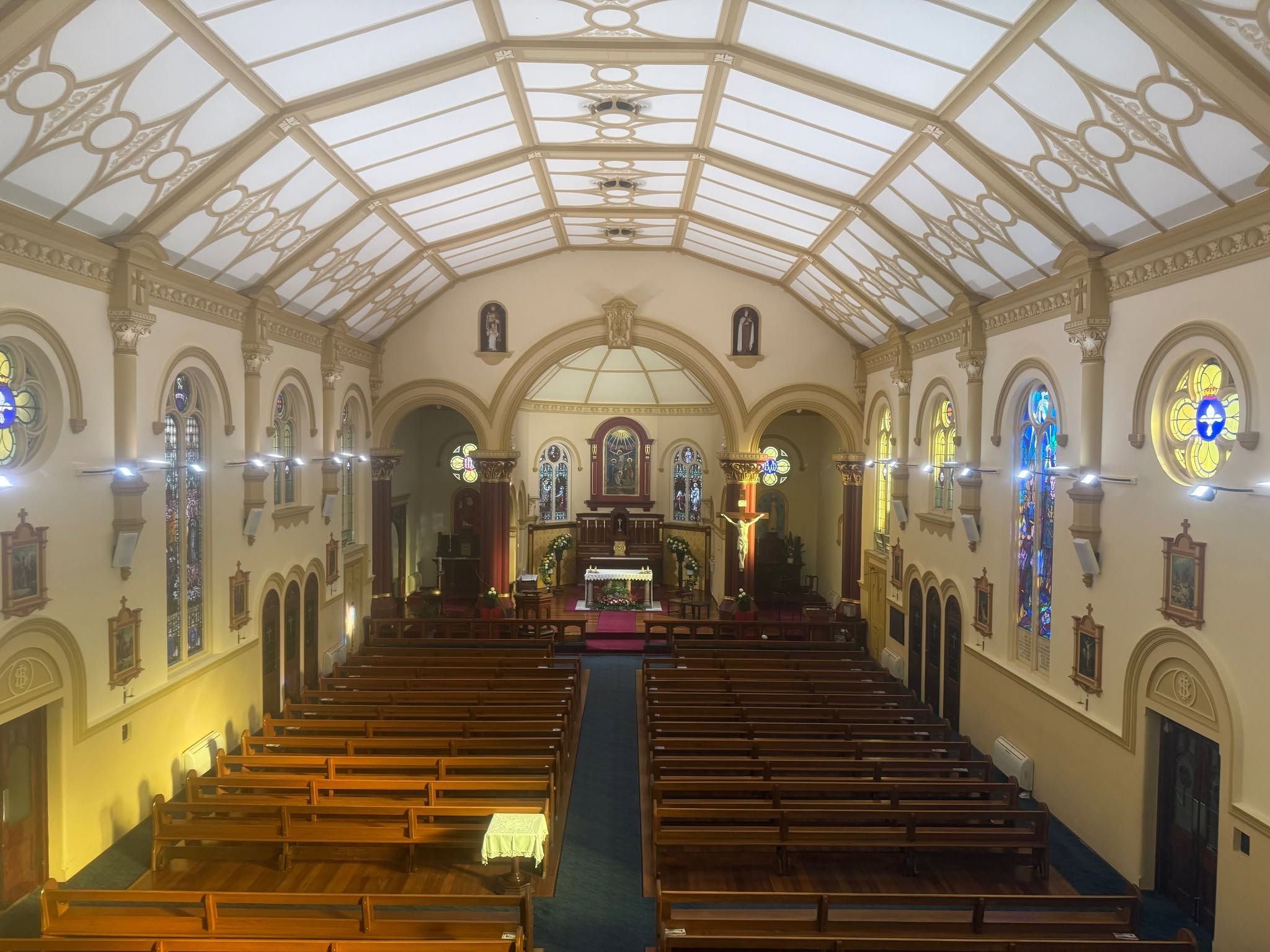
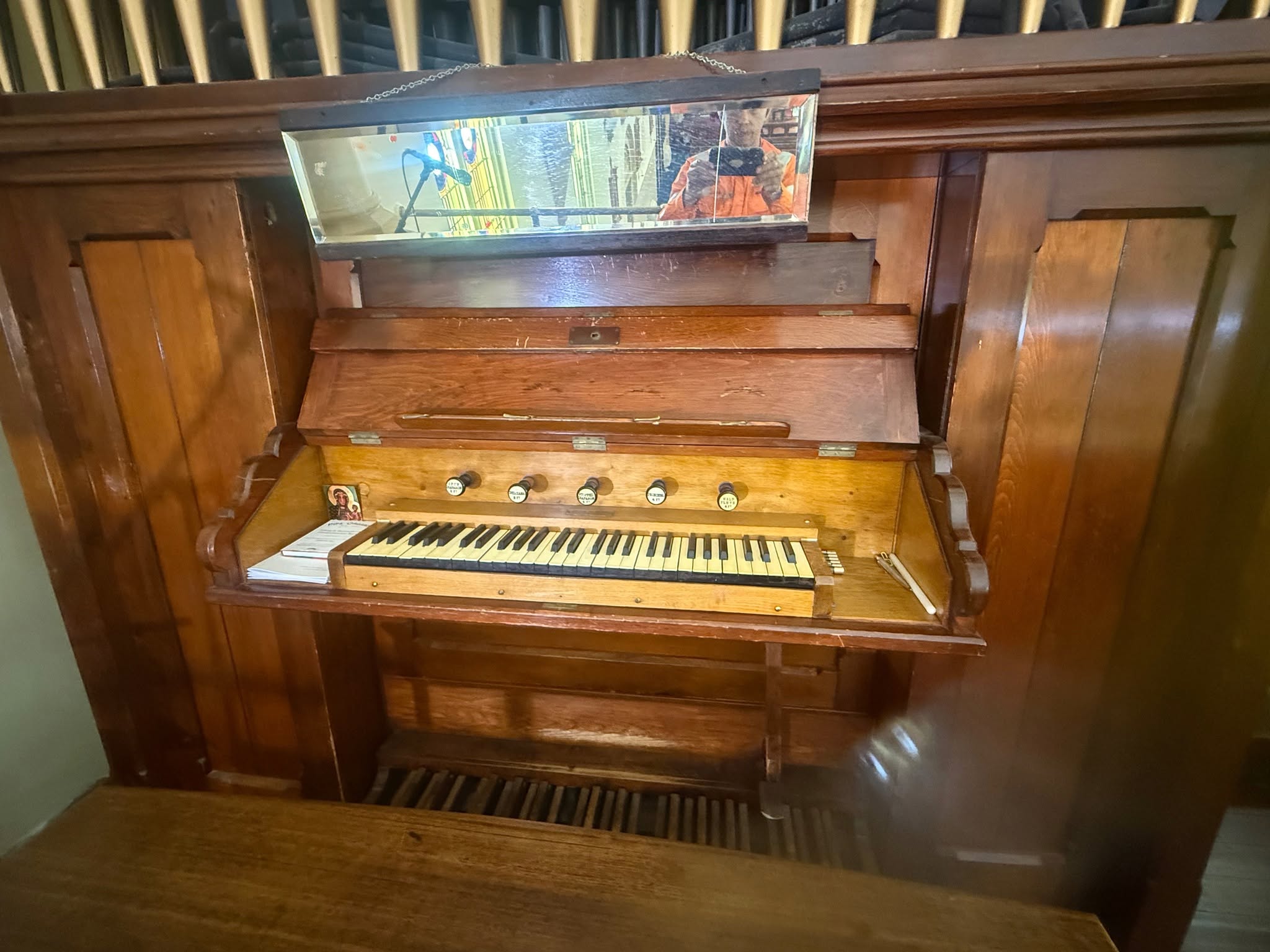
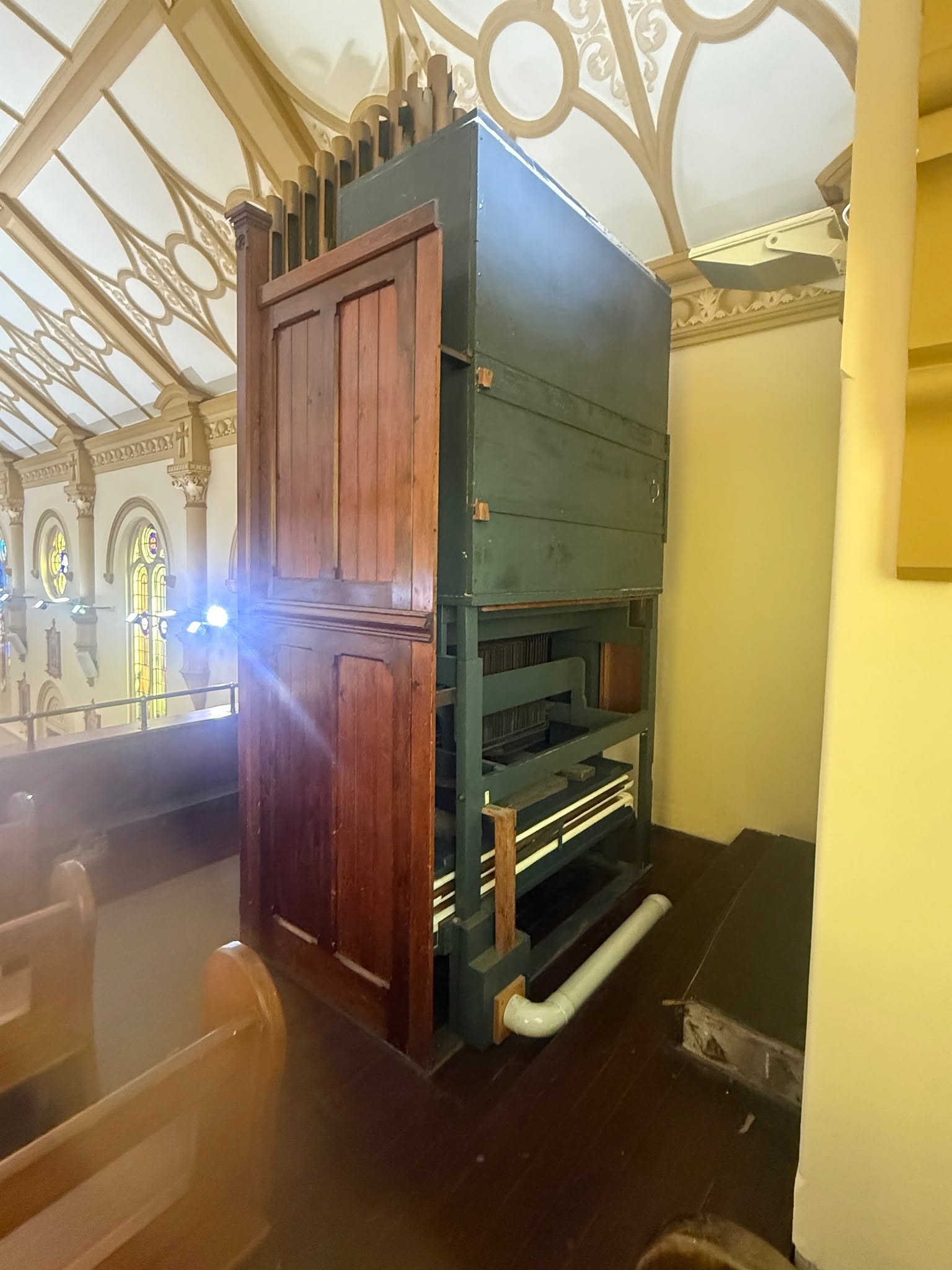
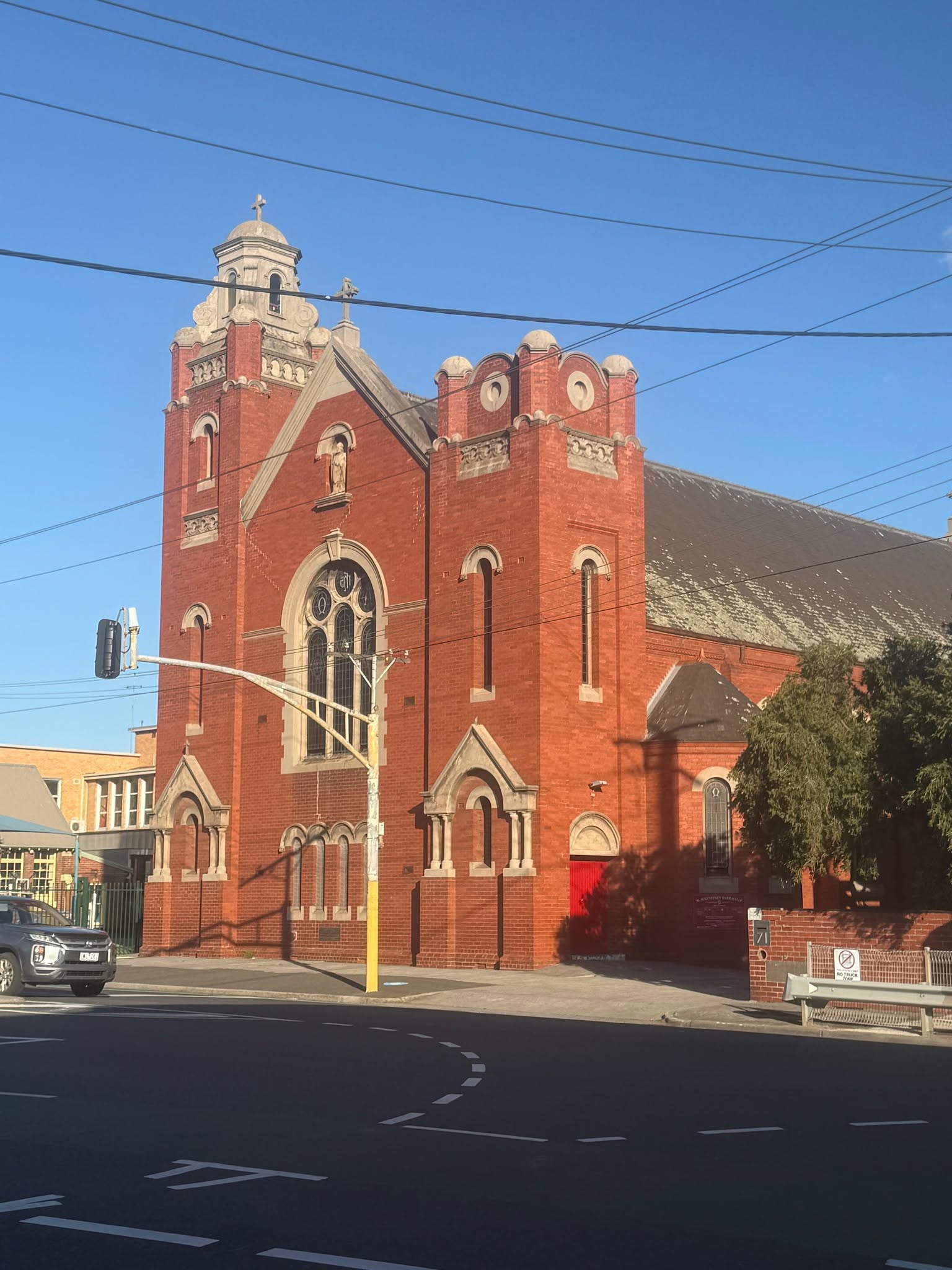
This is a delightful little 1872 Hill & Son pipe organ at St. Augustine’s Catholic Church in the suburb of Yarraville (Melbourne, Victoria, Australia) yesterday afternoon. Pipe Organs Victoria now maintain it. The bellows have been releathered relatively recently. There is more preventative work to be done in the future but it is all in good working order and speaks well into the generous acoustic with an ever slight reverberation; helped along with the curved ceilings in the well cared for and looked after building.
Photos and notes 2026 by Anthony Hahn.
1893 - Sweetland organ, St Piran’s Perranarworthal, Bleadon in Somerset
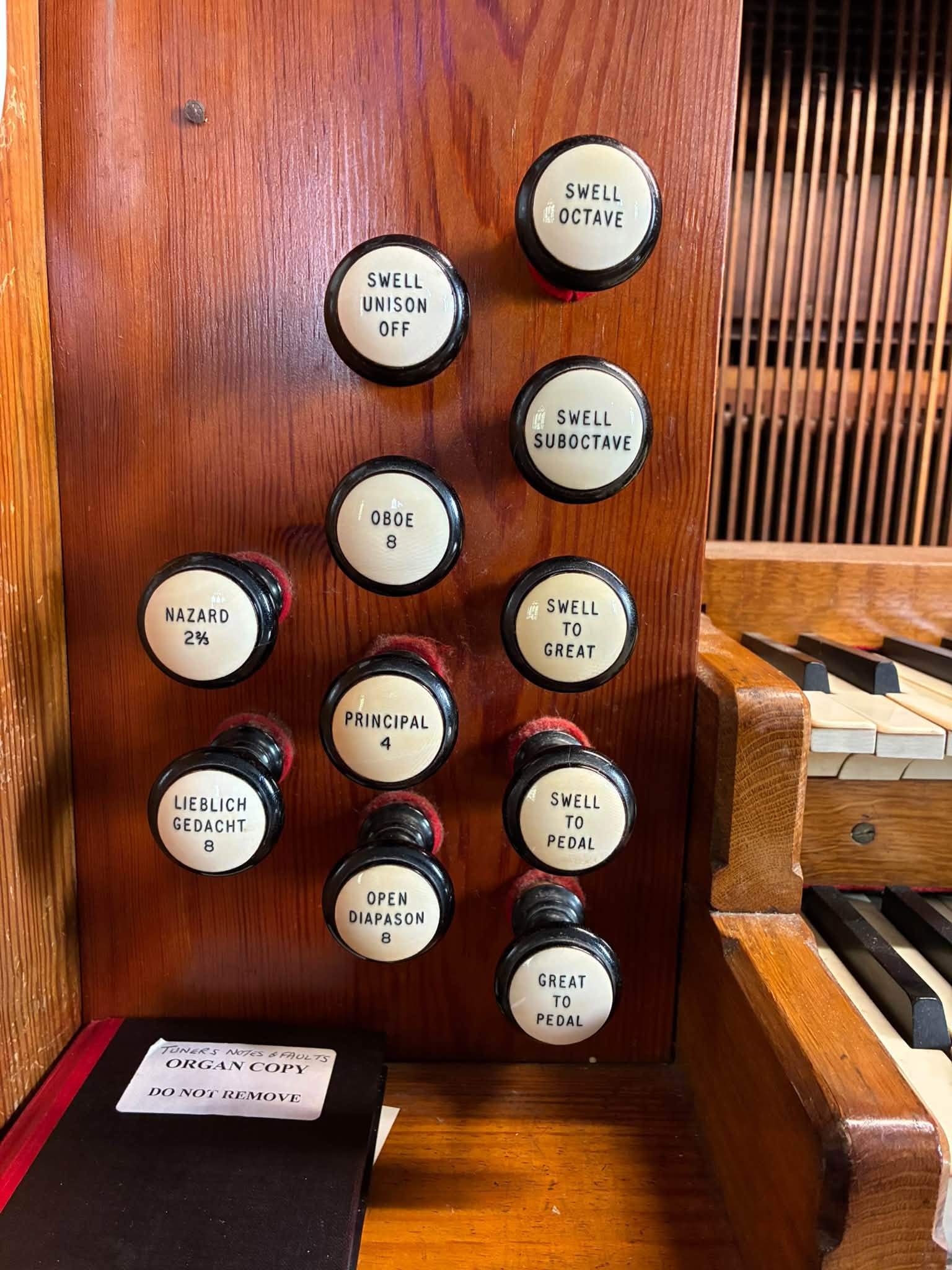
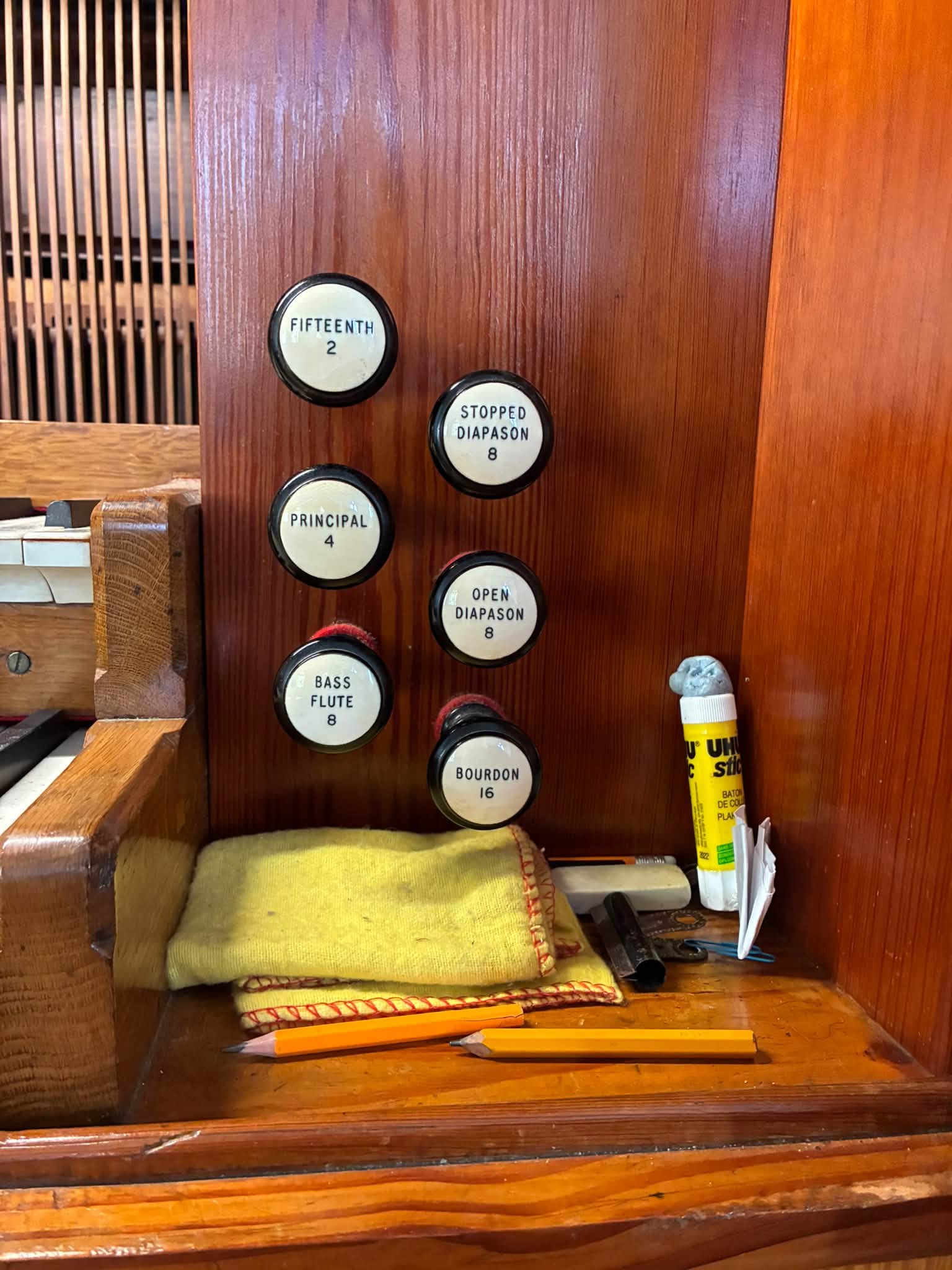
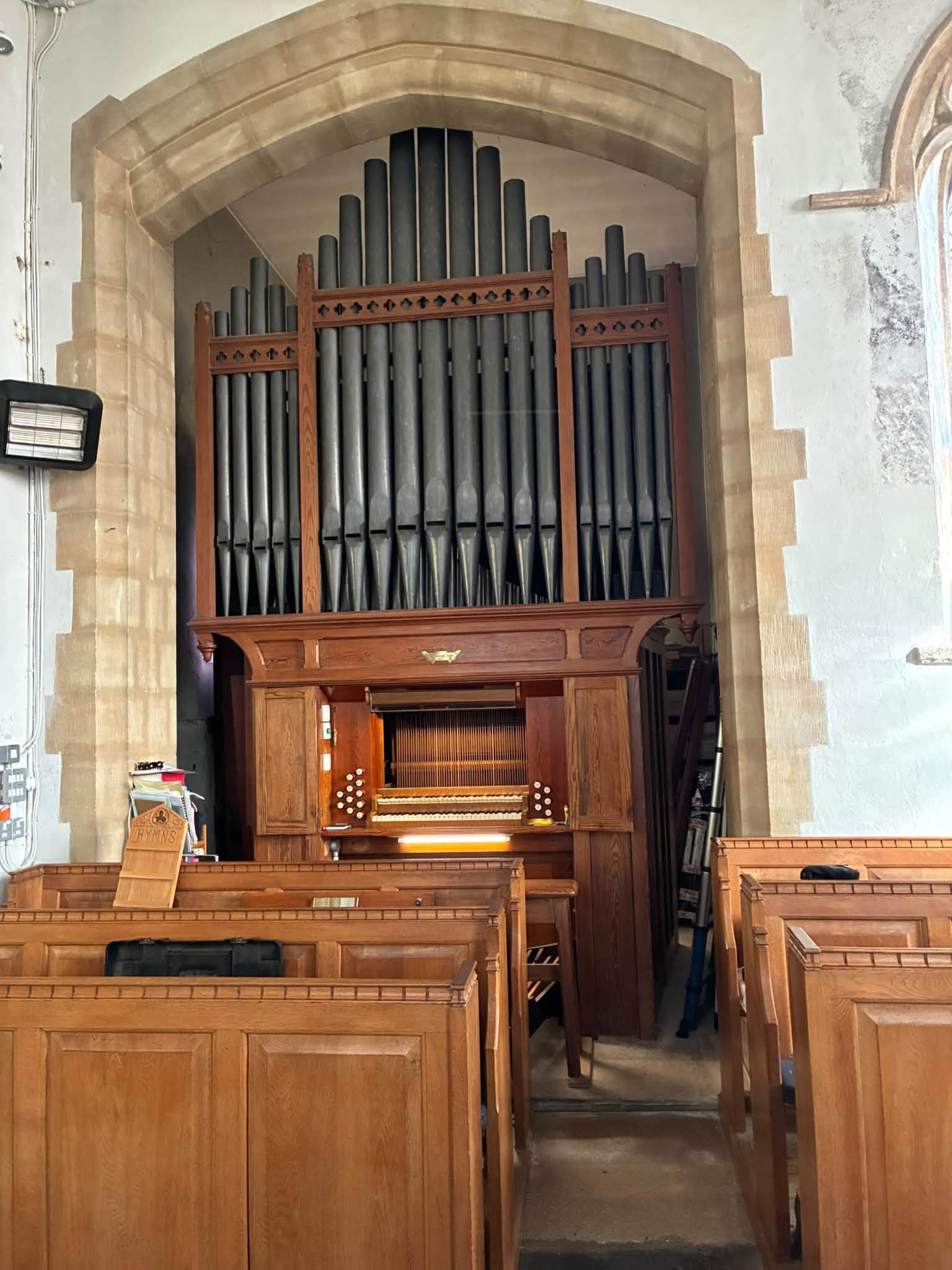
I show this late Victorian organ (Sweetland organ - 1893, St Piran’s Perranarworthal, Bleadon in Somerset), because of its wonderful casework. It is much more elequent than the simular sized organ at Yarraville, (previous organ, above), which is just a rectangular box. Even worst (but very commonly done) is when the organ is placed in an alcove, with the opening blocked off with a picket fence of facade pipes.
The tuner, Lance Foy, says it is "a basic two manual in fair order, but someone in the past felt it necessary to put the swell on pneumatic and provide octave couplers".
Photos 2026 by Lance Foy Organs.