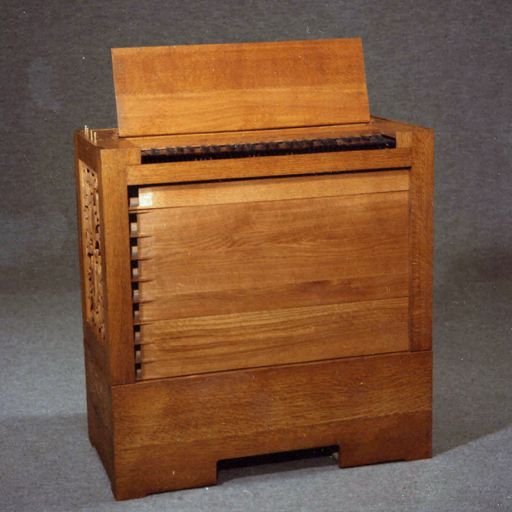
Special Organs Box Organ
To my mind, a box organ has a special purpose, to accompany or play with a chamber orchestra and/or choir. To do this it must meet specific, often conflicting requirements.
- Concerts are transitory; it must be compact and easily moved by two persons.
- Moveable in the trunk and back seat of a large car.
- The pipes must be small in scale, so that the organ can be compact.
- It must be low in height, to not block sight lines between musicians.
- The voicing/scales must be bold enough to balance a Chamber Group.
- It needs some soft and loud choices.
- A shifting low/normal/high pitch keyboard is desireable.
- Build robustly, with cone tuning, so it doesn't need tuning after every move.
Many of the box organ designs are too bulky and require a truck and four strong men to move. Or they are built tall, like a positiv and block the view. Or they use miniature pipes that are voiced too weakly to be heard doing battle with a chamber group. In my opinion this scale of the 8' is about two pipes too narrow; there is just not enough fundamental in the bottom octave. However, it's not possible to increase the scale, unless you make the organ bigger!
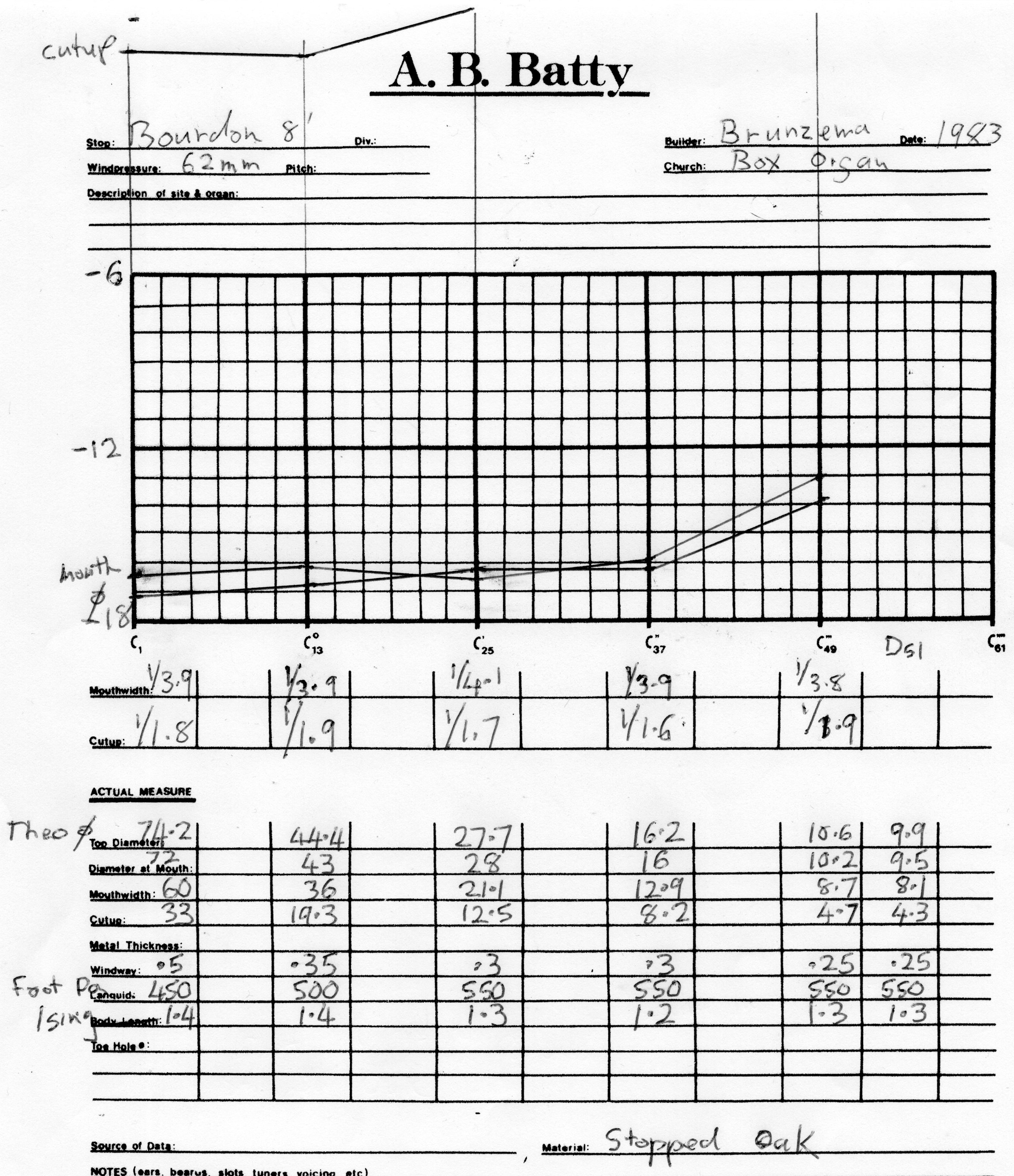
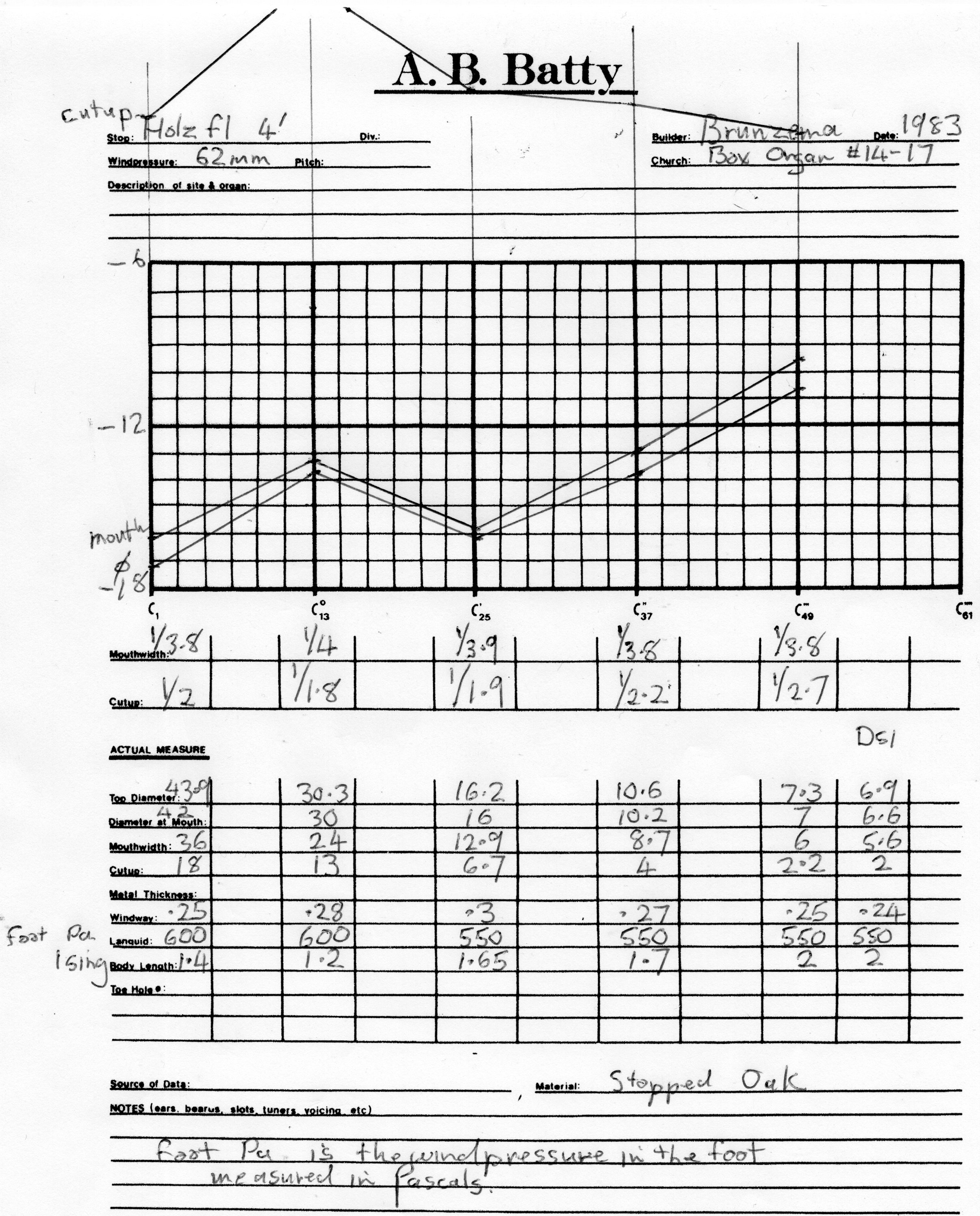
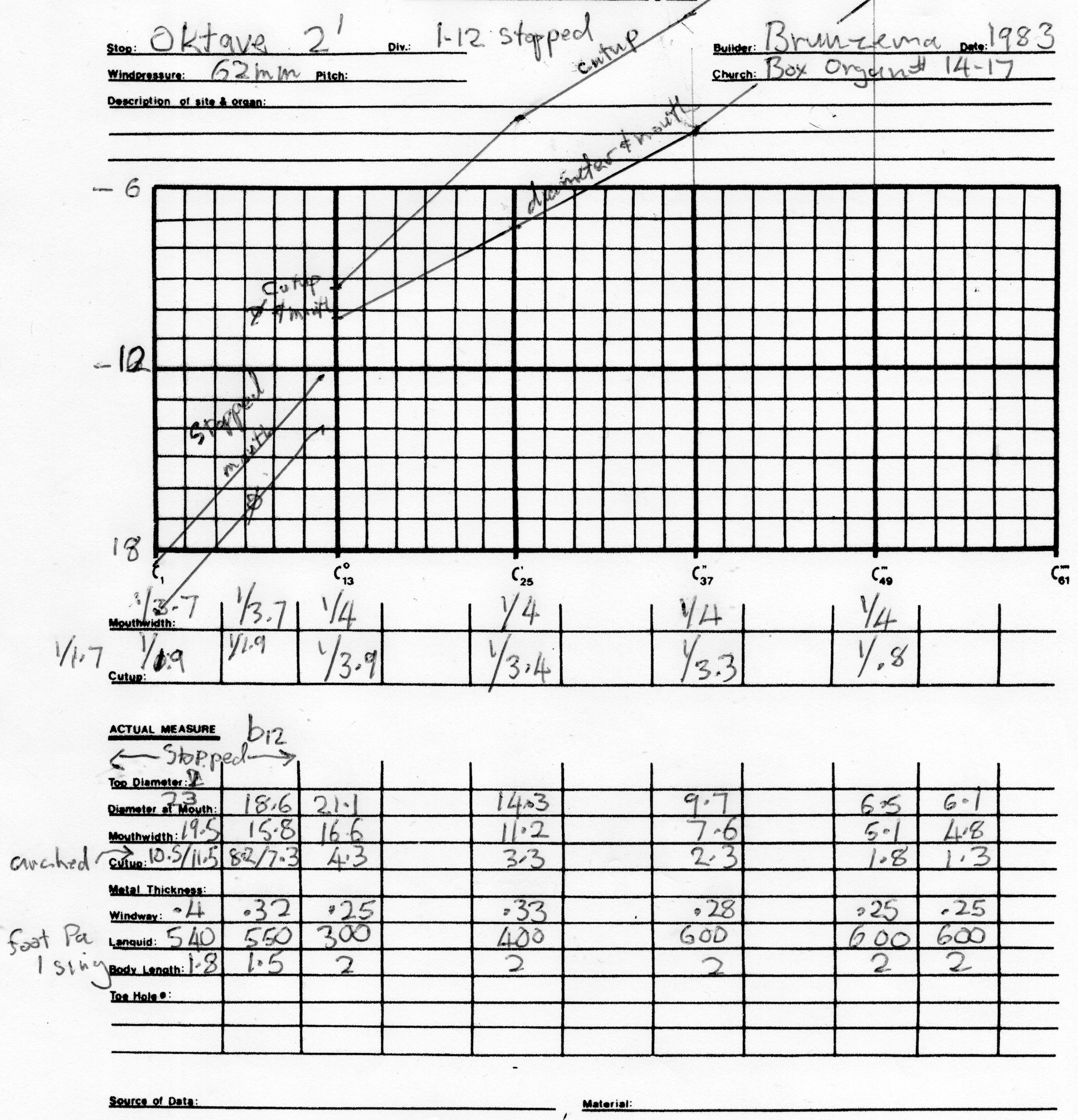
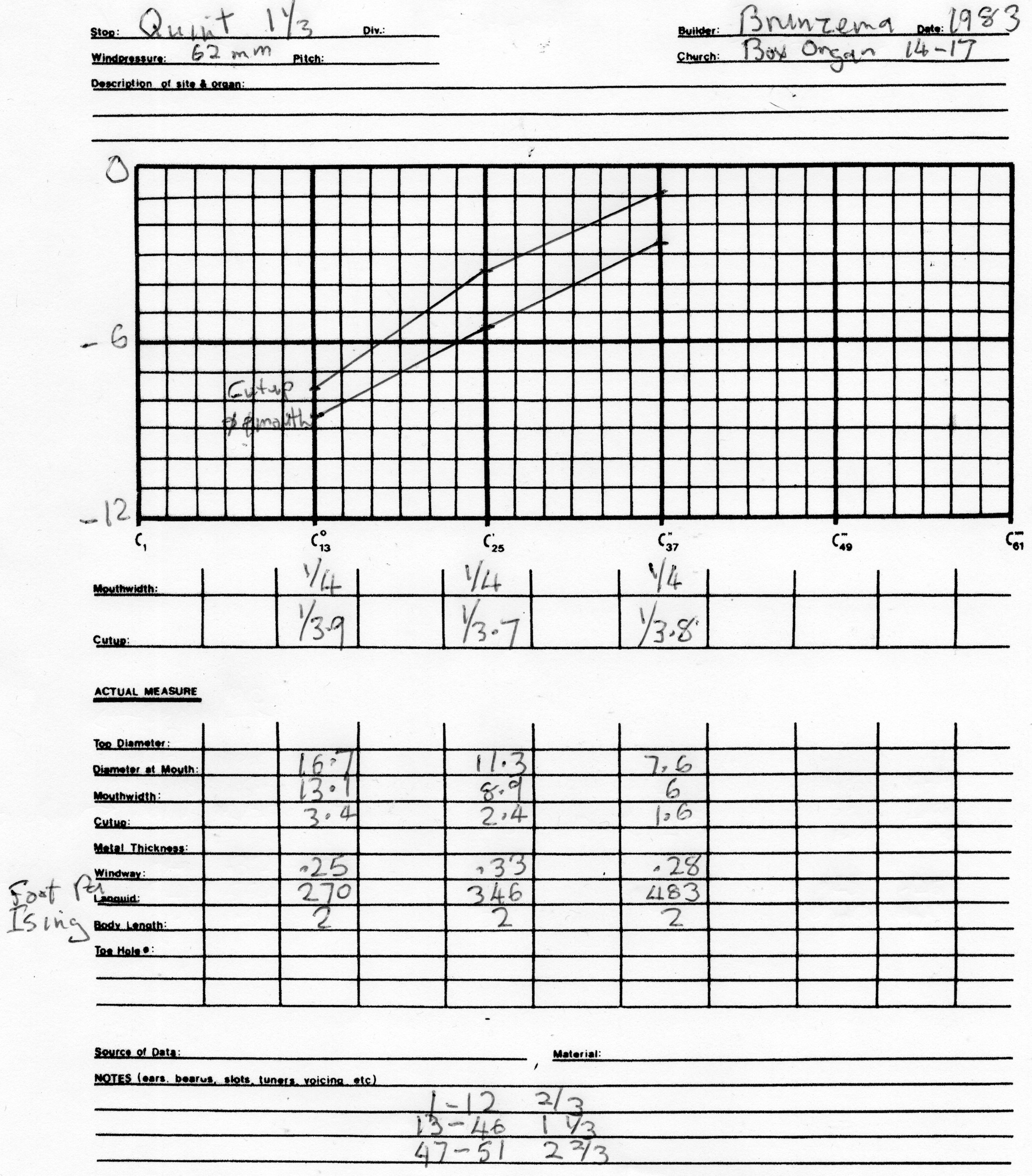
Special Organs Table Organs
One Rank
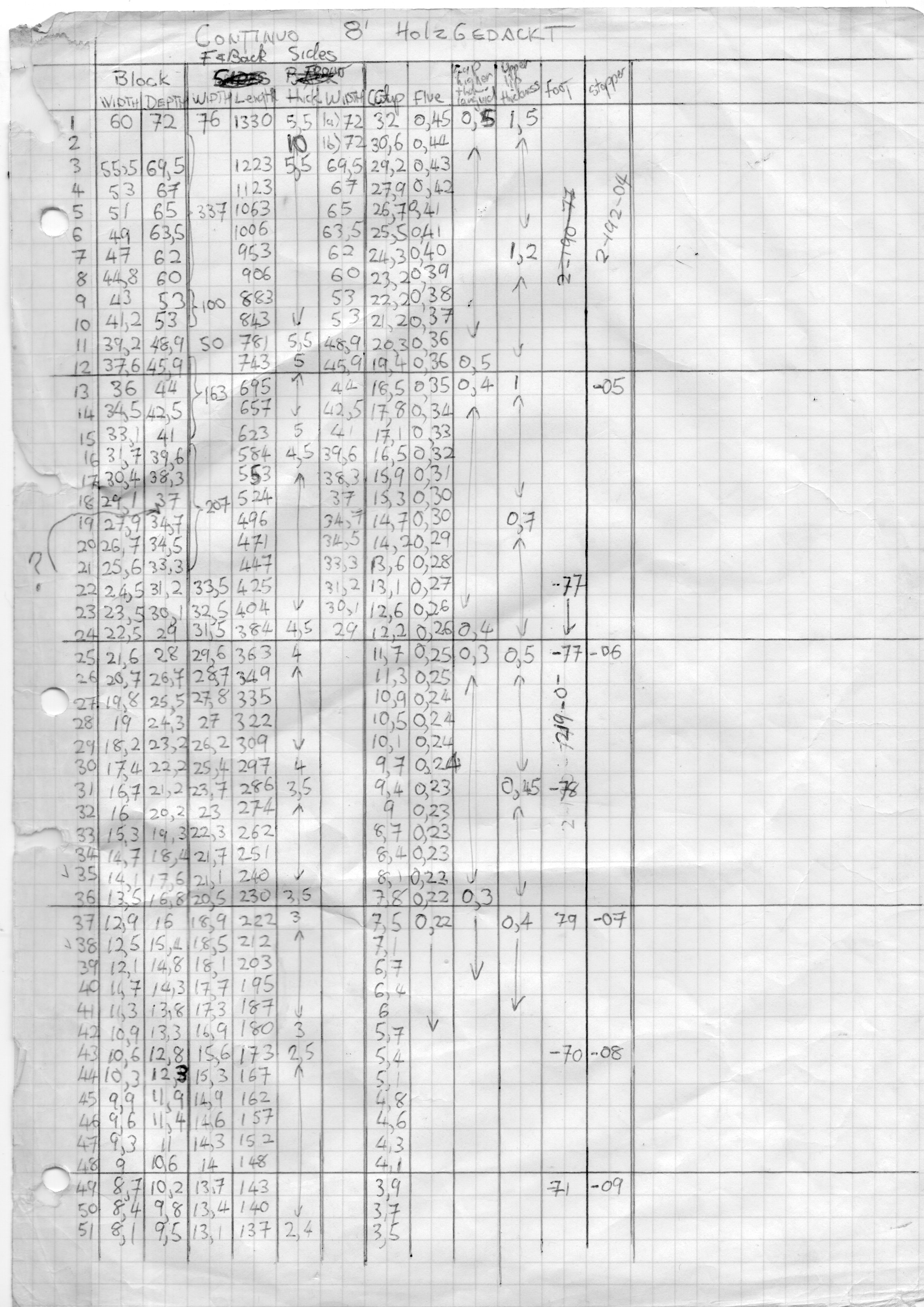
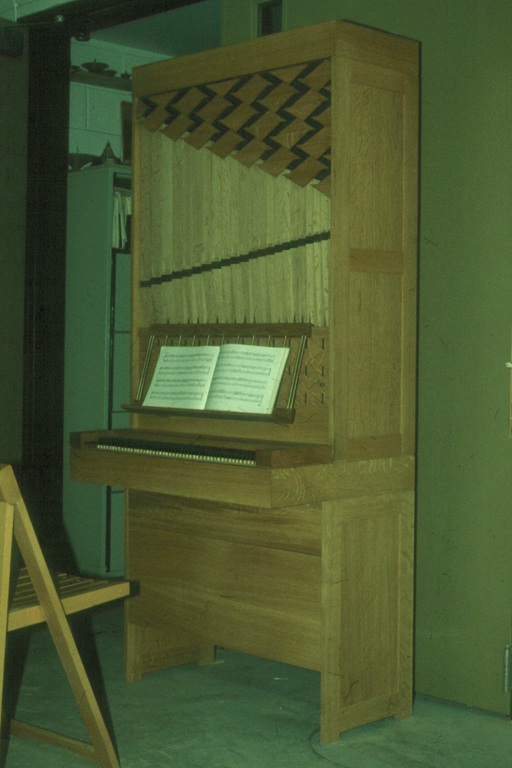
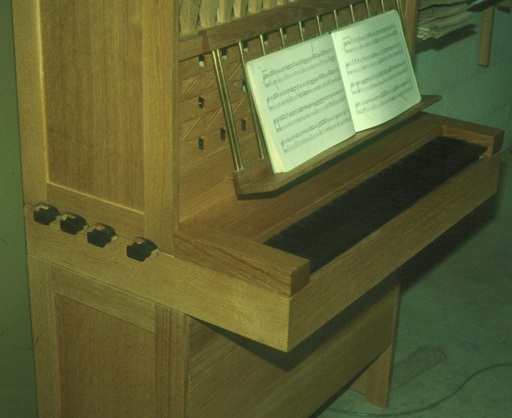
We built these miniature organs in several styles. Smallest is a one rank organ using a wooden 8' Quintadena stop or Gedackt 8' from the Wagner organ. The blower and regulator is located in the upper case, above the pipes(!). The organ was designed to be placed upon a desk, but looked top-heavy to me; this is necessary to hide the bass pipes. It is better with the matching base, which could contain the blower.
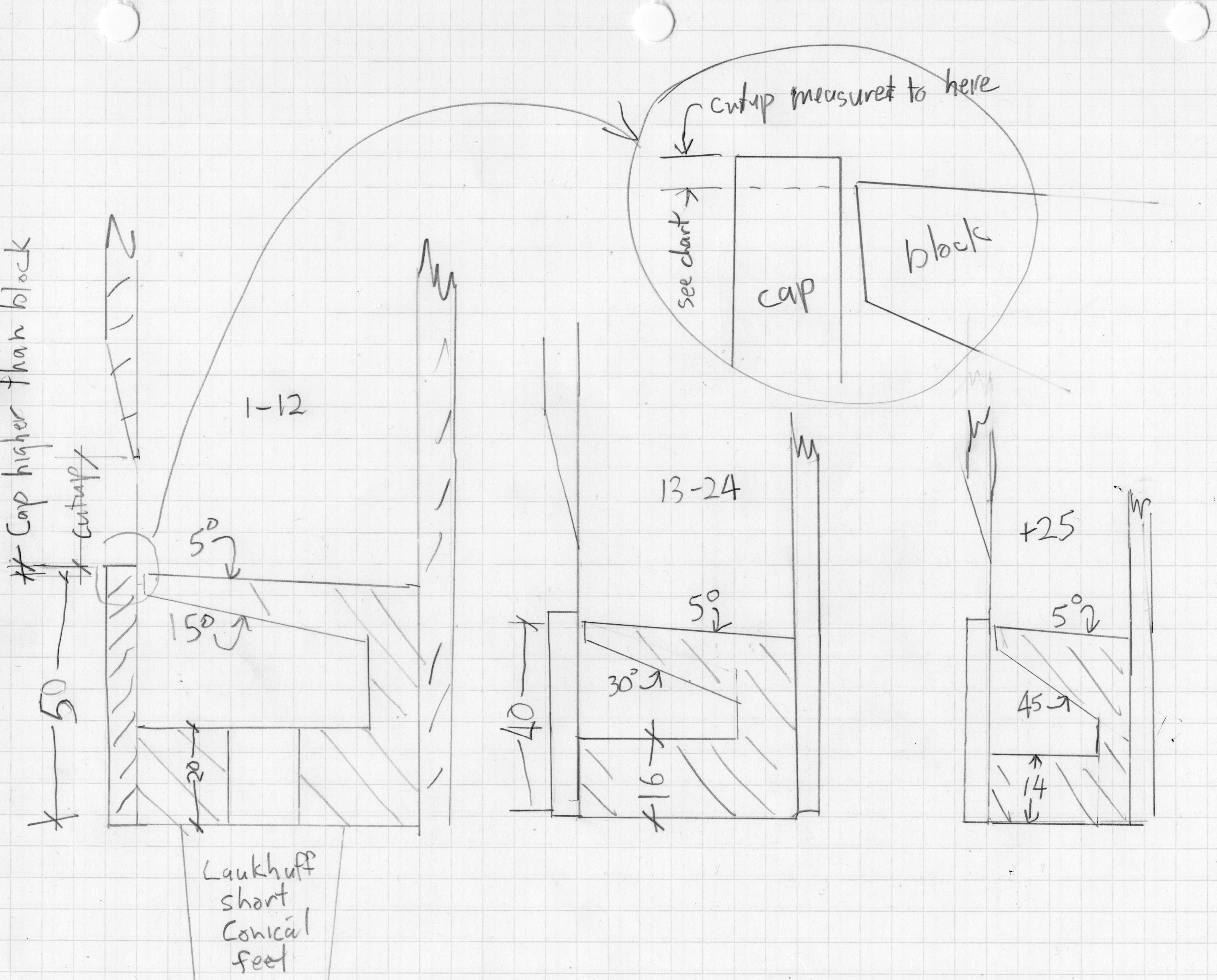
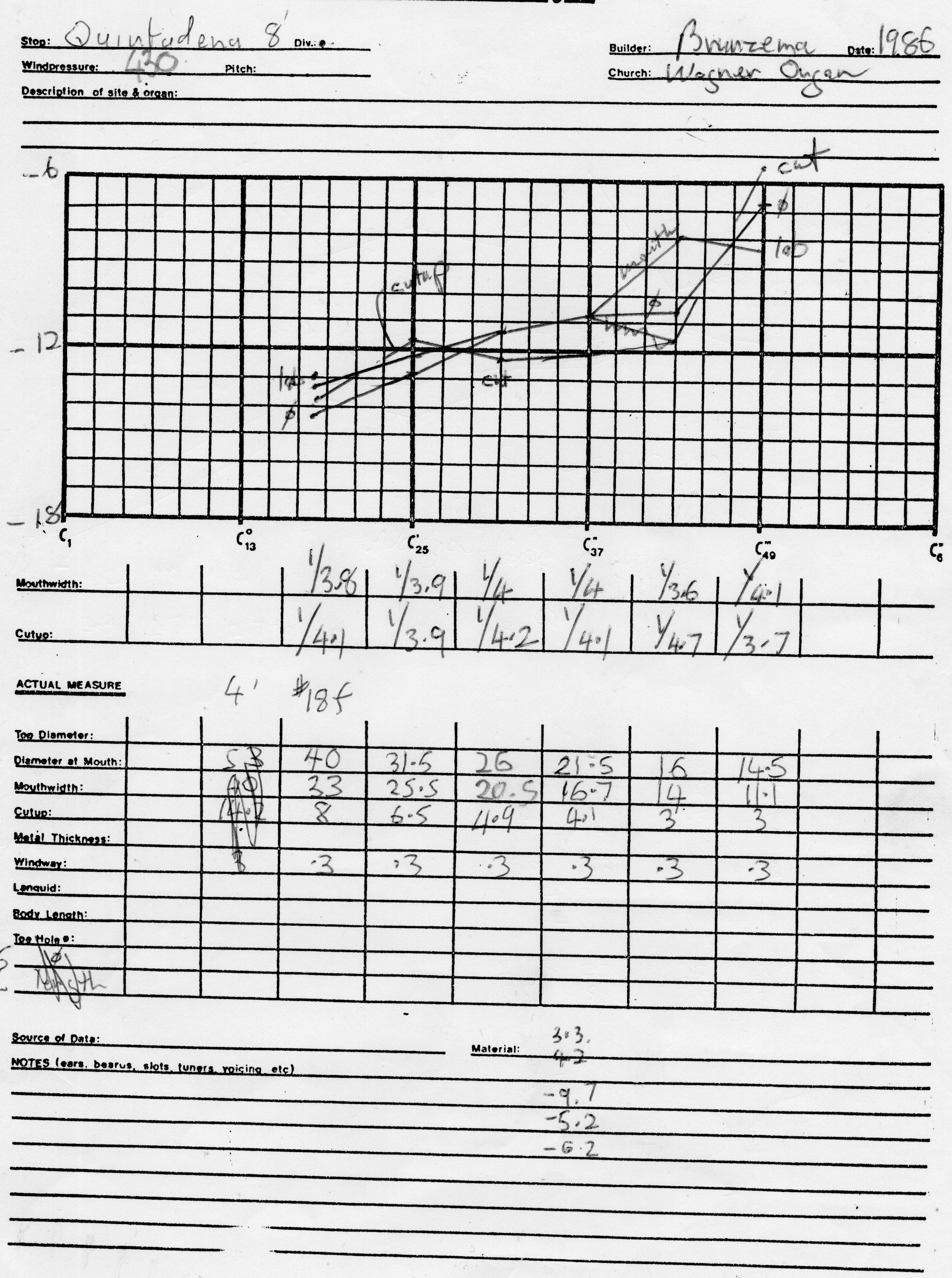
You can build a quintadena with a very narrow scale to get the quint; or you can use a wider scale , but with lower cutups fo the quintiness. I think the pipes speak better if wider. Voicing is very fussy, especially without beards or rollers. Gentle wind helps, but special block and cap construction really helps the speech. Also, putting the flue in the cap helps. When voicing, spend particular attention to the quickness of the pipes by adjusting the upper edges of the windway.
The "original" scale show was the ideal scale, before adjustments; which we didn't use because the pipes were too big for the casework. So we reduced them a couple of pipes to the "as used" scales. The bigger scales is better. The narrower scale was a bitch to voice...
Quintadena Organ: Scales and Drawings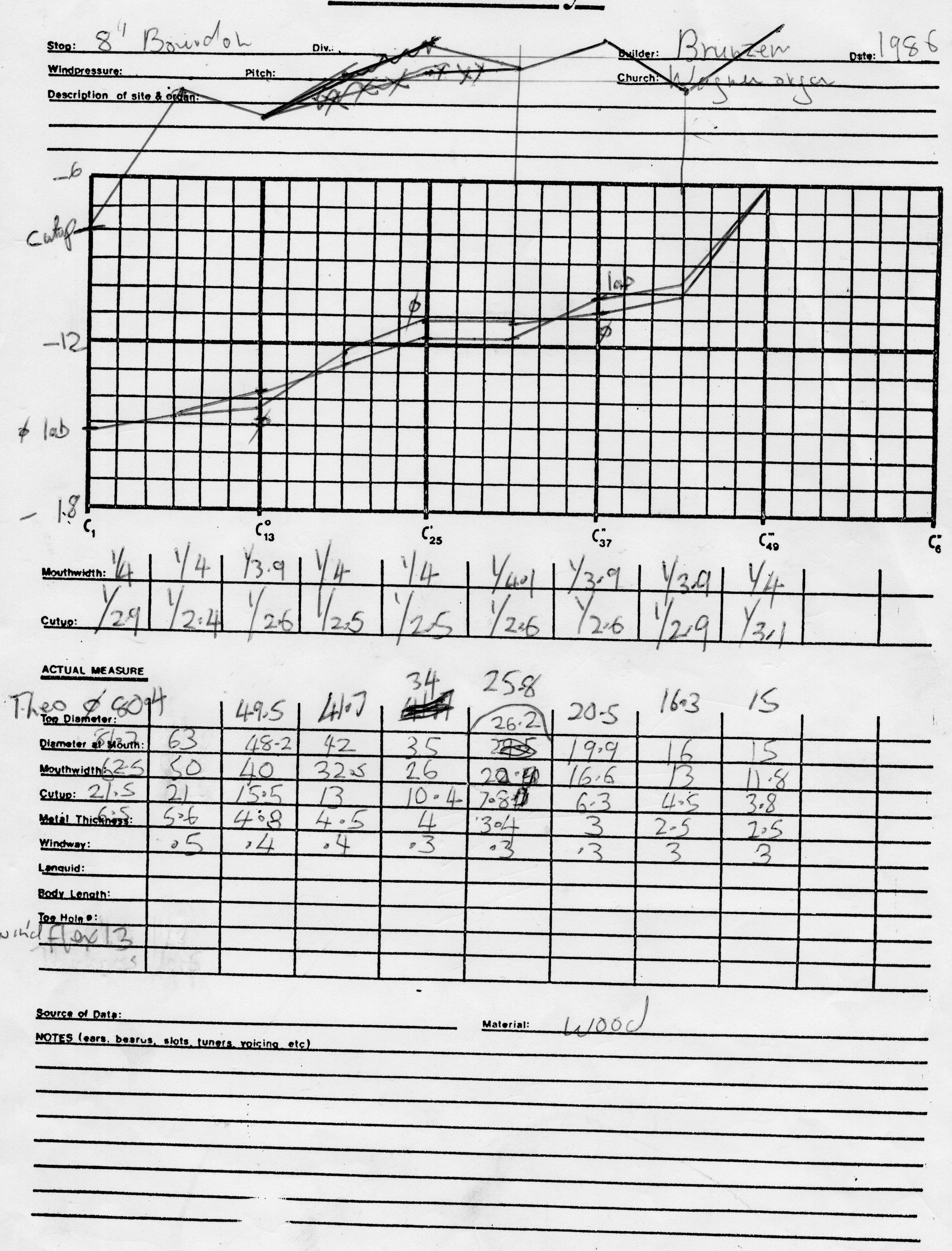
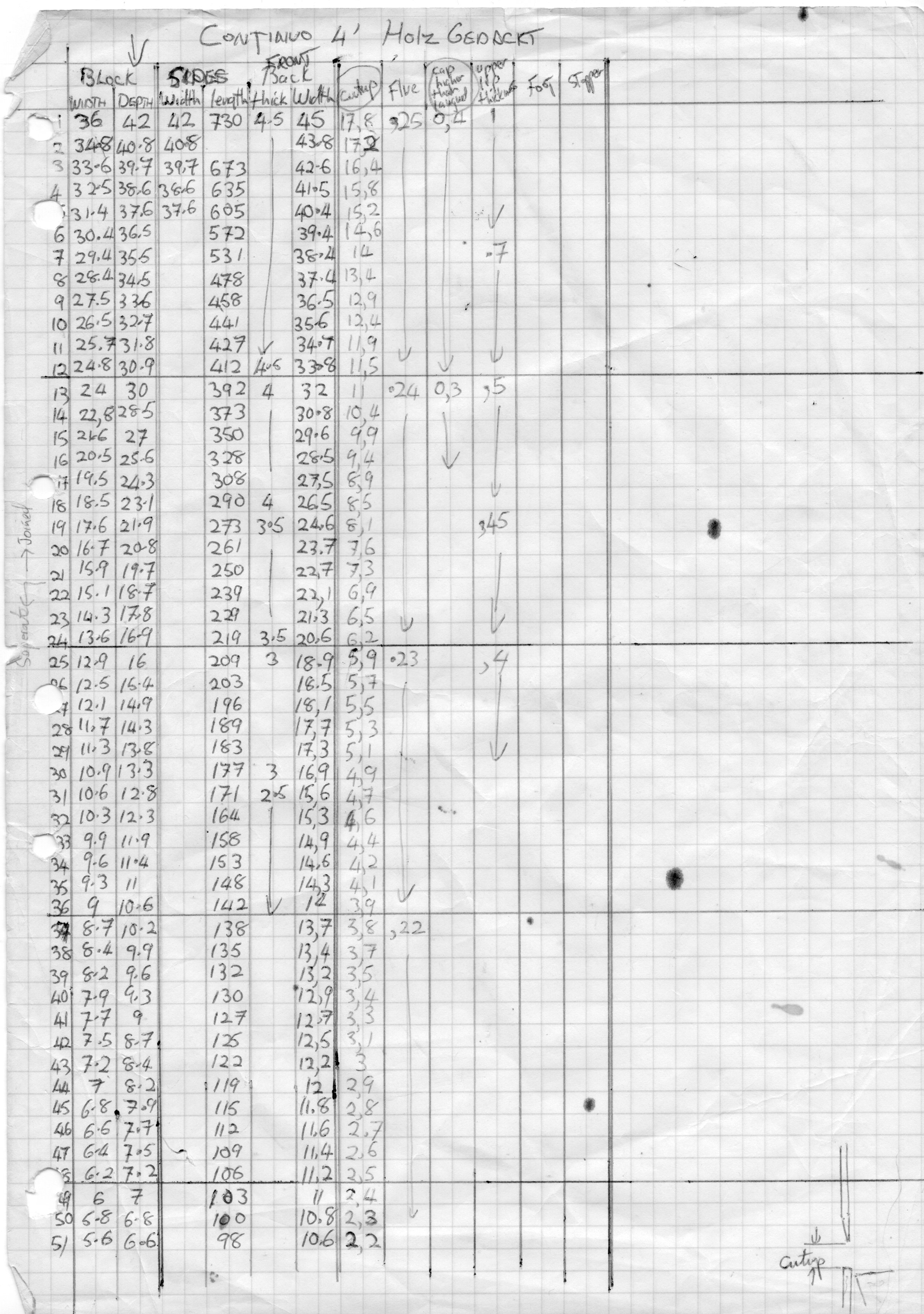
Four Rank
The four rank organ built on an 8' regal. The regal was placed immediately behind the grill, behind the music rack. The grill was two layers and sliding, to act as a hand operated volume control. The grill was removable for regal tuning. The base for the four stop organ contained the blower and regulator.
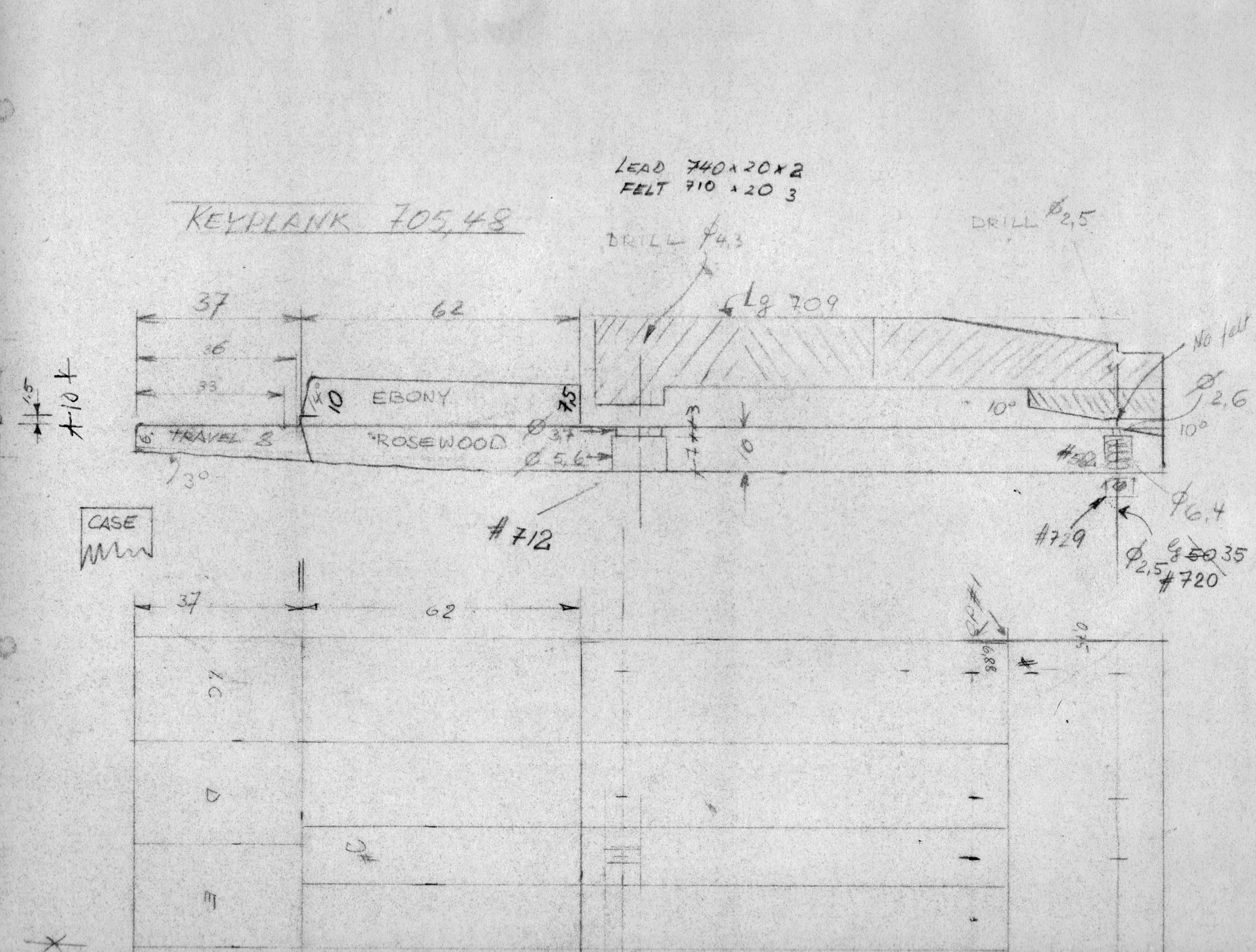
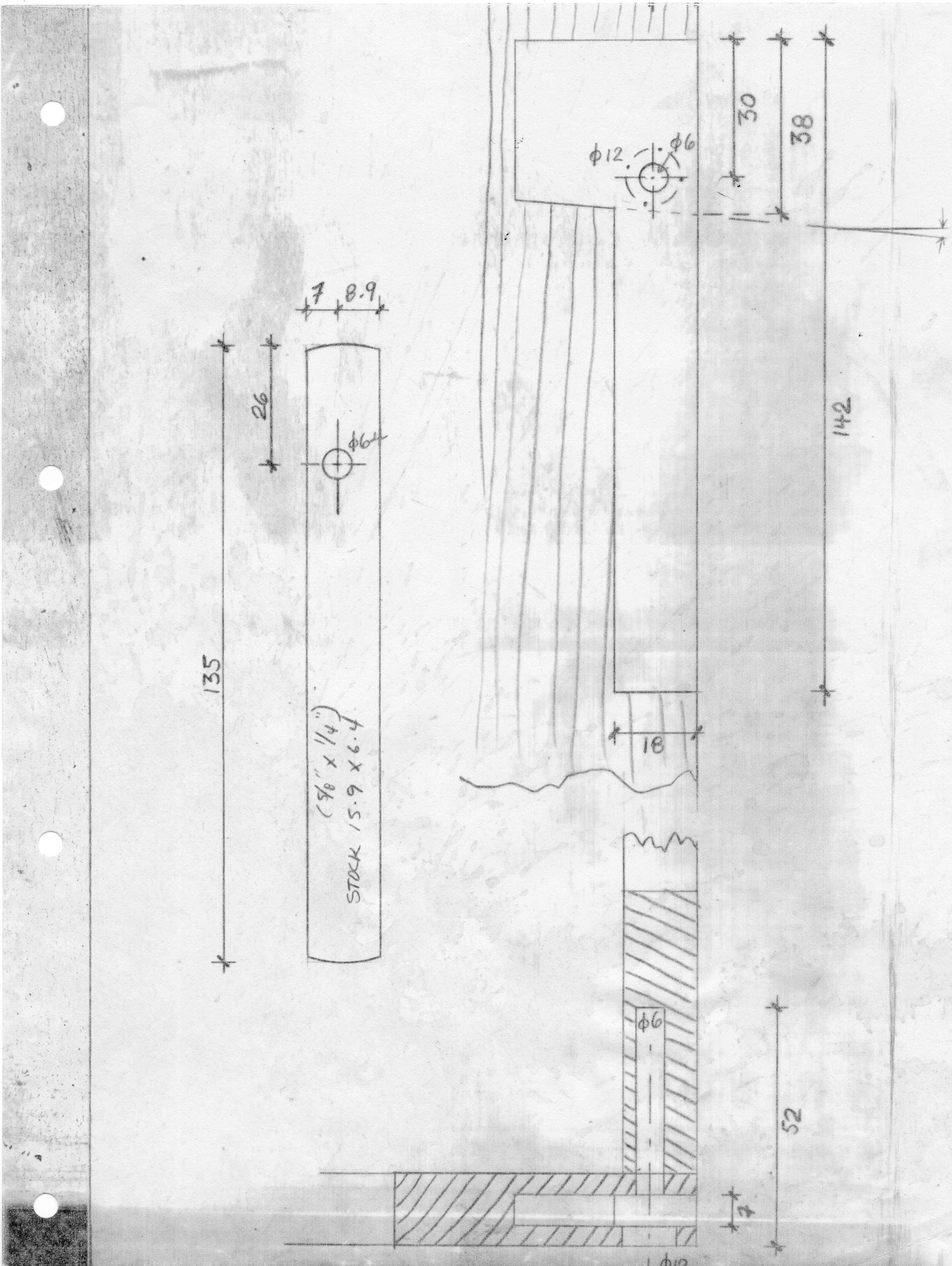
Part of the 4' Holtzgedackt forms the facade. The front pipe's appearance is improved by making them with tapered wooden feet. The side and foot is from one piece of wood, with a grove cut inside at the block to help the side fold into the foot. Making the treble feet long than the bass feet also improves the appearance (see drawing). The tiny 8' Giesecke regal's square blocks plug directly into a key scale "log" toeboard.
Four Stop Organ: Scales and Drawings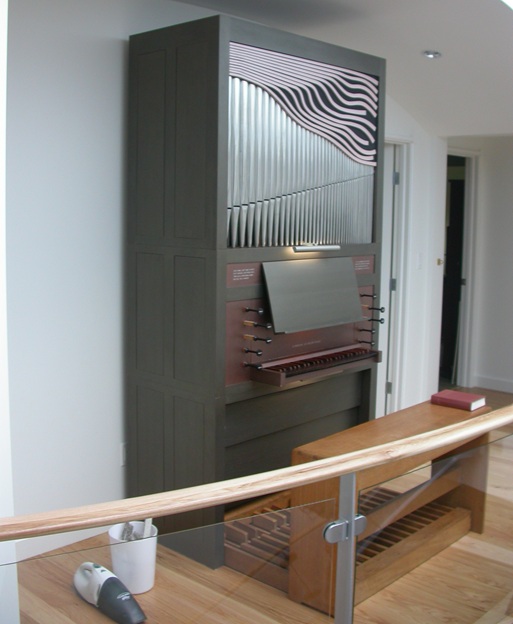
Special Organs Home Organs
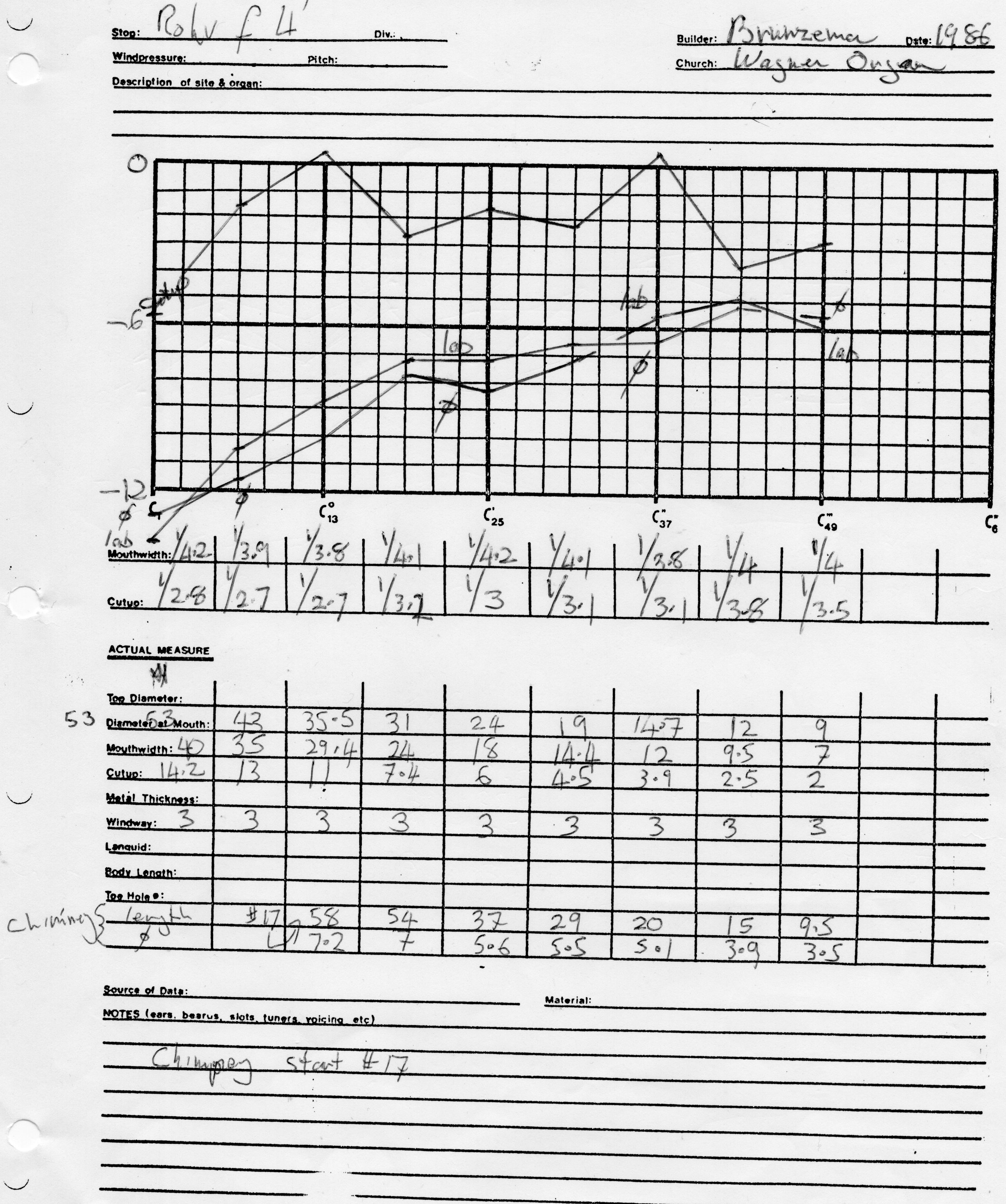
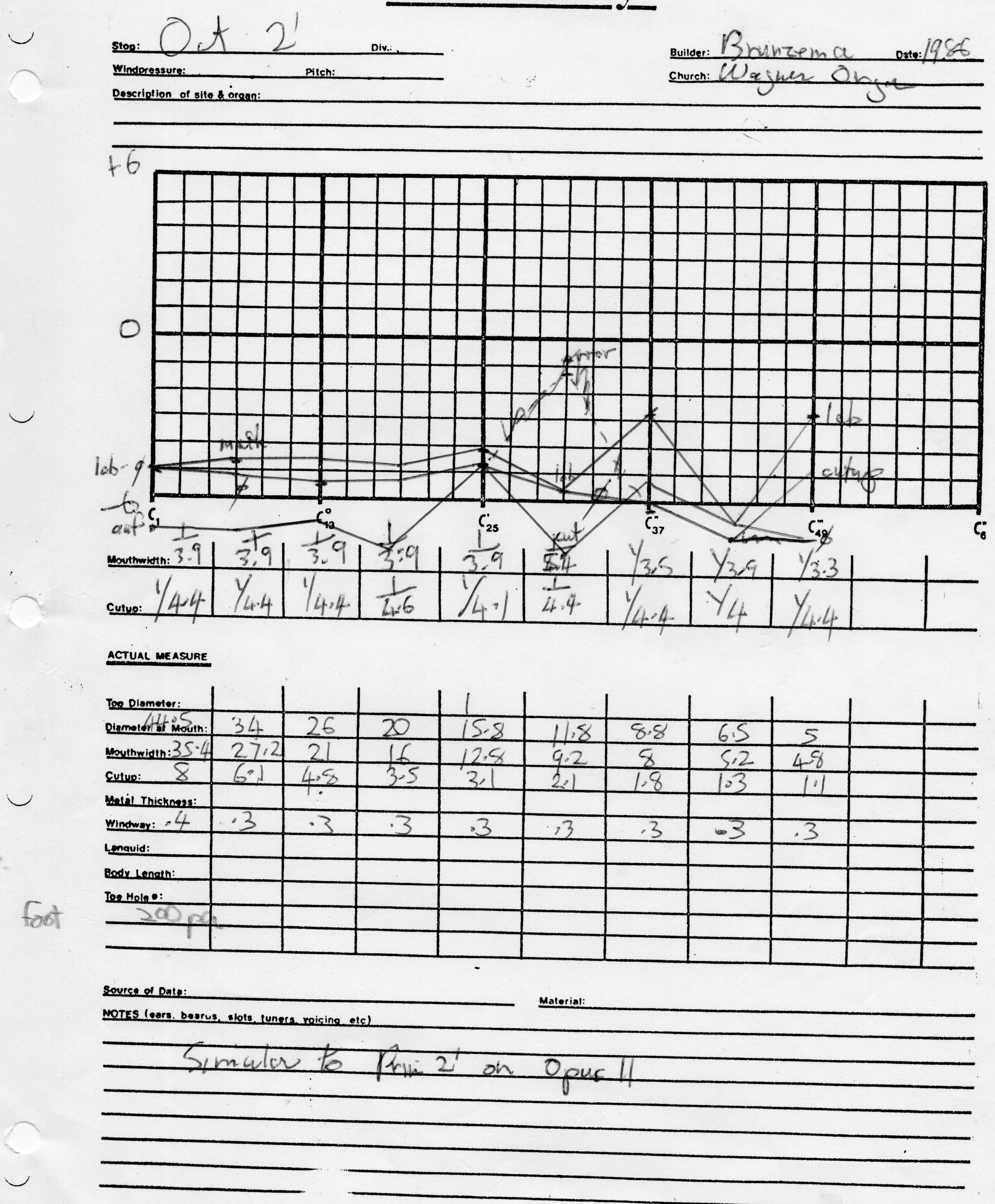
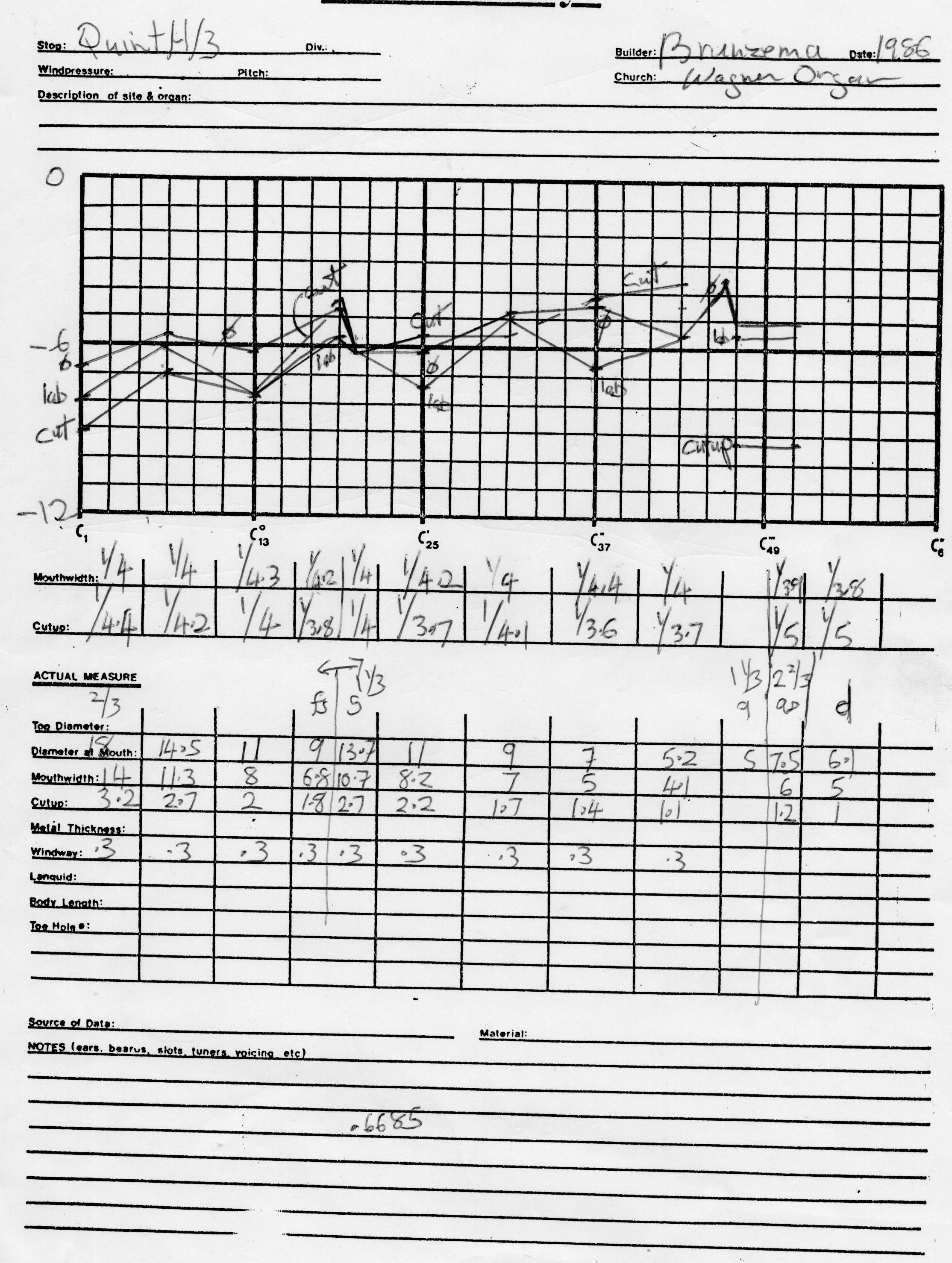
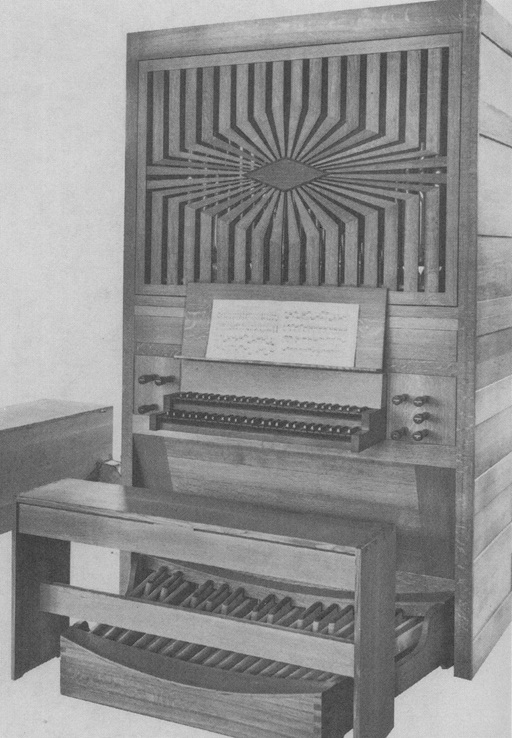
I didn't help build this delightful Brunzema home organ (1986). But about 20 years ago I helped move it and had an opportunity to measure the scales. It has 43mm windpressure. This instrument, pipework and voicing is about as small as you can go; very suitable for a small room. All stops divided.
The two 8' stops have nearly the same scale and the tonal difference comes from the cutups. This 8' scale is chosen because it is about as narrow as pipes can be, and still have some fundamental in the tone, in the bottom octave.
I haven't measured toeholes. This is because Brunzema used restricted toehole borings in the toeboard to reduce foot pressures.
Home organs need to be compact and the pedalboard determines the width of this organ. To keep the pedalboard small, it is only 30 notes, straight and flat. Key spacing, etc., is standard AGO and most people will quickly adapt to it.
Organ Pipe Scales.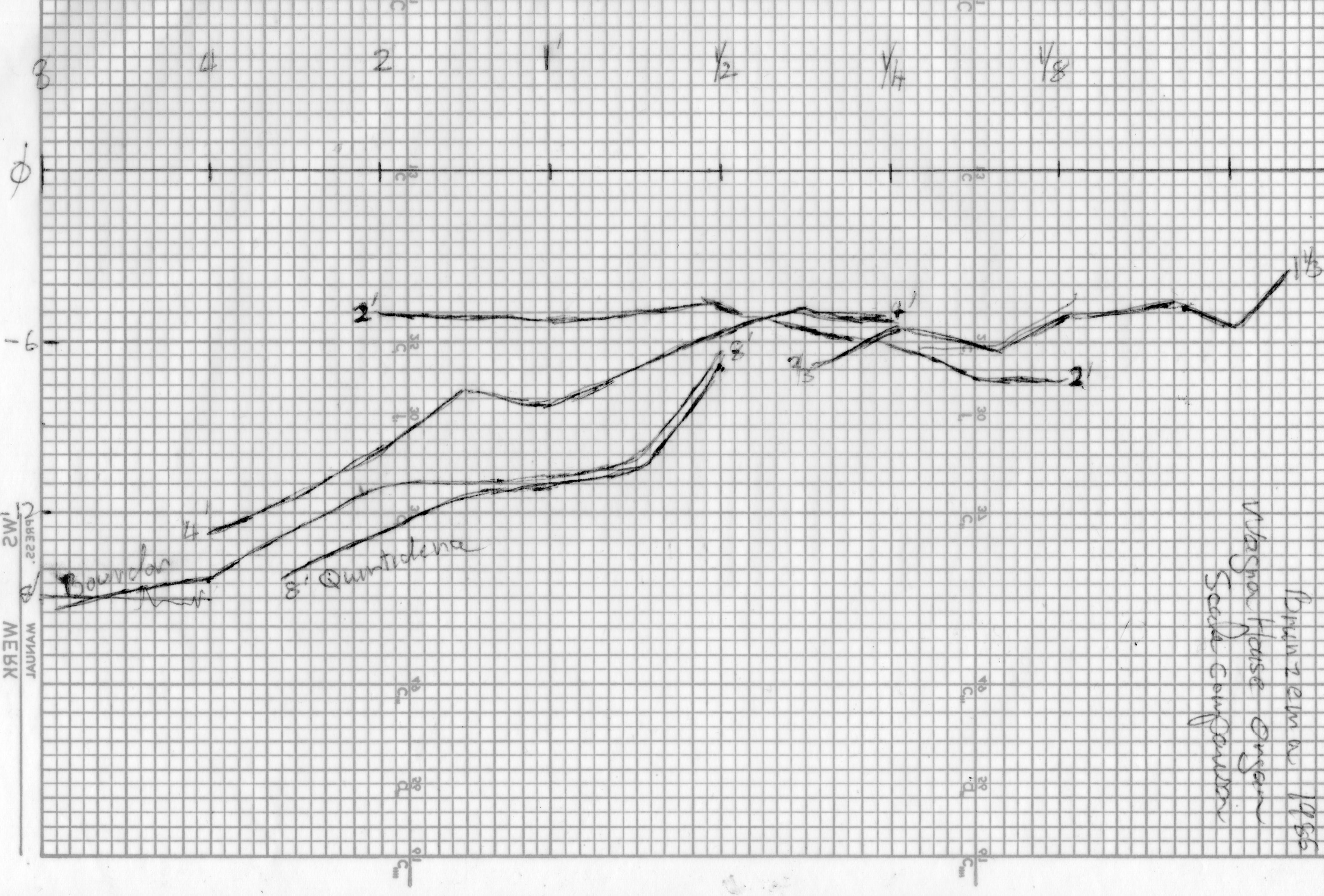
Special Organs Practice Machine
At the Brunzema workshop we built this practice machine in 1982, for Alberta University in Edmonton. Shown below is the standard stoplist for this organ. But this instrument's stoplist was drawn up by consultant Gerhard Krapf. The actual stoplist as built us shown lower, with the scales.
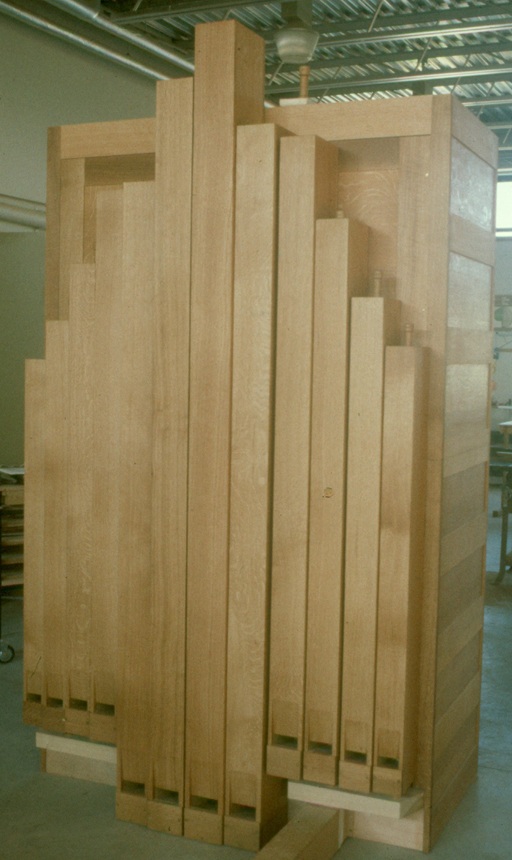
Here is the back of the organ, with the biggest 12 pipes of the Pedal Bourdon 16' attached to the back. Pipes #1-14 of the 8' Hohlflute and 8' Gedackt are borrowed from the Subbass.
Edmonton (Krapf} Practice MachineStops
- I - Hohlflote 8'
- I - Rohrflote 4'
- I - Quinte tg 2-2/3' (prepared)
- I - Principal 2'
- II- Gedackt 8'
- II- Spitzgedackt 4'
- II- Spitzflote 2' (prepared)
- II- Terz 1-3/5' (prepared)
- Ped - Subbass 16' of oak