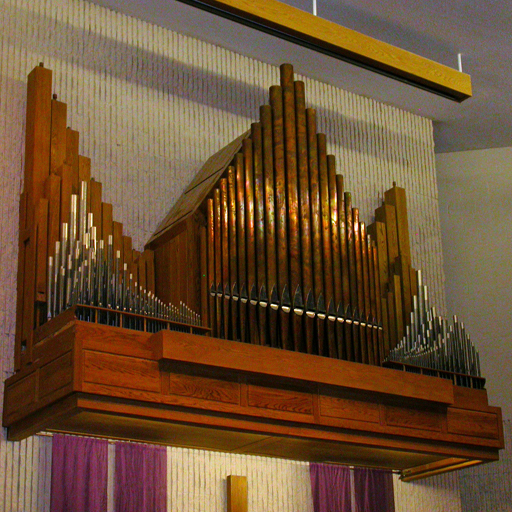
Organbuilding how I did it...
When I was in high school, I'd already decided I wanted to be an organ builder. I was already an organist, but my personality was not an artist or musician; I was a mechanic. I loved taking things apart, and there is no greater mechanical marvel than a pipe organ. So in 1985, after a decade and a half working and learning at several excellent organbuilders in Canada, Europe and the USA, I returned to my hometown and started my own workshop.
My plan was to build mechanical (tracker) and electric action organs. To have my own woodworking shop to make the chests, consoles, keyboards, wood pipes; and a foundry where we cast the metal and made the metal pipes. Why make everything? Because for me, that was the fun part. There were others that called themselves organbuilders, who were really just kit assemblers, buying the components from supply houses.
Most businesses exist to make profits. I didn't care about that. As long as my business generated enough money to pay the bills, I was happy. Money was necessary to survive and grow; but my raison d'être was cutting dovetails and Soldering pipes.
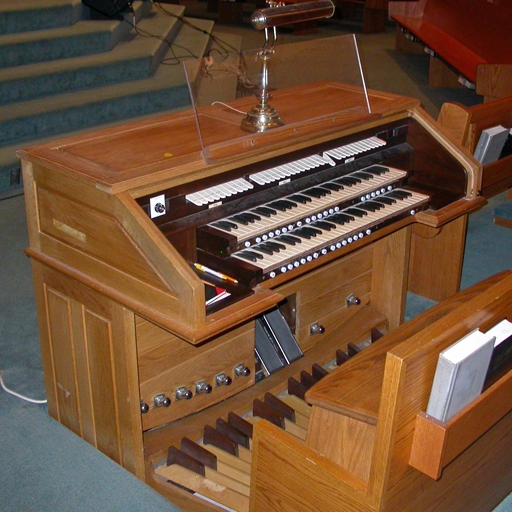
New Organs, I'm the biggest donor...
Though I did submit proposals, I soon found I wasn't able to sell new tracker organs. Tracker organs are considered to be an expensive, premium product and people in the market for "the Best" had no interest in buying from an unknown newcomer.
I could however, sell ordinary electric action pipe organs by underbidding. No church committee would ever be faulted for choosing the lowest bidder. The problem for me was that there were several small builders within a couple of hour's drive of me, who were happy to sell a crappier organ for a even cheaper price.
I wanted the jobs so I underbid and got some. But to build an organ using good materials and workmanship is expensive. I wasn't willing to build a crappier organ, so I accepted a lost of about 10% on my first couple of organs. Of course this wasn't viable, so I stopped persuing new organs.
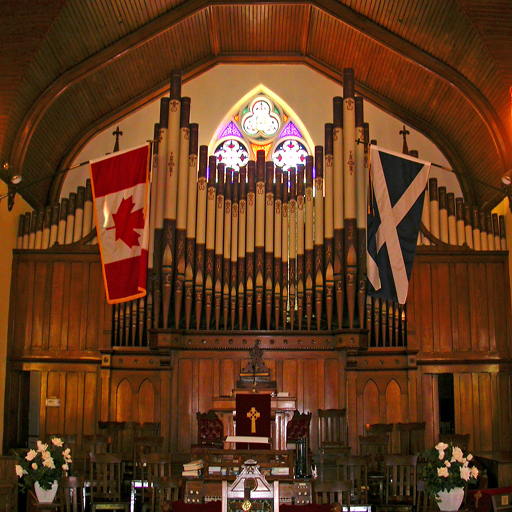
What we did? lots of work
Fortunately, there was plenty of work for us besides building new organs. I had a crew of four employees, growing to six in busier years. With skills and facilities to do real organbuilding, we kept busy rebuilding and restoring existing organs. We did a lot of releathering, made replacement parts, rebuild wornout parts and rebuilding consoles. Ironically, a lot of our income came from services and materials sold to our competition.
A big part of my business was tuning and maintanance. We cared for the organs of about one hundred churches, as far away as Perry Sound, Wiarton and Windsor. Though most tunings were within about 1-1/2 hours drive from home.
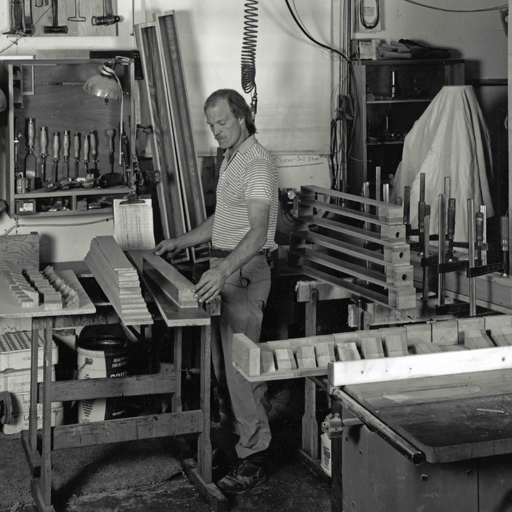
Cabinetmaker, organs are made of wood
We had a complete woodworking mill; jointer, planer, lathe, drill presses, dozens of wood clamps, table and crosscut saws. We worked in the traditional ways, using frame and panel construction.
>Joinery was glued dovetails, and mortice and tenon. Screws were only used where necessary; for shipping assembly and for repair access. Finishes were carefully matched to the church furnature and we typically used oil stains and finishes. Polyurathane was reserved for high wear surfaces.
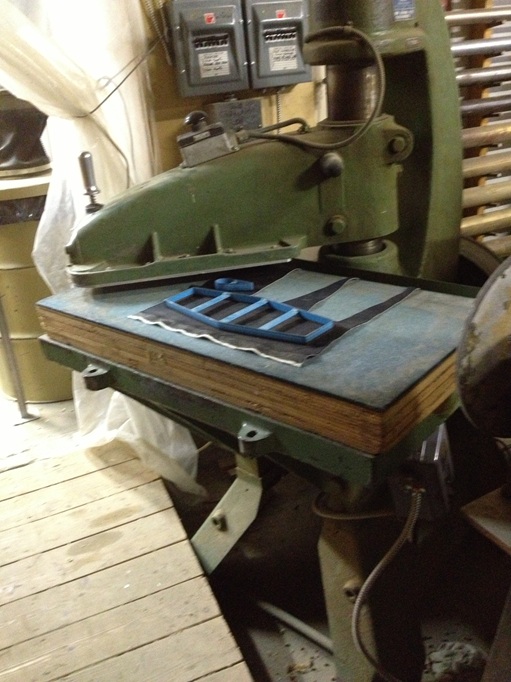
Clicker press, stamps leather parts
We had a five ton leather cutting press an a bunch of custom dies and cutters. We used it to very accurately stamp out corner gussets, pouches, gaskets and all sorts of other leather parts.
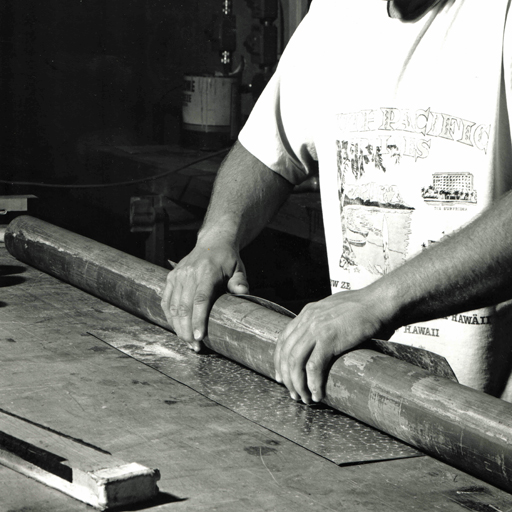
Pipemaking,a rare skill
For years we were the only metal pipemaker in Ontario. Pipes are made from soft metal, lead & tin, so are fragile and easily damaged. Over the decades some pipes have even collapsed under their own weight. So we had lots of repair work.
We also rebuild lots of pipes: changing harmonic flutes into Bourdons, Open #1 into Gedackt 16', dulcianas into mutations, and lots of rescaling, denicking and lowering cutups. Easy to do, if you have a pipshop and understand scaling and voicing.