Organ Pipes, designing, making and repairing...
The pipes are the most important part of the organ. All the rest of the organ: the chests, casework, action, keyboards, bellows and blower only exist to give life to the pipes.
In a previous section of the website "Tonal", we explore the dimensions (the scales) of the pipes, and how to measure, chart and analyse the scales. I also give some historical and modern examples with scales and voicing information. Of course, information must be guided by experiance, but one must start somewhere so hopefully some of this is useful to you.
In this section, I give typical examples of various stops and variations: soft-loud, small-big and suggestions for construction, voicing and repair. We talk about reeds, mixtures, Cornets, Mixtures and wood pipes. We also give suggestions for construction and voicing.
Index

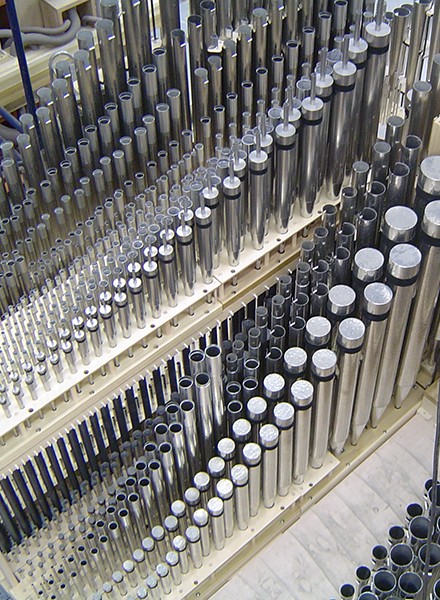
Mixtures, all about them
Mixtures are compound stops; they are made up of several rows of harmonically related pipes. If you play one key, you will hear several pipes. Mixtures are usually made of 2 to 4 pipes per note, though mixtures have been known to contain up to 10 pipes! The pitch of the ranks, number of ranks, the loudness of the pipes and overall design can vary according to region, and builder, and can be very confusing.
Adding a mixture to the chorus makes the chorus brighter and louder. But, depending on how the mixture is designed and voiced, and how it fits with the rest of the chorus, a mixture can add subtle vowel color that has powerful musical effects.
Reeds, all about reeds
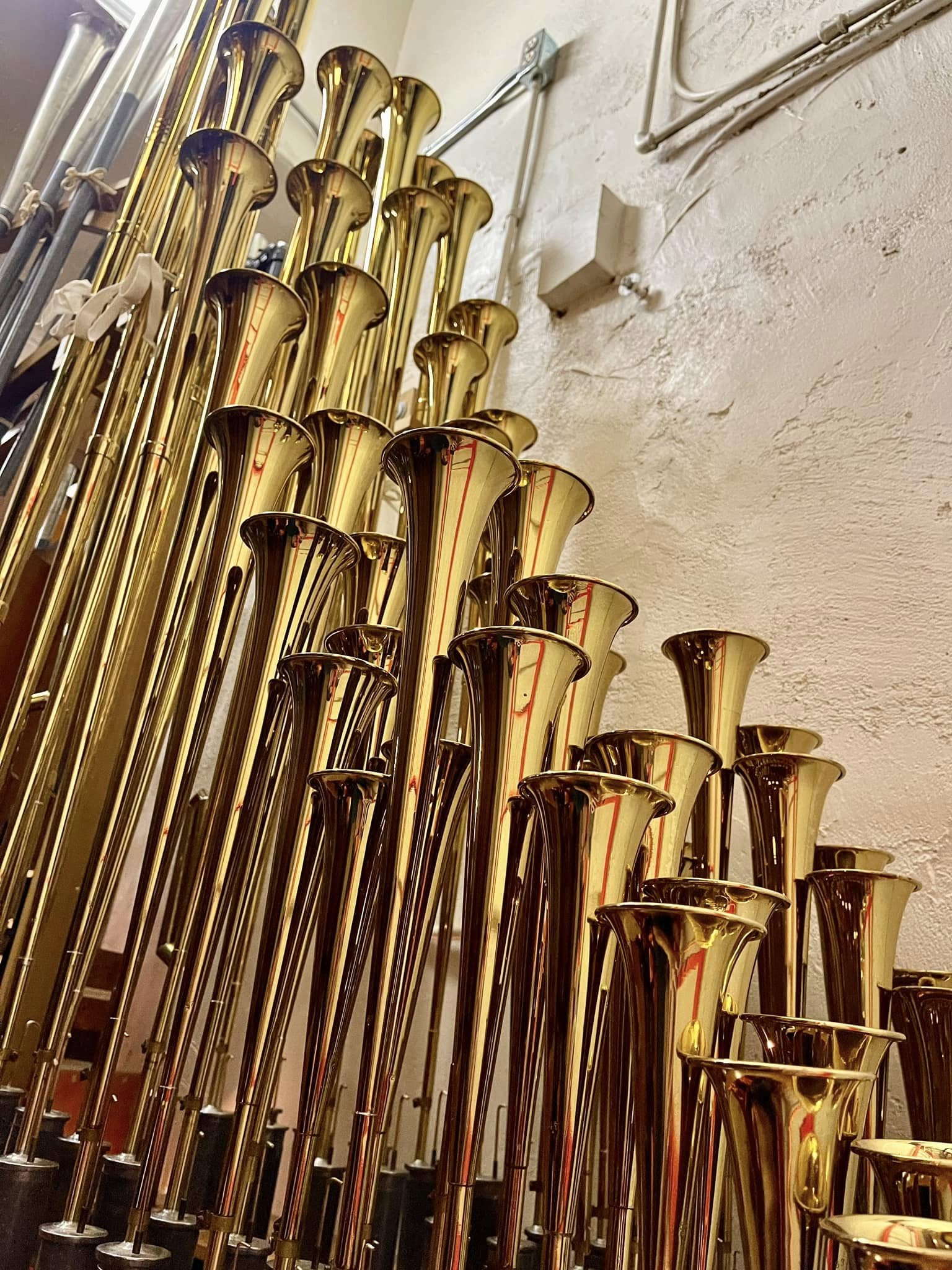
Click here to read all about reeds. We discuss scaling, voicing, how to make shallots, history of reeds and how to clean and repair reeds.
Metal pipemaking, Plans and instruction
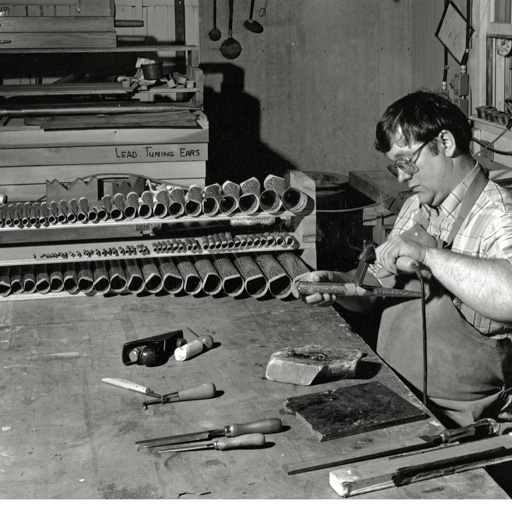
Pipemaking is a craft that requires years of training, jigs, templates and custom made tools. You can't master it by reading a couple of books and watching a few Youtube videos. If you are serious about learning pipemaking, do what I did. Get a job at a pipeshop and serve you apprenticeship.
The links below will give you a tour of my pipeshop, and also some charts and graphs a pipemaker may find interesting.